

Singapore’s MICE Industry and Carbon Emissions:...
Singapore’s MICE sector is among the most measured and most rapidly formalising...
Green Passport Carbon , Singapore
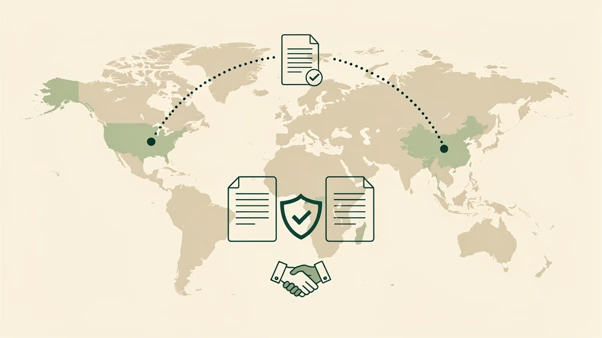
Article 6 of the Paris Agreement is the international rulebook that lets countries cooperate on climate targets by transferring verified emissions reductions between them. If one country funds an emissions-reduction project in another, Article 6 sets out how that reduction can be counted — and, crucially, how it is prevented from being counted twice. For businesses in Singapore, Article 6 matters for a very concrete reason: Singapore’s own carbon tax framework requires that eligible international carbon credits comply with Article 6. The government has effectively made Article 6 alignment the national benchmark for credit integrity.
Article 6 allows countries to voluntarily cooperate in meeting their Nationally Determined Contributions — the climate pledges each country files under the Paris Agreement. In practice, this means Country A can finance or support a mitigation project hosted in Country B, and count an agreed share of the resulting reduction toward its own target.
The unit of transfer is called an Internationally Transferred Mitigation Outcome (ITMO).
If you remember one thing about Article 6, remember this.
When Country B transfers a mitigation outcome to Country A, Country B must make a corresponding adjustment — it adds that quantity back to its own emissions accounts, effectively removing it from its own ledger, so that only Country A can count it.
Without this step, the same tonne of avoided or removed emissions could be claimed simultaneously by the host country and the buying country. The reduction would be real, but the accounting would be fiction, and the aggregate global effect would be overstated.
The corresponding adjustment is what distinguishes an Article 6 transaction from an informal carbon claim. It is a government-level accounting act, not a registry entry or a marketing statement. This is why credits flowing through an authorised Article 6 pathway carry a structurally different assurance profile from credits bought loosely on the open voluntary market.
Article 6 is not one system but three:
Mechanism | What it is | How it works |
|---|---|---|
Article 6.2 | Cooperative approaches | Bilateral, government-to-government arrangements transferring ITMOs directly between countries under negotiated Implementation Agreements |
Article 6.4 | Paris Agreement Crediting Mechanism | A centralised, UN-supervised crediting mechanism — the successor framework to the older Clean Development Mechanism — issuing credits through a standardised, internationally overseen process |
Article 6.8 | Non-market approaches | Cooperation that does not involve trading credits at all: technology transfer, capacity building, finance |
Most commercial activity relevant to a Singapore buyer flows through 6.2 bilateral agreements or 6.4 issuance.
Singapore has positioned itself deliberately in this market, and the specifics are worth knowing because they are unusually favourable to buyers here.
On the policy side: Singapore’s carbon tax rose to S$45 per tonne of CO2-equivalent from 1 January 2026, up from S$25 across 2024 and 2025, with a stated trajectory toward S$50 to S$80 per tonne by 2030. Taxable companies may use high-quality international carbon credits to offset up to 5% of their taxable emissions — and to qualify, those credits must comply with Article 6 and satisfy seven principles demonstrating high environmental integrity.
That last sentence is the most useful fact in this entire article. The Singapore government has defined, in its own tax framework, what integrity means. Any buyer or provider can adopt that same benchmark rather than inventing a private definition of quality.
On the market side: Singapore has signed bilateral Implementation Agreements authorising Article 6 transfers with corresponding adjustments across a growing network of partner countries, which market analysts describe as establishing a legally robust pipeline for high-quality credits. Singapore is also now home to more than 150 carbon services and trading firms — the highest concentration in Southeast Asia — with Economic Development Board figures placing the count above 160 as of early 2026.
For a Singapore-based organiser or corporate, this means credible, government-authorised credit pathways are locally accessible in a way they are not in most jurisdictions.
It would be easy to end this article on the policy strength. That would be incomplete and, in a market facing genuine greenwashing scrutiny, unwise.
Independent analysis of the first wave of Article 6.4 credits found that only a small fraction — roughly one in twenty-six — was likely to represent genuine, additional emissions reductions. The mechanism is young, and its earliest output has attracted serious, well-founded criticism.
The broader voluntary market shows a related tension. Carbon credit retirements fell 7% to 157 Mt in 2025, even as the number of companies setting near-term and net-zero targets surged 227% — a widening gap between stated commitment and executed action. Market analyses name “lack of awareness and quality concerns” among the principal challenges facing the sector, alongside regulatory fragmentation and the absence of standardised verification protocols.
Even providers of nature-based credits acknowledge the specific technical risks plainly: permanence (forest carbon can be released by fire, disease or land-use change), leakage (protecting one forest can displace deforestation elsewhere), verification credibility, and the criticism that offsetting can substitute for genuine domestic reduction rather than supplement it.
None of this argues against using Article 6 credits. It argues for three things: preferring credits with documented government-to-government authorisation and corresponding adjustment, insisting on verifiable retirement evidence, and treating any offering priced far below market as a question rather than a bargain.
The market is shifting in exactly this direction — toward high-integrity credits, with growing preference for removal over avoidance, and emphasis on permanence and demonstrable additionality.
Singapore’s MICE sector is among the most measured and most rapidly formalising...
The cost of offsetting a corporate event’s footprint in Singapore depends on...
ISO 14068-1, published in 2023, is the international standard that defines how...
Find quick answers about the Event Carbon Calculator, your emissions estimate, and what happens next.
Article 6 credits carry a stronger integrity framework than most informally sourced credits, because they require host-country authorisation and a corresponding adjustment at national accounting level. Singapore’s own carbon tax framework treats Article 6 compliance plus seven environmental-integrity principles as the eligibility standard. That said, the mechanism is young — independent analysis found only about one in twenty-six of the earliest Article 6.4 credits likely represented genuine additional reductions — so buyers should look for documented government-to-government authorisation rather than treating an Article 6 label as self-certifying.
It is the accounting step that prevents double-counting. When a credit transfers from a host country to a buying country, the host country adds that quantity back to its own emissions ledger so that only the buyer can count it. It is performed at government level, which is why it carries more weight than a registry entry alone.
No. Voluntary offsets are typically transacted between companies and project developers without government-level authorisation. Article 6 involves formal cooperation between national governments under the Paris Agreement, including the corresponding adjustment, which adds an assurance layer absent from most voluntary transactions.
Companies subject to Singapore’s carbon tax — S$45/tCO2e as of 2026 — may use eligible international carbon credits to offset up to 5% of taxable emissions, and eligibility requires Article 6 compliance plus satisfaction of seven high-environmental-integrity principles.
Not directly — Article 6 governs cooperation between countries, not individual corporate purchases. Its relevance to you is as a quality benchmark: credits sourced through authorised Article 6 pathways carry government-level verification, which is why Singapore’s own framework uses Article 6 compliance as its eligibility test.
Singapore’s MICE sector is among the most measured and most rapidly formalising...
The cost of offsetting a corporate event’s footprint in Singapore depends on...
ISO 14068-1, published in 2023, is the international standard that defines how...
Article 6 of the Paris Agreement is the international rulebook that lets...
If you are planning a conference, exhibition, or corporate event in Singapore,...

Green Passport Carbon
Quick Links
More Information