Carbon neutral vs net zero: what’s...
Carbon neutral vs net zero: two terms, both sound green, both are...

Green Passport Carbon , Singapore

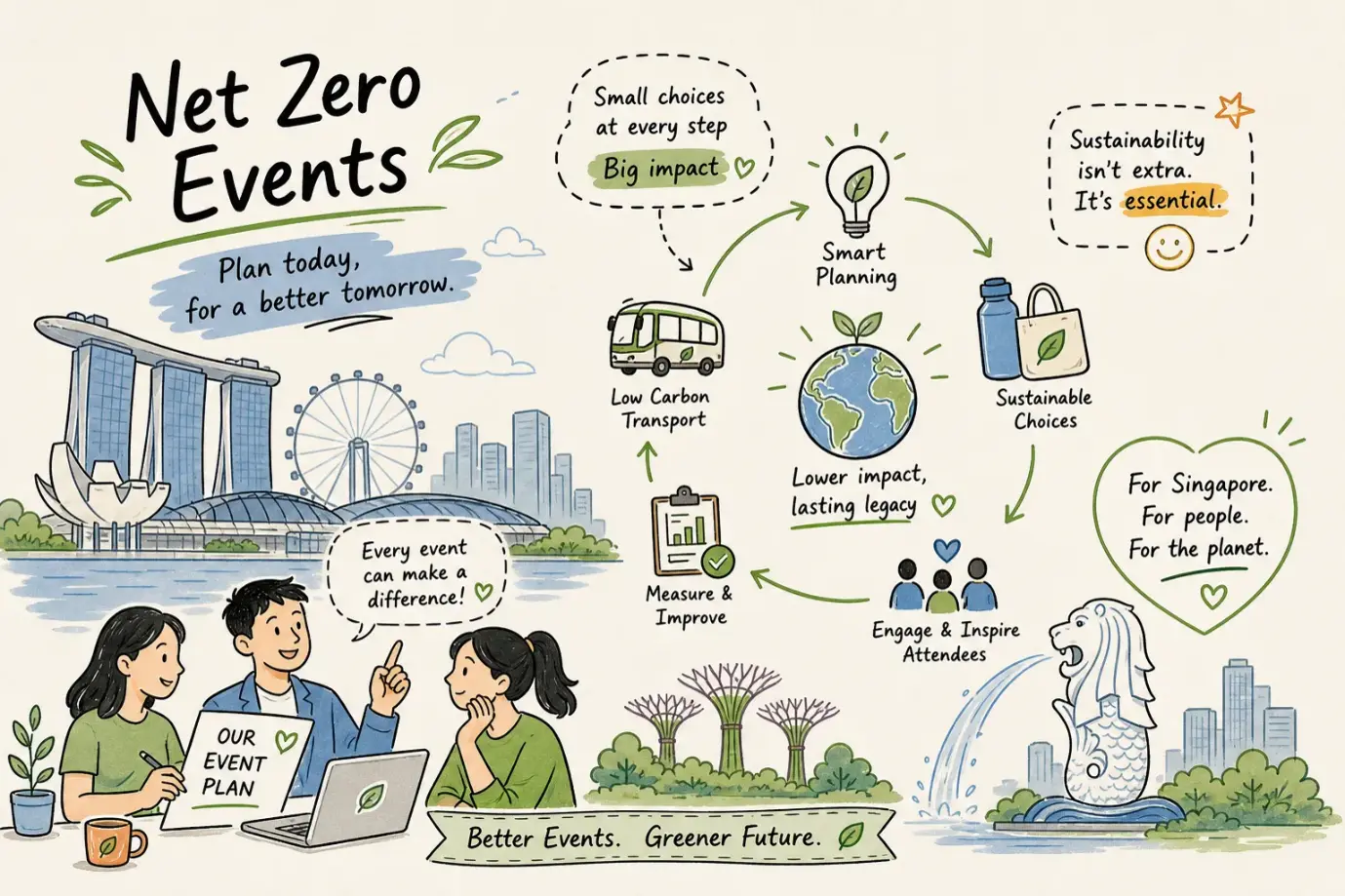
More Singapore event briefs now include the words “net zero event” or “carbon neutral” somewhere in the sustainability clause. Often, they appear side by side, as though they mean the same thing. They do not, and this misunderstanding frequently leads to planning mistakes before a single venue has been shortlisted.
A net zero event sets a far higher bar than carbon neutrality. Understanding that distinction early will shape every decision across the planning cycle: from venue selection and catering briefs to supplier contracts and post-event reporting. Organisations like Green Passport Carbon have built carbon measurement, credit retirement and certificate processes specifically to help Singapore event organisers get the foundation right. A solid foundation is what makes the rest of the journey defensible.
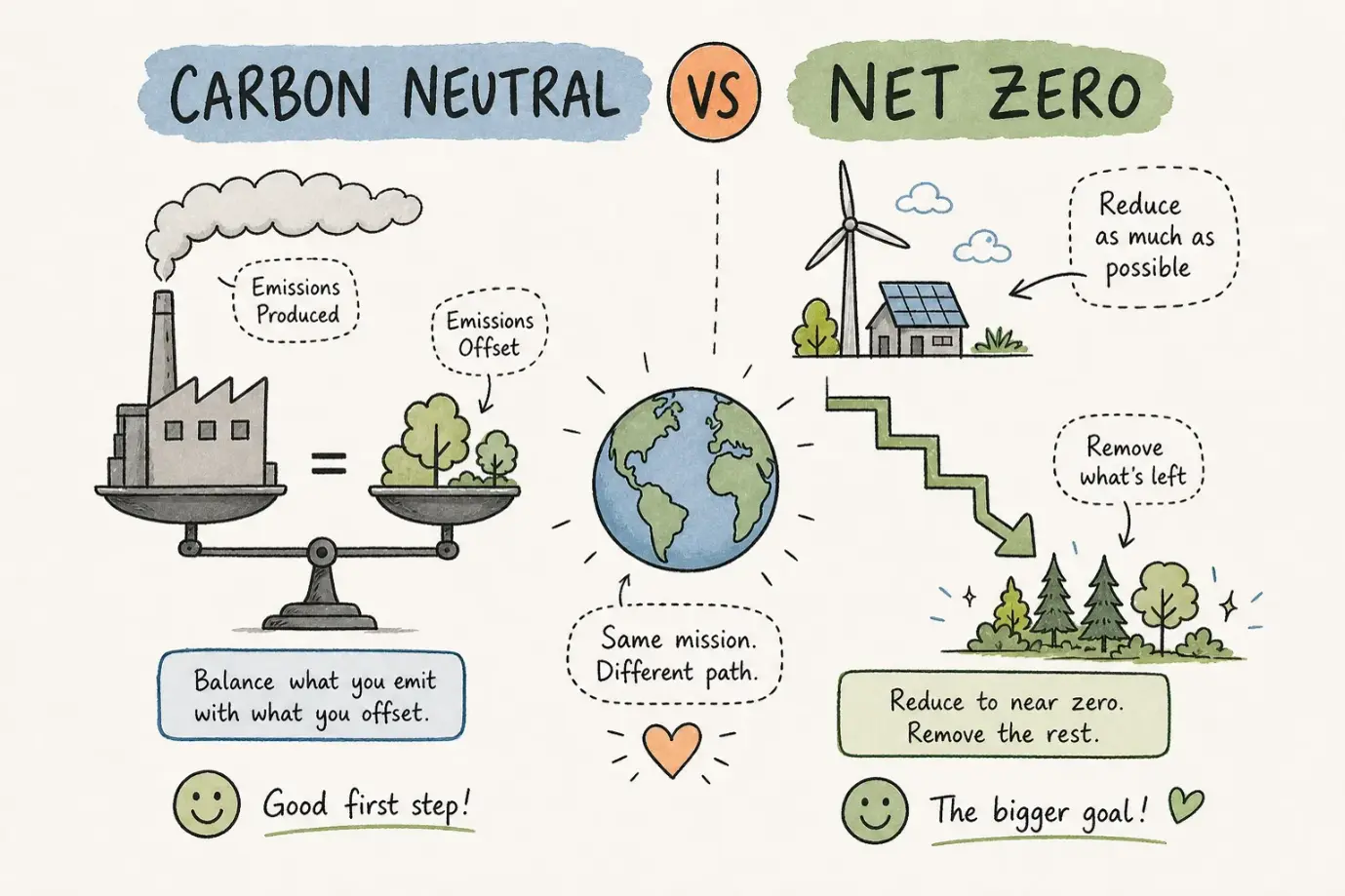
A net zero event is one where greenhouse gas emissions produced across the full event lifecycle are reduced as deeply as technically and economically feasible, with only the residual, unavoidable remainder balanced through verified carbon removals or credits, independently audited, permanent, and free from double-counting. Net zero frameworks such as the SBTi Corporate Net-Zero Standard, updated to Version 2.0 in June 2026, set this bar, which is higher than the carbon neutrality claims covered by ISO 14068-1. Reaching this standard is not a claim achieved by purchasing offsets at the point of invoicing: it is the outcome of a structured, deliberate reduction process.
The global reference framework for this is the Net Zero Carbon Events (NZCE) initiative, hosted by the Joint Meetings Industry Council (JMIC) and aligned to the Paris Agreement. Organisations that sign the NZCE pledge commit to publishing their own net zero pathway, setting interim reduction targets to cut emissions by 50% by 2030, and reaching net zero by 2050. The NZCE roadmap covers measurement methodology, venue energy, logistics, food and waste, travel and accommodation, and carbon offsetting, each as a distinct workstream with best-practice guidance applicable to Singapore’s MICE context.
The critical point for Singapore event organisers is this: net zero is not an outcome you achieve at a single event. It is a trajectory. That means building systems now, baseline measurement, annual reduction targets, supplier requirements, and documented progress tracking. Singapore’s Green Plan 2030 and the Singapore Tourism Board’s sustained focus on sustainable MICE development are already creating market pressure for exactly this kind of structured approach. Planners who start now will have credible data when clients, sponsors, and regulators demand it.
Carbon neutrality means the calculated emissions from an event have been balanced, typically through the purchase of carbon offsets or credits, so the net figure reaches zero on paper. This is a legitimate claim when done to a recognised standard such as ISO 14068-1, revised in September 2026 as ISO 14068:2026. It is not greenwashing if the methodology is sound, the credits are high-quality, and the calculation covers all relevant emission sources. Green Passport Carbon’s Calculate-Retire-Certify process illustrates what a structured carbon neutrality process looks like in the Singapore MICE context: an emissions estimate, the retirement of eligible carbon credits with documented retirement records, and a branded certificate with a unique ID and verification link that is useful for ESG reporting. The certificate documents the carbon action taken; it is not an ISO certification or an independent third-party verification.
The difference between carbon neutrality and net zero lies in what comes before the offset. Carbon neutrality can allow a large share of emissions to be balanced through credits after the fact. Net zero requires the event organiser to have actively reduced emissions as far as possible first, with offsets used only for what genuinely cannot be eliminated. This means rethinking venue choice, energy use, catering sourcing, freight, and delegate travel, not as optional improvements but as primary obligations. Event planners who internalise this distinction design for reduction from the outset rather than calculating what they need to offset at the end, which changes every decision in the planning cycle. The certification, when it comes, is evidence of that reduction journey rather than a substitute for it.
Before any reduction is possible, the full footprint must be visible. For conferences and exhibitions, emissions span all three GHG Protocol scopes. Scope 1 covers direct fuel use such as on-site generators. Scope 2 covers purchased electricity and cooling at the venue. Scope 3, by far the largest for most events, covers delegate and staff travel, accommodation, catering, freight, printed materials, and waste.
In one published breakdown for a conference with substantial international attendance, attendee travel accounted for approximately 85% of total emissions, venue energy roughly 1%, and catering around 3%; your own event’s split will depend on where delegates travel from. This breakdown changes the shape of your reduction strategy entirely. Venue energy improvements, while valuable, are never sufficient on their own. The biggest lever is attendee travel, which means hybrid or regional event formats, deliberate venue location choices, and active encouragement of lower-emission transport modes all need to be in the brief from the start, not treated as afterthoughts.
Reduction measures should be prioritised by impact. For Singapore events, the highest-leverage actions include selecting venues with renewable electricity commitments, such as Singapore EXPO, which operates an 11.53 MWp rooftop solar system of close to 20,000 panels. Planning hybrid or regional formats to reduce long-haul flights addresses the single largest emissions source directly. Specifying low-carbon catering from suppliers like Grain, Orange Clove, or Rasel Catering, which use biodegradable serviceware and food-waste reduction systems, compounds well alongside minimising freight through digital collateral and reusable event materials. Every reduction decision should be documented with data, because that documentation is what distinguishes a credible net zero claim from a marketing statement.
An event carbon footprint calculation requires activity data multiplied by recognised emission factors. For Singapore MICE events, the key data points to collect are: delegate flight distances and travel modes, venue electricity consumption in kWh, hotel room-nights, catering quantities and menu type, waste volumes by category, and freight or logistics data from suppliers. Dedicated event carbon calculators such as TRACE by isla or myclimate’s event calculator are built to handle these categories in one workflow, unlike generic personal footprint tools that are not designed for event-scale activity data.
For Singapore event organisers starting this process, a structured calculation framework removes the risk of undercounting or using inconsistent methodology. Green Passport Carbon’s event carbon footprint calculator covers flights, accommodation, electricity, food and beverages, and materials in a single process, producing an indicative estimate that can be reviewed and then feed into credit retirement and certificate steps. Even for organisations targeting net zero rather than carbon neutrality, using a rigorous calculation framework is the only way to establish a defensible baseline, set meaningful reduction targets, and track progress year-on-year. Without that baseline, reduction targets and progress reporting have nothing to anchor them. The calculator itself is free and gives a Free Event Carbon Estimate; the Full Event Carbon Assessment, carbon-credit retirement and the Green Passport Carbon Event Certificate are provided as part of Green Passport Carbon’s quote-based service.
The NZCE roadmap is the most directly relevant global framework for event-level net zero claims. Organisers who align with it commit to publishing their own pathway to net zero, setting 2030 interim reduction targets, measuring emissions across Scopes 1, 2, and 3 using shared methodologies, and using offsets only as a last resort for residual emissions. NZCE also publishes best-practice guidance documents covering venue energy, logistics, food and waste, travel and accommodation, and carbon offsetting, each applicable to Singapore’s MICE operating context.
At the event management system level, ISO 20121:2024 provides the framework for integrating social, economic, and environmental considerations into event planning and execution. In Singapore, the SACEOS MICE Sustainability Certification (MSC) is the local recognition scheme, aligned with GSTC, EIC, ISO, and Singapore’s WA3 and WA4 workstreams on waste and carbon. Achieving MSC certification requires applicants to meet at least 80% of applicable clauses and undergo external audit, with documentation of carbon measurement, reduction measures, and any offsetting actions all reviewed as part of the process.
For organisers building toward zero-carbon events, ISO 20121 and the Singapore MSC provide the governance structure, while ISO 14068-1 and the NZCE methodology handle the carbon-specific measurement and claims. These are complementary frameworks, not competing ones, and the strongest event decarbonisation programmes in Singapore’s MICE sector are using all of them together.
Net zero is not the starting point, and it should not be framed as one. For most Singapore event organisers, the practical and credible first step is establishing a robust carbon neutrality process for every event: measure the footprint accurately, retire high-quality carbon credits for the residual, and receive a certificate that can be reported and communicated to clients and ESG stakeholders.
Beyond the certification, committing to net zero means treating each event as a data point in a longer reduction story. Set up a simple tracking system: record the carbon footprint of each event, note what reduction measures were implemented, compare year-on-year, and tighten supplier requirements progressively. Rather than issuing three separate directives, the practical approach is to bring venue, catering, AV, and logistics partners into shared reduction goals from the briefing stage, and to choose Singapore-based suppliers already investing in lower-emission operations where possible. Communicate your progress honestly, distinguishing clearly between what has been reduced and what has been offset, so your sustainability claims are substantiated rather than simply stated.
Each certified event also produces the baseline data and documented reduction evidence needed to build toward a net zero trajectory over time. Green Passport Carbon’s end-to-end Calculate-Retire-Certify framework, built for Singapore’s MICE sector and informed by ISO 14068-1 principles, is designed to make this first step straightforward and well documented. If your organisation needs a credible, standards-aligned starting point that directly supports ESG reporting, speak with the Green Passport Carbon team to understand what the process looks like for your next event.
Net zero events are not a box to tick before an event opens. They are the outcome of a deliberate, structured commitment: measure everything, reduce as much as possible, and offset only what remains. The gap between carbon neutrality and net zero is not a failure of ambition. It is a gap that every credible journey must pass through, and one that can be closed systematically, one documented event at a time.
Singapore event organisers who start with a rigorous carbon neutrality process, built on recognised net zero event standards and honest measurement, are in exactly the right position to build a real net zero trajectory over time. That is what achieving a net zero conference or exhibition actually takes. The next event on your calendar is the right place to begin.
Carbon neutral vs net zero: two terms, both sound green, both are...
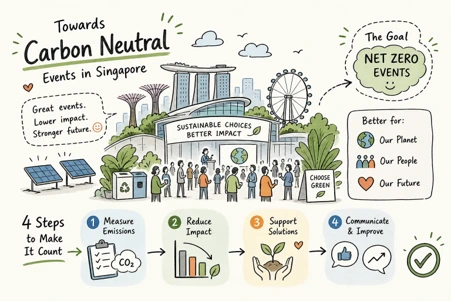
Carbon neutrality claims are increasingly visible in Singapore's events industry. Conference programmes...

Carbon offset solutions for hotel ballrooms and event spaces in Singapore are...
Find quick answers about the Event Carbon Calculator, your emissions estimate, and what happens next.
There is no official threshold. The most cited reference is approximately 14.13 kg CO2 per attendee for venue-related emissions, with energy the dominant contributor. Note this excludes attendee travel, so a full-scope per-attendee figure will typically be higher. Treat it as a comparative benchmark for the venue category rather than a pass mark for the whole event.
Yes. SACEOS has published WA 4: Sustainable MICE — Guidelines for Carbon Emissions Management, a Singapore Standards workspace agreement covering measurement, reduction, calculation, verification and offset. Separately, the Singapore MICE Sustainability Certification (MSC) provides GSTC-Recognised organisational certification, and STB and SACEOS will develop a MICE Decarbonisation Framework by 2028.
Air-conditioning, lighting and audiovisual systems run continuously through operating hours regardless of attendee behaviour, making venue energy a structural and relatively predictable load. In Singapore’s climate, cooling demand is both unavoidable and substantial. This is why the MICE Venue Sustainability Playbook points to emissions per square foot of venue area as a comparable metric.
Yes — and then raised them. By 2025 the original roadmap targets were exceeded, with all purpose-built MICE venues and over 80% of SACEOS member companies certified. Roadmap 2.0, unveiled in July 2026, commits to a MICE Decarbonisation Framework by 2028 and net zero by 2050.
No. MSC certifies the organisation across domains including carbon, waste, energy, water, social responsibility, HR competency and procurement, valid for two years. It does not produce a per-event footprint figure or evidence that a specific event’s emissions were addressed. Those are separate exercises.
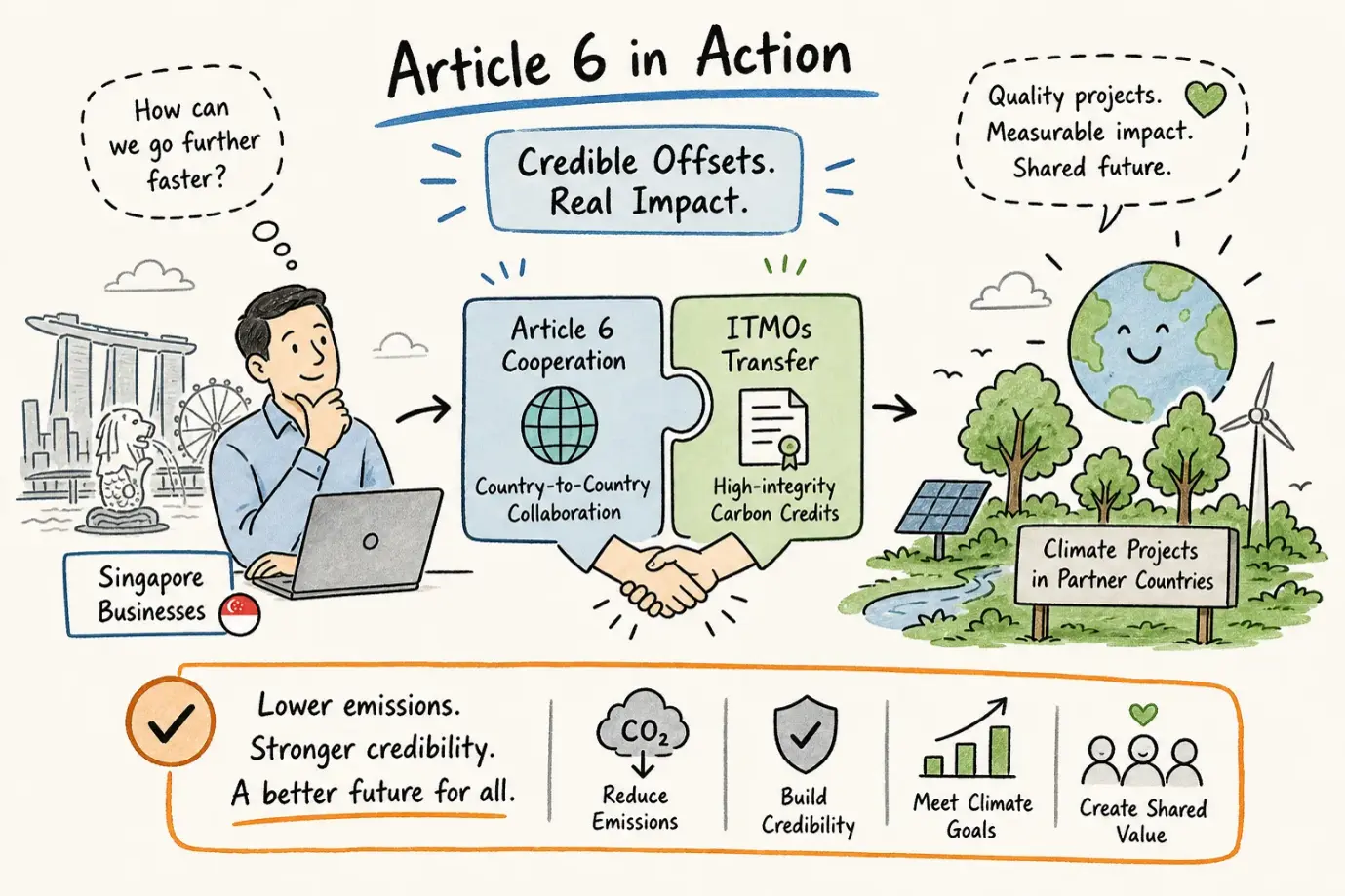
Article 6-aligned offsets are no longer just a conference talking point; they...
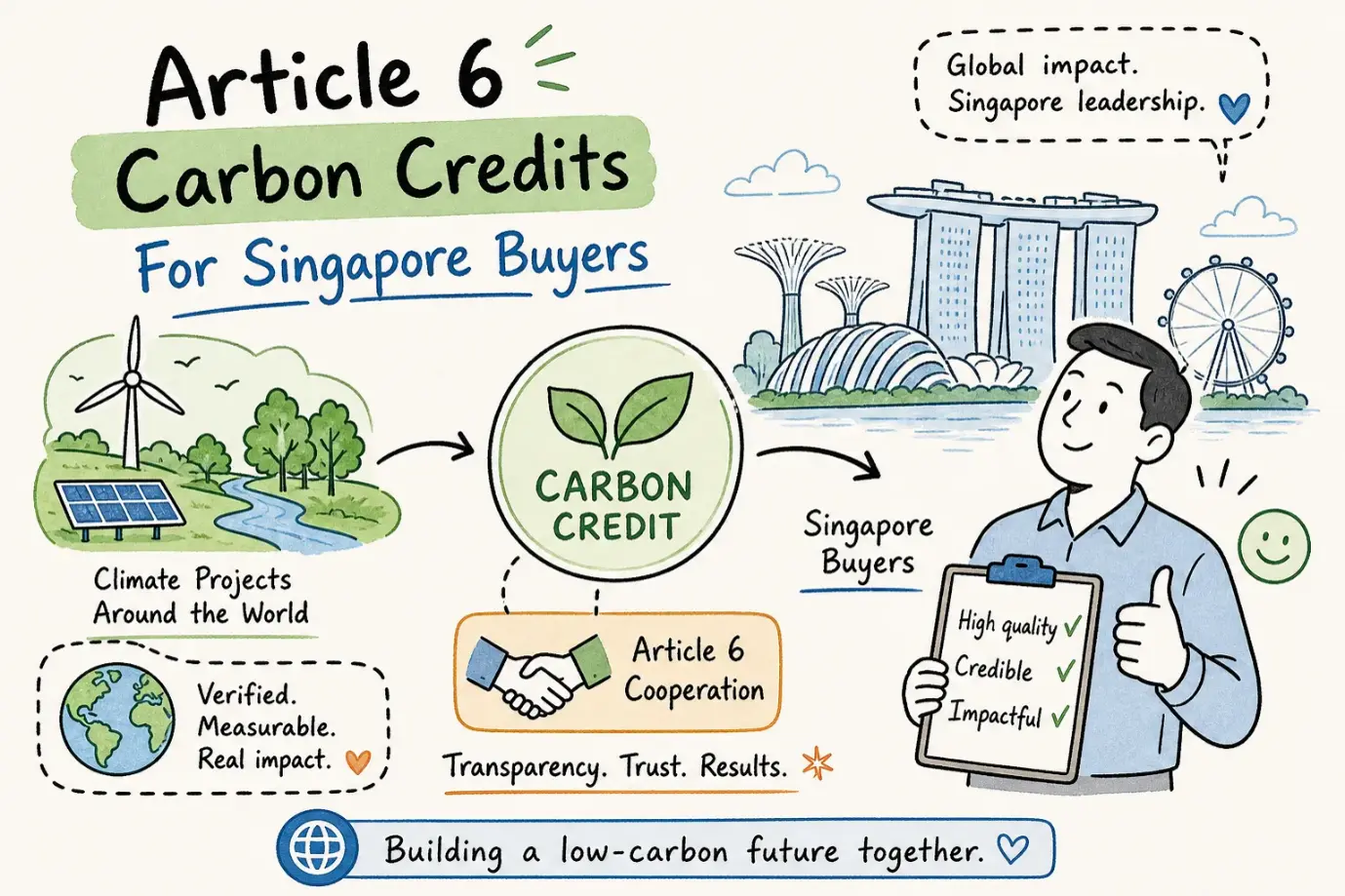
Article 6 carbon credits are fundamentally different from standard voluntary offsets, and...
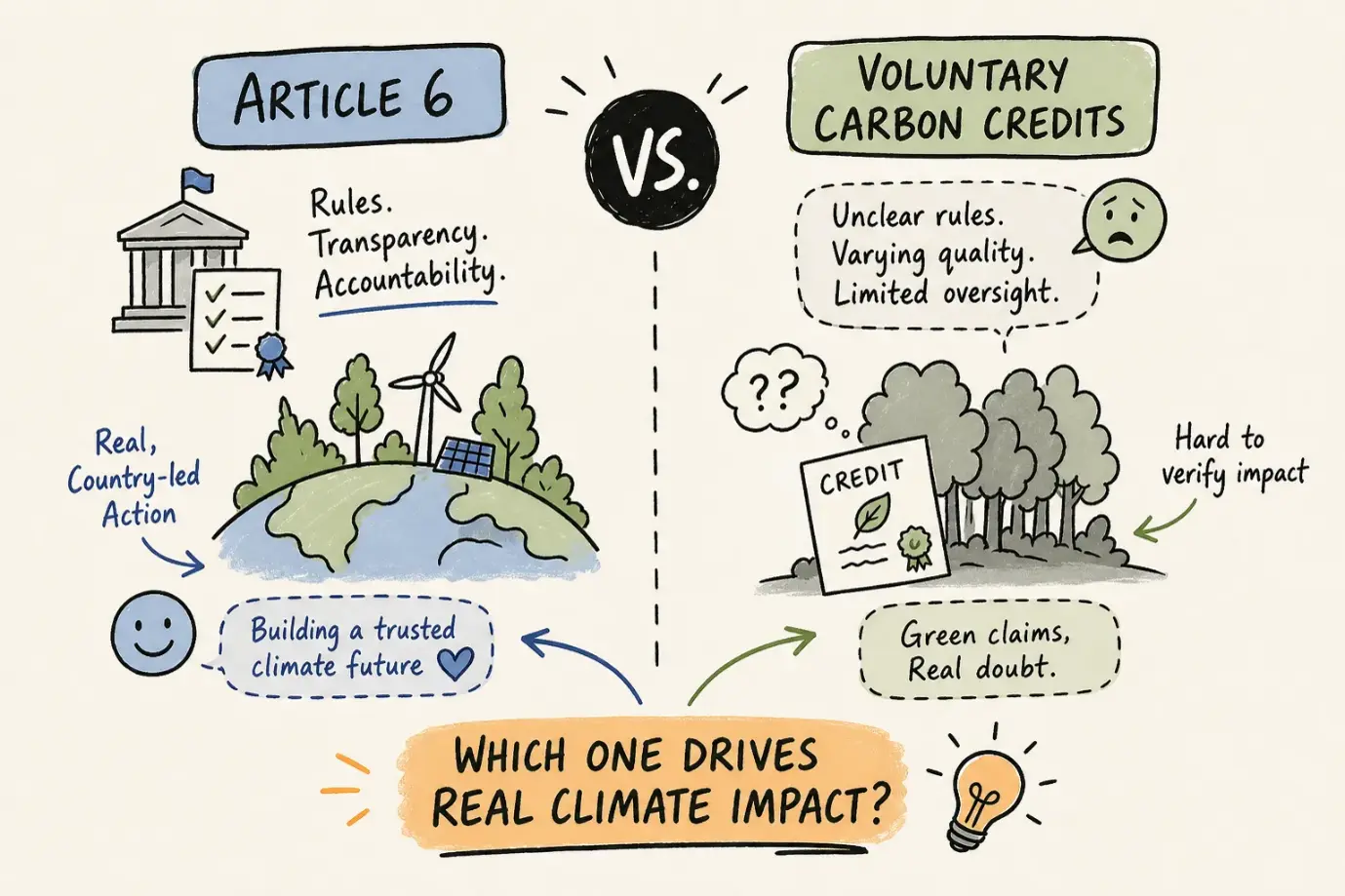
Understanding the difference between Article 6 and voluntary carbon market credits is...
Carbon neutral vs net zero: two terms, both sound green, both are...
For Singapore businesses, Article 6 carbon credits explained properly can mean the...
Carbon neutrality claims are increasingly visible in Singapore's events industry. Conference programmes...

Green Passport Carbon
Quick Links
More Information
 Optimized by Seraphinite Accelerator