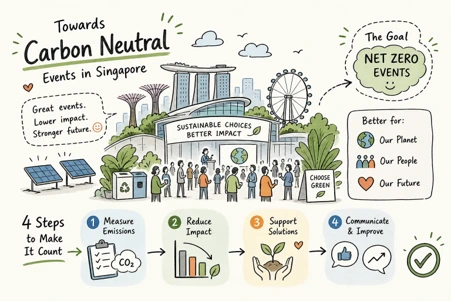
Carbon neutrality standards for Singapore events,...
Carbon neutrality claims are increasingly visible in Singapore's events industry. Conference programmes...

Green Passport Carbon , Singapore

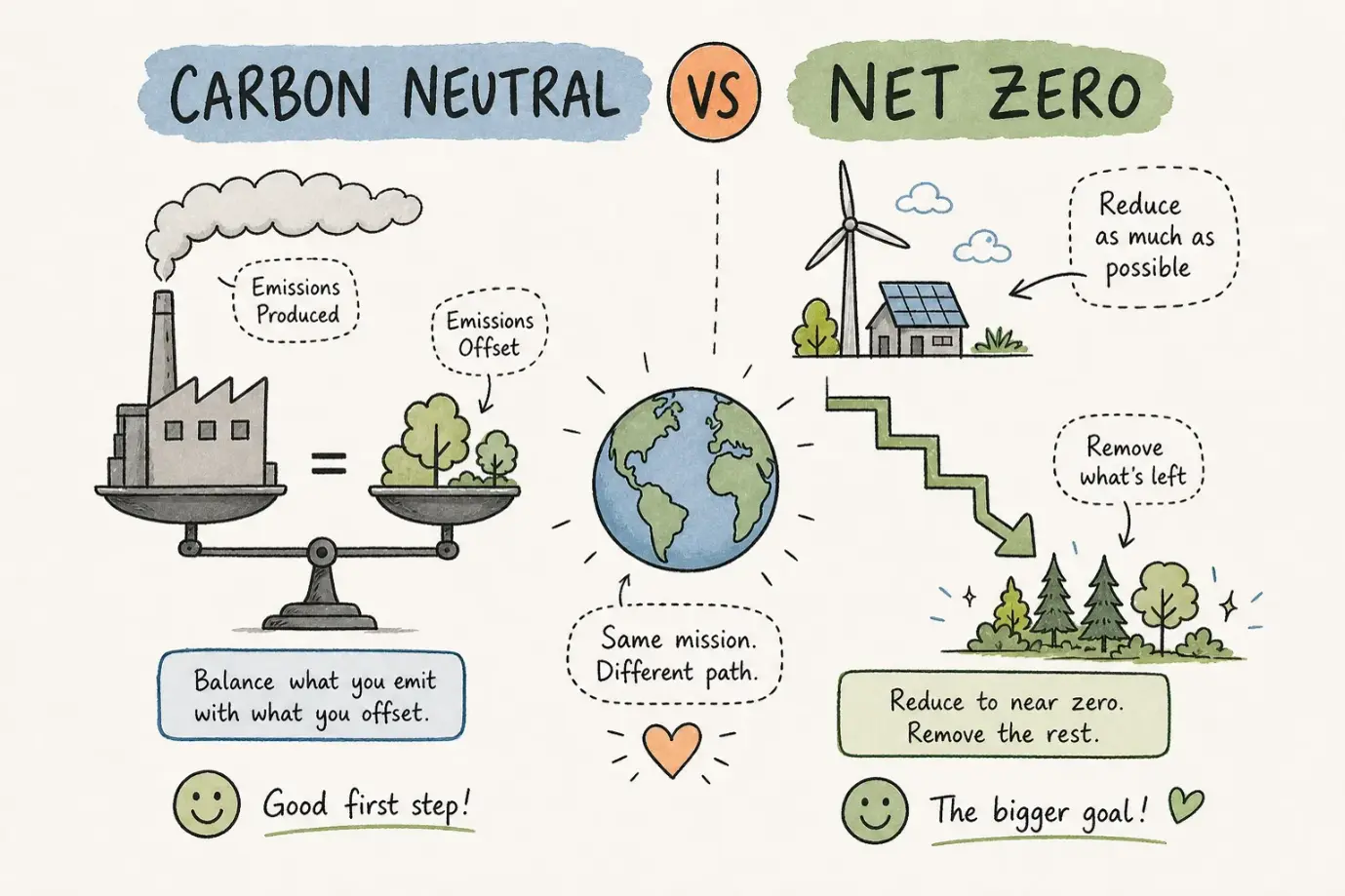
Carbon neutral vs net zero: two terms, both sound green, both are used interchangeably in sustainability decks, event proposals, and ESG reports. And yet they ask completely different things of your organisation, sit under different standards, and carry very different credibility risks if you get them wrong.
At Green Passport Carbon, we work with Singapore event organisers who field this exact question from clients, sponsors, and ESG teams every month. The confusion is real, and the stakes are growing. Regulatory expectations are tightening, procurement teams are asking harder questions, and a vague claim backed by nothing is no longer good enough. This article gives you a clear, honest breakdown so you can choose the right claim, back it up credibly, and build toward something that holds up to scrutiny.
By the end, you will know precisely what each term requires, where offsets fit in, which standards matter, and what your organisation’s realistic starting point looks like.
Carbon neutral means the greenhouse gas emissions attributed to an activity, event, or organisation are measured, reduced as far as practicable, and then balanced by an equivalent amount of emissions reductions or removals elsewhere, so the net result is zero. Many older references used the term narrowly for carbon dioxide only. Credible standards now address all greenhouse gases, expressed as CO₂e.
Two formal standards define what a credible carbon neutrality claim looks like. PAS 2060, introduced by BSI in 2010, was the first internationally recognised framework; BSI withdrew it at the end of 2025. It required a quantified emissions inventory, a documented reduction plan, verified offsetting of residual emissions, and a public Qualifying Explanatory Statement. ISO 14068-1, published in 2023, became the global benchmark, and in September 2026 ISO replaced it with ISO 14068:2026, a minor revision that mainly changes the title and removes the part number. It builds on PAS 2060 with a stronger emphasis on genuine emissions reduction before any offsetting, greater transparency requirements, and a clear hierarchy: reduce first, then address what remains. Without alignment to a recognised standard such as PAS 2060 or ISO 14068-1, a carbon neutrality claim has no verifiable basis.
What carbon neutral is not: it does not mean you have eliminated your emissions. It means you have accounted for them, reduced what you can, and credibly addressed what remains. That distinction matters enormously when sponsors, clients, or regulators start asking questions.
Net zero is a fundamentally more ambitious target. Under Science Based Targets initiative (SBTi) guidance, a 1.5°C-aligned net zero target generally requires an organisation to cut its emissions by around 90% or more from baseline levels, typically by 2050 or earlier, before neutralising the small residual share. SBTi published Version 2.0 of its Corporate Net-Zero Standard in June 2026, with a stronger focus on implementation and progress tracking. That means structural changes to operations, supply chains, and procurement. It is not a calculation exercise followed by offset purchases.
Carbon offsetting plays a supporting role only in a net zero framework. The final 5 to 10% of emissions that cannot be eliminated through operational changes can be neutralised using permanent carbon removals, methods that physically extract CO₂ from the atmosphere, such as direct air capture or enhanced rock weathering, rather than simply avoiding future emissions elsewhere. Offsets used for convenience, rather than as a response to true residual emissions, do not make a credible net zero claim. SBTi and the UN Race to Zero both apply the same logic: deep reductions come first, and removals address only what is genuinely left over.
Net zero is also a long-term destination with near-term milestones, not something declared on a timeline of months. Organisations seeking credible net-zero alignment are expected to set science-based near-term and long-term targets with interim milestones, for example, per SBTi guidance, and to document a clear pathway showing how those reductions will be achieved.
Scope 1 covers direct emissions from sources your organisation owns or controls, such as fuel used in company vehicles or on-site generators. Scope 2 covers indirect emissions from purchased energy, primarily electricity. Scope 3 covers all other indirect emissions across the value chain: supplier activities, business travel, employee commuting, product use, and disposal. For many organisations, Scope 3 represents the largest share of total emissions by a considerable margin.
A carbon neutral claim can be built on Scope 1 and 2 emissions, with Scope 3 encouraged but not always mandatory under every standard. For Singapore event organisers, this is meaningful. The emissions from a conference, including venue energy, delegate travel, accommodation, and catering, can be inventoried and addressed within a defined boundary. ISO 14068-1 requires significant indirect (Scope 3) emissions to be identified and quantified, but exclusions can be justified where emissions are not significant within the defined boundary.
A credible net zero target cannot stop at Scope 1 and 2. SBTi requires Scope 3 to be included because that is where most organisations’ emissions actually live. Excluding it from a net zero claim is not an oversight; it is a credibility failure. This is one of the core structural reasons why carbon neutral and net zero are not interchangeable terms, regardless of how often they are used that way.
For a carbon neutrality claim, offsets serve a genuine and legitimate purpose: they balance the residual emissions that remain after reduction efforts, so the net accounting position is zero. But not all offsets are equal. A credible offset must be additional (the climate benefit would not have happened otherwise), permanent, accurately measured, independently verified, and free of double-counting.
The quality of the credit registry and the project type both determine whether the offset actually holds up under scrutiny. Offset quality and verification rigour deserve careful attention before any credit is retired against a public claim.
In Singapore, Article 6-aligned carbon credits carry particular relevance. These credits are issued under the framework of the Paris Agreement, where both the host country and the purchasing country agree on how the emissions reduction is accounted for, preventing double-counting at the national level. This alignment lowers double-counting risk at the national level. For voluntary carbon neutrality claims, however, Singapore’s October 2025 guidance on carbon credits states that corresponding adjustment requirements do not apply to corporate buyers meeting voluntary climate commitments, and that a corresponding adjustment does not by itself indicate the quality of a credit, which must be assessed separately. Buyers should still disclose whether their credits include one. Article 6 alignment can add credibility with some procurement teams and disclosure reviewers, but it does not replace project-level due diligence.
Using offsets to cover a large share of emissions and calling the result “net zero” is one of the most common greenwashing patterns in sustainability communications. Net zero does not allow offsets to substitute for reductions. If an organisation has cut 40% of its emissions and offset the other 60%, that is not net zero by any credible standard. It may qualify as carbon neutral for a defined activity or period. It is not the same claim, and treating it as such creates real reputational and regulatory exposure.
Vague claims with no referenced standard are the first warning sign. “We are carbon neutral” without any mention of ISO 14068-1, PAS 2060, or a comparable framework tells you nothing about what was measured, what boundary was set, or how residual emissions were addressed. Similarly, a pledge of net zero by 2030 with no filed reduction targets or SBTi commitment is a statement of intent, not a credible pathway.
A credible carbon neutrality claim does three things clearly:
Names the standard it follows and specifies the emissions boundary, including which scopes, which activities, and which reporting period
Discloses the reduction actions taken before any offsetting occurred
Documents the offset credits used, including the registry, project type, and verification details
A credible net zero claim looks different. It shows a near-term science-based reduction target, a pathway to at least 90% emissions reduction, and a plan for addressing the residual share with permanent removals rather than avoidance credits. The absence of any of these elements is a signal worth taking seriously.
Singapore’s regulatory environment is moving in this direction. Climate reporting requirements from ACRA and SGX, guidance on carbon credits from Singapore agencies, and sustainable events guidance from tourism bodies are raising the bar on what counts as substantiated. Claims that cannot be backed by auditable documentation and recognised standards are increasingly exposed to scrutiny from investors, regulators, and procurement teams. The window for vague claims is closing.
For most Singapore organisations, and especially event organisers working within the MICE sector, carbon neutral is the credible, achievable, and immediately valuable starting point. It can be scoped to a specific event, a recurring programme, or a defined operational boundary. It can deliver a well-documented outcome referenced to an internationally recognised standard, which is exactly what sponsors, clients, and ESG reports need right now.
Green Passport Carbon offers a structured, end-to-end process built for this. The three-step framework estimates event emissions across travel, venue, accommodation and catering; retires eligible carbon credits with documented retirement records; and issues a branded Green Passport Carbon certificate with a unique ID and verification link. The certificate documents the carbon action taken; it is not an ISO certification or an independent third-party verification, which can be commissioned separately where a claim requires it. The calculator itself is free and gives a Free Event Carbon Estimate; the Full Event Carbon Assessment, carbon-credit retirement and the Green Passport Carbon Event Certificate are provided as part of Green Passport Carbon’s quote-based service. You are not piecing this together from separate consultants and credit registries, and you get one documented record to put in front of stakeholders. Get in touch with our team to find out what this looks like for your next event.
Carbon neutral done properly is not a shortcut that delays net zero. It builds the data foundation, the reduction discipline, and the stakeholder credibility that a net zero journey requires. Organisations that start with a rigorous carbon neutral claim referenced to ISO 14068-1 are better positioned to set science-based targets and track meaningful progress over time. The two goals are sequential, not competing.
The difference between carbon neutral and net zero is not semantic. It is structural. Carbon neutral means your emissions are accounted for, reduced where possible, and credibly balanced. Net zero means your emissions have been nearly eliminated at source, with only a small residual share remaining to address. Both are legitimate goals, but they require different timelines, different scopes, and different evidence to be credible.
Understanding carbon neutral vs net zero clearly is the foundation of any credible sustainability commitment. For Singapore event organisers making those commitments today, the right question is not which label sounds more ambitious, it is which claim you can actually back up. Starting with a rigorous carbon neutrality claim that follows the principles of ISO 14068-1 gives you something real to put in front of clients, sponsors, and ESG teams while you build the data and systems that a credible net zero pathway demands. That is a more honest approach to carbon management in events, and ultimately a more effective one.
Carbon neutrality claims are increasingly visible in Singapore's events industry. Conference programmes...
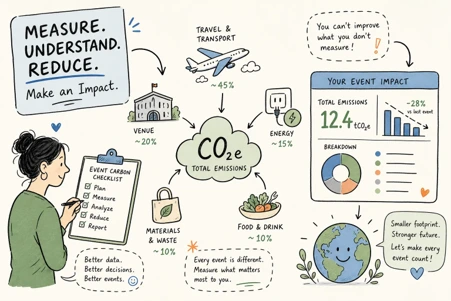
Most event organisers know they should be doing event carbon measurement. The...

Many venues now advertise a green event package Singapore corporate clients can...
Find quick answers about the Event Carbon Calculator, your emissions estimate, and what happens next.
There is no official threshold. The most cited reference is approximately 14.13 kg CO2 per attendee for venue-related emissions, with energy the dominant contributor. Note this excludes attendee travel, so a full-scope per-attendee figure will typically be higher. Treat it as a comparative benchmark for the venue category rather than a pass mark for the whole event.
Yes. SACEOS has published WA 4: Sustainable MICE — Guidelines for Carbon Emissions Management, a Singapore Standards workspace agreement covering measurement, reduction, calculation, verification and offset. Separately, the Singapore MICE Sustainability Certification (MSC) provides GSTC-Recognised organisational certification, and STB and SACEOS will develop a MICE Decarbonisation Framework by 2028.
Air-conditioning, lighting and audiovisual systems run continuously through operating hours regardless of attendee behaviour, making venue energy a structural and relatively predictable load. In Singapore’s climate, cooling demand is both unavoidable and substantial. This is why the MICE Venue Sustainability Playbook points to emissions per square foot of venue area as a comparable metric.
Yes — and then raised them. By 2025 the original roadmap targets were exceeded, with all purpose-built MICE venues and over 80% of SACEOS member companies certified. Roadmap 2.0, unveiled in July 2026, commits to a MICE Decarbonisation Framework by 2028 and net zero by 2050.
No. MSC certifies the organisation across domains including carbon, waste, energy, water, social responsibility, HR competency and procurement, valid for two years. It does not produce a per-event footprint figure or evidence that a specific event’s emissions were addressed. Those are separate exercises.
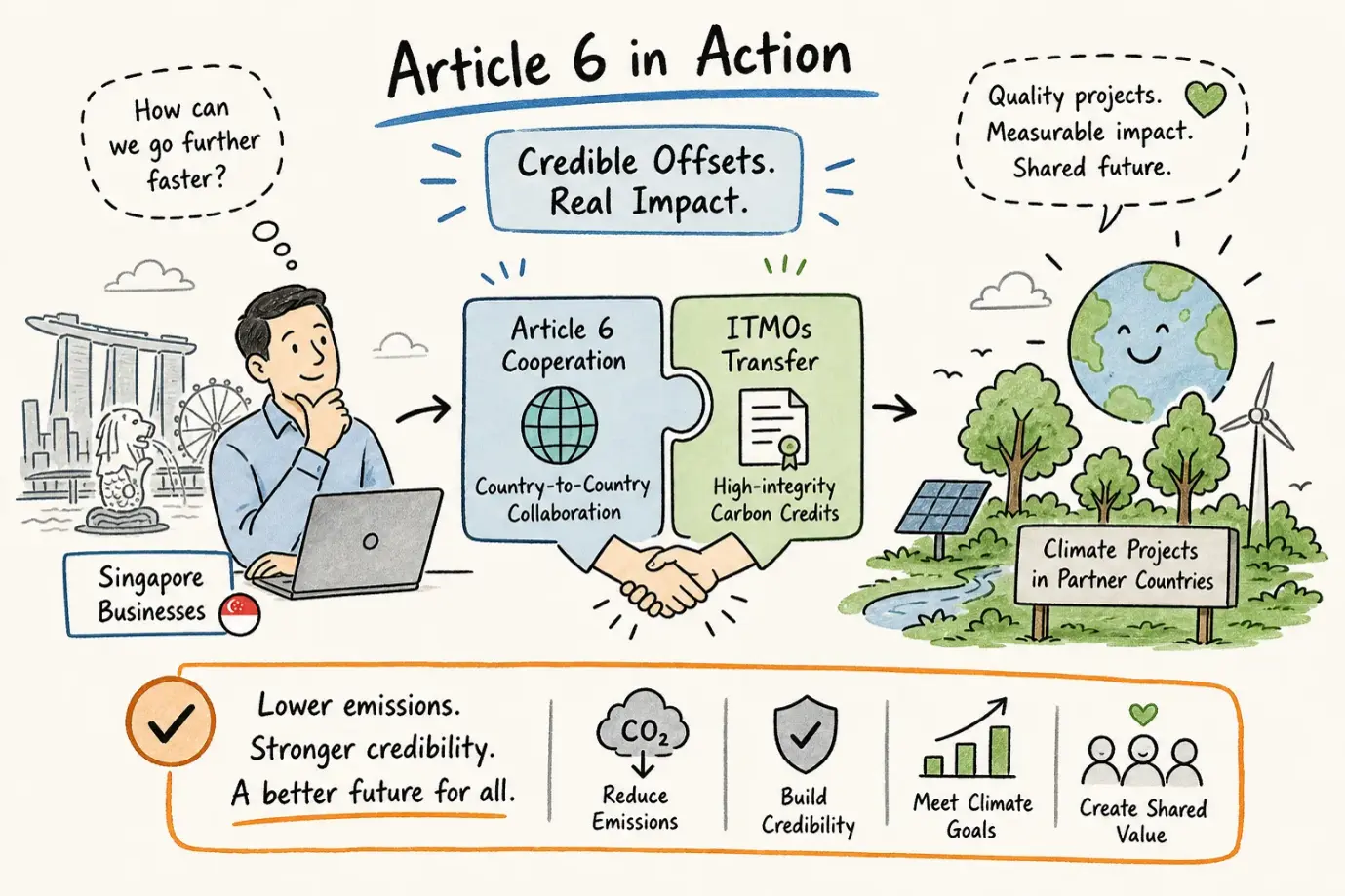
Article 6-aligned offsets are no longer just a conference talking point; they...
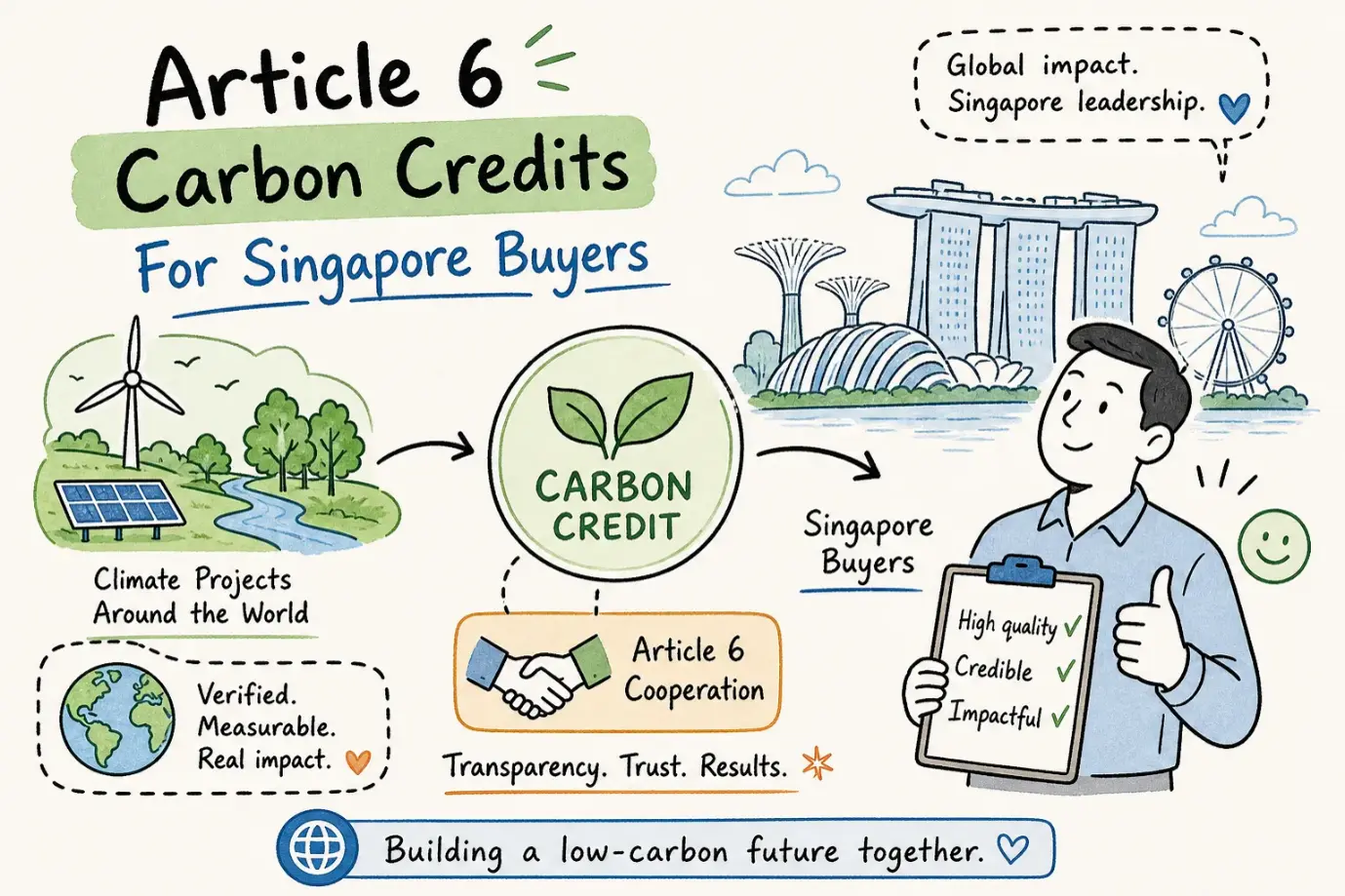
Article 6 carbon credits are fundamentally different from standard voluntary offsets, and...
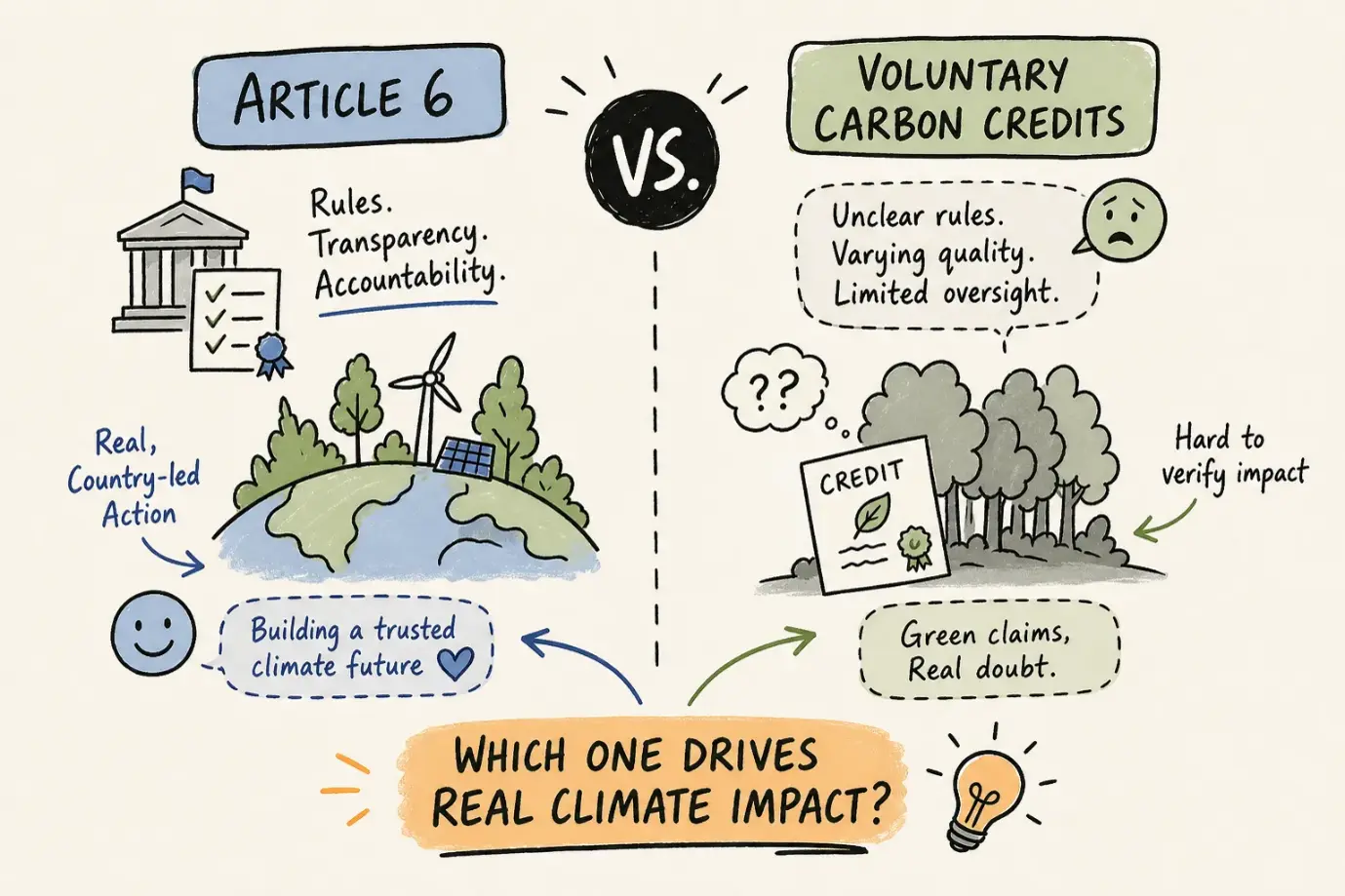
Understanding the difference between Article 6 and voluntary carbon market credits is...
Carbon neutral vs net zero: two terms, both sound green, both are...
For Singapore businesses, Article 6 carbon credits explained properly can mean the...
Carbon neutrality claims are increasingly visible in Singapore's events industry. Conference programmes...

Green Passport Carbon
Quick Links
More Information
 Optimized by Seraphinite Accelerator