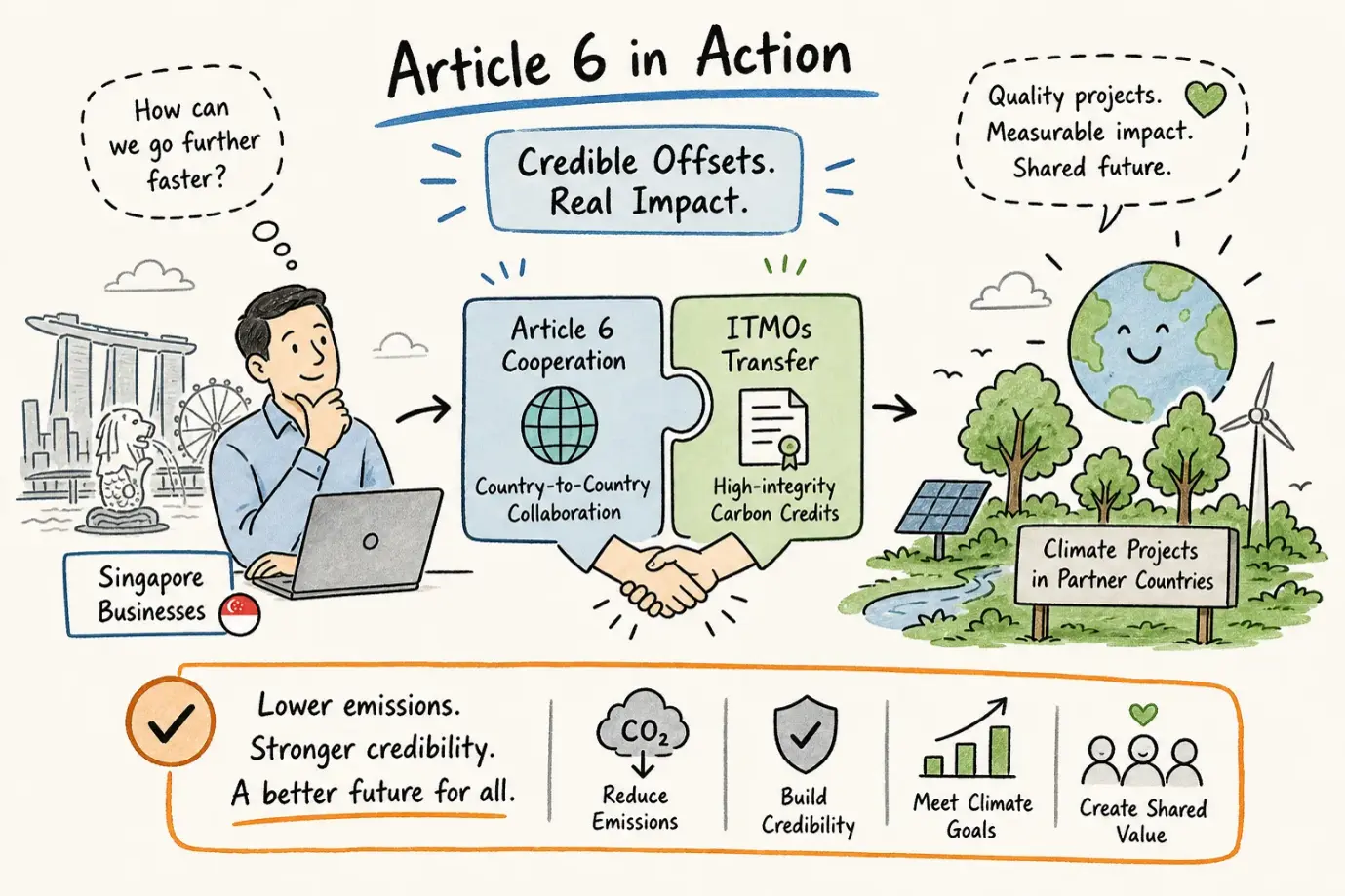
Article 6-aligned offsets explained for Singapore...
Article 6-aligned offsets are no longer just a conference talking point; they...

Green Passport Carbon , Singapore


Carbon offset solutions for hotel ballrooms and event spaces in Singapore are moving from a differentiator towards a procurement requirement. Three years ago, a hotel ballroom could win a conference bid on location, catering quality and competitive day-delegate rates. Now, procurement teams at MNCs and government-linked corporations arrive with a sustainability checklist, and carbon documentation sits near the top. The Singapore Tourism Board’s push for sustainable business events, combined with SGX and ACRA climate reporting requirements for listed companies, means the question has moved from “should we offer a green event package?” to “how do we make that package credible enough to appear in a client’s ESG report?”
That is where most venues hit a wall. The genuine commitment to sustainability is there. What is missing is a clear, documented path from “we care about the environment” to carbon documentation that holds up under ESG scrutiny. Purpose-built event carbon solutions are helping Singapore hospitality properties close exactly that gap. This article walks through every realistic option: how emissions are calculated, what offsets cost, and which approach actually produces documentation that corporate clients can use.
Before you can offset anything, you need a credible number. For a full-day hotel ballroom event in Singapore, an illustrative planning figure is approximately 25 kg CO₂e per attendee, covering venue energy, catering and AV equipment. That figure excludes attendee travel and accommodation. It breaks down into roughly 14 kg CO₂e for venue energy (HVAC, lighting and general electricity), in line with Singapore’s national MICE baseline of 14.13 kgCO₂ of venue-related emissions per attendee across six purpose-built venues, 94% of it from energy; 8 to 12 kg CO₂e for catering; and 1 to 3 kg CO₂e for AV and production equipment. Singapore’s grid emissions factor of 0.402 kg CO₂/kWh, published by the Energy Market Authority for 2024 and the latest annual figure available at the time of writing, is the anchor for the venue energy component. The catering and AV figures are planning assumptions rather than official benchmarks, so replace them with actual meter readings, meal counts and supplier data wherever possible.
The boundary decision matters enormously. A local leadership seminar drawing 50 attendees from within Singapore looks very different from a regional conference pulling delegates from across Southeast Asia. Attendee travel, particularly regional flights, can dwarf every on-site emission combined. A 200-person conference where half the delegates fly in from Bangkok, Jakarta or Kuala Lumpur could easily triple the total footprint compared with the same event attended entirely by local delegates. Deciding what goes inside the calculation boundary is therefore one of the most consequential choices a venue or organiser makes, and it is the first question any reputable carbon offset solution for Singapore event spaces will ask you to answer.
Hotel sustainability teams typically use an activity-data multiplied by emission-factor model. The data hierarchy runs from best to acceptable: event-specific sub-metered electricity readings sit at the top; where no sub-meter exists, venues apportion annual energy by floor area and event days. The formula is straightforward in practice: multiply metered or estimated kilowatt-hours by Singapore’s grid factor, add fuel combustion, then work through catering and waste line by line. Keeping electricity, gas, catering, AV, waste and travel as separate line items matters because auditors and ESG report reviewers need to trace each figure back to a source document.
Catering is where generic hotel spreadsheets most commonly fall short. Credible calculations require meal-category emission factors applied to actual meal counts, distinguishing meat-heavy, mixed, vegetarian and vegan options, plus drinks and tableware. A single meals-per-person average will not hold up under ESG scrutiny. Waste calculations face the same problem: route-specific factors (landfill, incineration, recycling, composting) produce very different results from a blanket average, and Singapore’s waste contractors can often provide route and composition data if you ask.
This level of granularity supports the transparent quantification expected under ISO 14068-1 (revised in September 2026 as ISO 14068:2026), and it is the reason generic spreadsheets create audit risk. For green meetings in Singapore, that methodology rigour is no longer optional, it is what separates a decorative certificate from one a corporate client can actually use.
It also helps to understand where event emissions sit in the GHG Protocol scope structure. Scope 1 covers on-site fuel combustion, gas boilers and kitchen equipment, for instance. Scope 2 covers purchased Singapore electricity. Scope 3 covers catering supply chains, attendee travel, accommodation, production freight and waste. Marina Bay Sands’ carbon-neutral venue claim for Sands Expo and Convention Centre, as described in the property’s published sustainability reporting, covers the meeting venue’s gas and electricity consumption, corresponding to Scope 1 and Scope 2 energy. It does not cover attendee travel, catering supply chains or accommodation. That is not a criticism; it is an illustration of why scope clarity must be established before any public carbon-neutral claim is made.
There are three realistic tiers of carbon-offset solutions for event spaces in Singapore, and they differ significantly in credibility, operational effort and what the resulting documentation can actually do.
The first tier is the DIY route: venue staff calculate emissions using a spreadsheet or generic online tool, then source credits independently from Singapore-based providers. The appeal is cost control. The risks are methodology inconsistency, incomplete scope coverage and the absence of independent verification. DIY credit procurement requires the venue to request registry retirement in the event’s name with serial-number documentation. Claims wording also needs careful management; “emissions were compensated through retirement of certified credits” is defensible; claiming the event produced no emissions is not.
The second tier covers venues that outsource credit procurement and retirement to a broker but do not pursue formal event-level certification. This approach produces a retirement certificate and project documentation but typically no independently verified carbon-neutrality claim. It is better than nothing, but it leaves gaps in methodology transparency that become a liability when a corporate client’s sustainability team needs to include the event in their Scope 3 emissions inventory.
The third tier is where the documentation becomes genuinely ESG-report-ready. End-to-end certified solutions combine a purpose-built event carbon calculator, the retirement of eligible carbon credits and a branded certificate documenting the carbon action, with the claim framed by reference to a recognised standard such as ISO 14068-1. This is the tier where Green Passport Carbon operates. Unlike standalone calculators or one-off credit brokers, the Calculate, Retire, Certify process covers the full workflow, from emissions boundary setting through to a certificate with a unique ID and public verification link, within a single documented methodology. The Green Passport Carbon certificate documents the carbon action taken; it is not an ISO certification or an independent third-party verification. For a Singapore hotel that wants to offer a green event package without building a carbon management team in-house, that single-process approach is the difference between a marketing statement and something a client can attach to a board sustainability disclosure.
Credit prices change frequently, so a planning range of roughly S$35 to S$120 per tonne is used here, depending on credit type, vintage and project quality. As a public reference point, Singapore’s September 2025 contract for 2.175 million tonnes of Article 6-aligned nature-based credits from four projects in Ghana, Peru and Paraguay was valued at about S$76 million, or roughly S$35 per tonne, which sits toward the lower end of that range. Biochar and durable removal credits can exceed S$150 per tonne. For Singapore buyers with formal ESG reporting obligations, Article 6-aligned credits are relevant given Singapore’s bilateral Implementation Agreements with 12 countries as of October 2026, including Thailand, Vietnam, Rwanda and Ghana, although a corresponding adjustment is not required for voluntary claims.
Using a footprint range of 0.5 to 1.5 tCO₂e per attendee covering venue energy, catering, travel, accommodation and waste, three planning scenarios emerge for hotel sales teams:
• A 50-person leadership retreat: estimated S$875 to S$9,000 depending on scope and credit tier.
• A 200-person product launch: approximately S$3,500 to S$36,000.
• A 500-person annual conference with regional attendees: S$8,750 to S$90,000.
For a typical regional business conference at approximately 0.8 tCO₂e per person, 200 attendees would generate offset costs of roughly S$5,600 to S$19,200 at credible pricing. These illustrative figures are planning estimates rather than quotations, but they give hotel sales teams a realistic basis for building green event package pricing rather than guessing. The offset cost is genuinely manageable at most event scales; the challenge is producing the methodology and documentation to justify the claim, not the credit cost itself.
When a venue combines a generic calculator, a standalone credit broker and a self-written certificate, three separate gaps appear: inconsistent emission factors between tools, an undocumented methodology that cannot be audited, and a certificate with no registry serial numbers or standard reference. Each gap is manageable in isolation; combined, however, those gaps produce a document that a sustainability officer at a client MNC cannot include in a formal ESG report. Singapore’s October 2025 guidance on carbon credits recommends that companies disclose the project name or ID, crediting programme, methodology, location, registry, vintage, volume and purpose of use for any credits, and ISSB-based climate disclosures also call for information about credits used to meet targets. Client sustainability teams and assurance providers commonly ask for this detail. A PDF with no methodology reference fails that test immediately.
Green Passport Carbon’s end-to-end process is designed to close those gaps. The purpose-built event carbon footprint calculator covers travel, venue, accommodation and catering within a single defined boundary. Credit retirement uses eligible carbon credits with documented retirement records. The resulting Green Passport Carbon certificate, with a unique ID and verification link, gives hotel clients documentation they can attach to an ESG report or share with an external reviewer; it is not an ISO certification or an independent third-party verification. For a Singapore venue aiming to win corporate and government MICE business in a market where sustainability documentation is becoming a procurement differentiator, that is the commercial case stated plainly. The calculator itself is free and gives a Free Event Carbon Estimate; the Full Event Carbon Assessment, carbon-credit retirement and the Green Passport Carbon Event Certificate are provided as part of Green Passport Carbon’s quote-based service.
A credible offset retirement certificate must include the project name, country and type; the standard under which credits were issued (Gold Standard, Verra VCS or Article 6-aligned); the credit vintage; registry serial numbers; the quantity retired; and the beneficiary name, ideally the event name rather than just the purchasing organisation. A certificate without registry serial numbers cannot be independently verified and should not be used in an ESG report. If a provider cannot supply all of these details before you sign, that is your answer.
Scope clarity in claims language matters as much as the certificate itself. Claiming an event is “carbon neutral” when only venue energy was calculated and offset exposes both the hotel and its client to reputational risk. The correct framing specifies what is and is not covered: “emissions within the defined event boundary, covering venue energy, catering and attendee ground transport, were compensated through retirement of X certified credits.” Full Scope 3 claims require a more comprehensive calculation. Any provider should be able to specify the emission boundary in writing before a contract is signed.
Singapore buyers also have a specific reason to understand Article 6.2-aligned credits. Singapore’s 5% International Carbon Credit offset mechanism under the domestic carbon tax framework, combined with the country’s active bilateral agreement programme, gives Article 6 alignment regulatory relevance for carbon tax-liable facilities. For voluntary event claims, Singapore’s October 2025 guidance on carbon credits states that corresponding adjustment requirements do not apply to corporate buyers meeting voluntary climate commitments, and that a corresponding adjustment does not by itself indicate the quality of a credit, which must be assessed separately. Buyers should still disclose whether their credits include one. For venues serving GLCs or MNCs with formal ESG reporting obligations, a process that references ISO 14068-1 principles, uses high-quality credits and discloses their corresponding-adjustment status is the combination most likely to satisfy both the client’s sustainability team and an external reviewer.
For Singapore hotel ballrooms and event spaces, carbon offset solutions range from DIY spreadsheets and standalone credit brokers to end-to-end certified programmes. The deciding question is straightforward: can the documentation you produce hold up in your client’s ESG report? For most venues, answering that question honestly points toward a purpose-built, standards-aligned solution rather than a combination of separate tools assembled after the event. Green meetings in Singapore increasingly demand exactly that standard of evidence, and the venues winning MICE business are those that can deliver it.
Carbon-neutral event documentation is moving from a nice-to-have to a baseline expectation in corporate and government MICE procurement. Green Passport Carbon’s Calculate, Retire, Certify process was built specifically for this context, removing the complexity of sourcing separate calculators, consultants and credit registries, and delivering a branded Green Passport Carbon certificate, backed by documented retirement of eligible carbon credits, that venues can share with clients who ask for proof. If your property is ready to move from sustainability intent to a well-documented green event package, get in touch with the Green Passport Carbon team to discuss how the programme works for your venue.
Article 6-aligned offsets are no longer just a conference talking point; they...
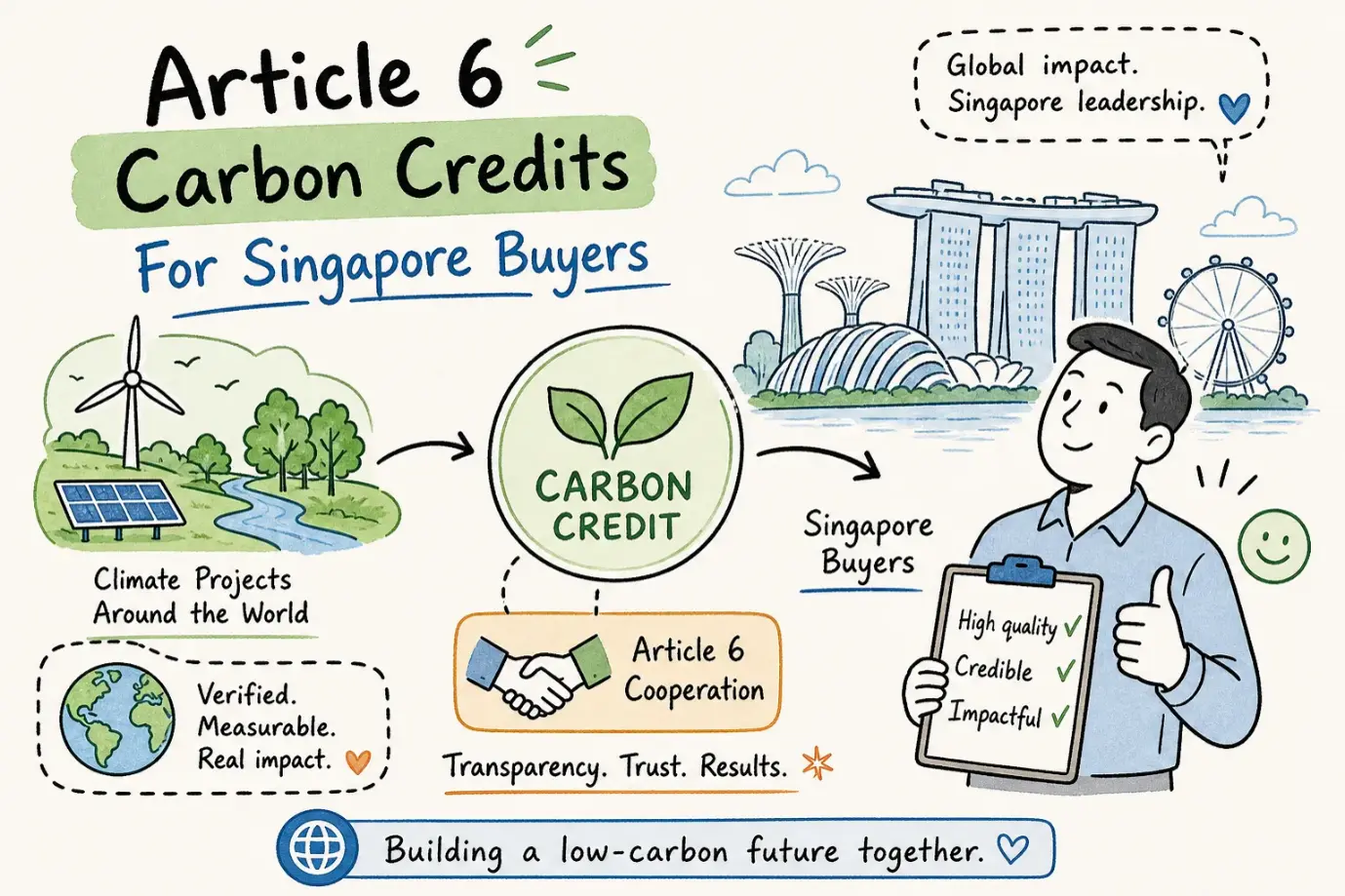
Article 6 carbon credits are fundamentally different from standard voluntary offsets, and...
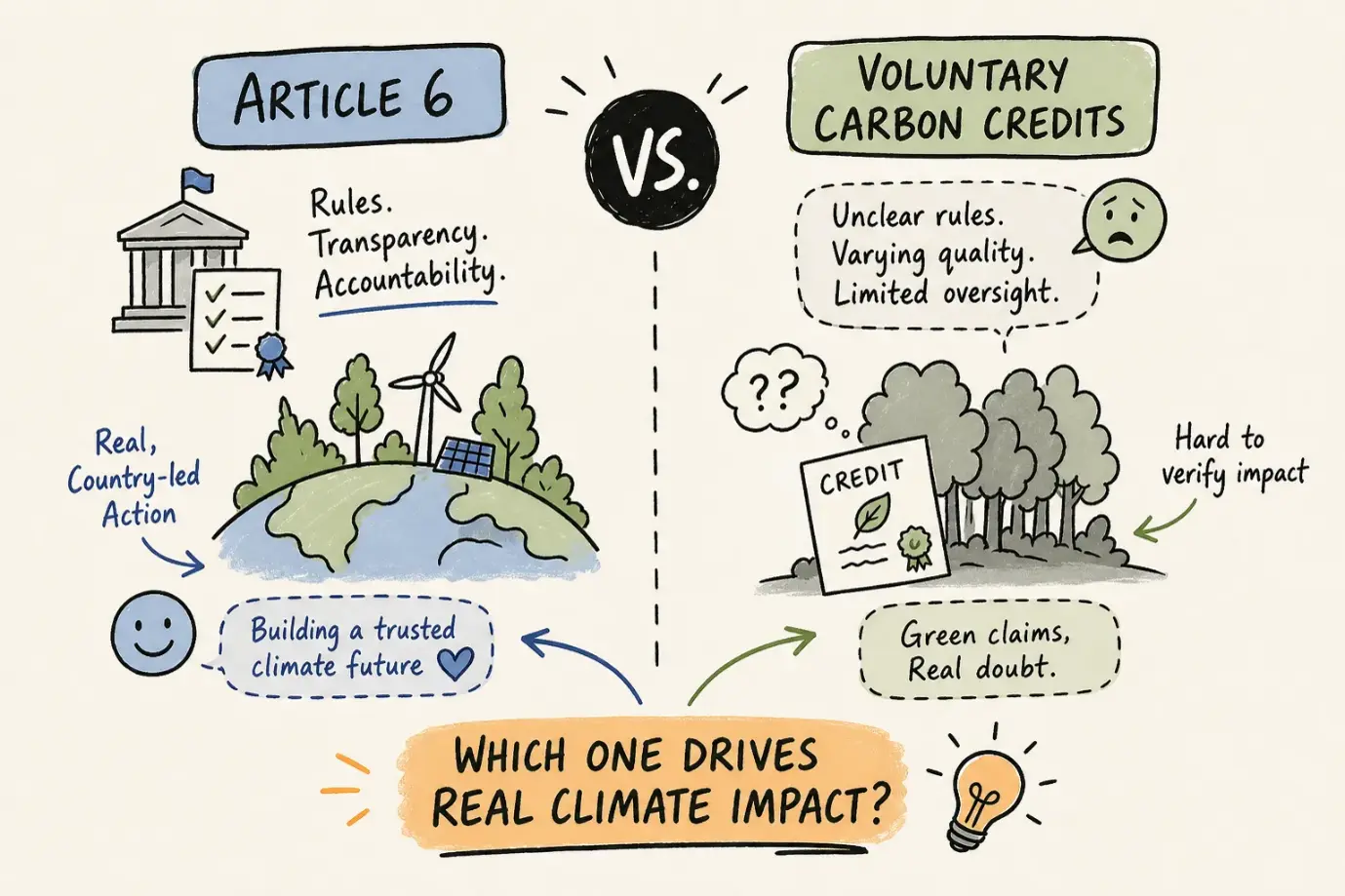
Understanding the difference between Article 6 and voluntary carbon market credits is...
Find quick answers about the Event Carbon Calculator, your emissions estimate, and what happens next.
There is no official threshold. The most cited reference is approximately 14.13 kg CO2 per attendee for venue-related emissions, with energy the dominant contributor. Note this excludes attendee travel, so a full-scope per-attendee figure will typically be higher. Treat it as a comparative benchmark for the venue category rather than a pass mark for the whole event.
Yes. SACEOS has published WA 4: Sustainable MICE — Guidelines for Carbon Emissions Management, a Singapore Standards workspace agreement covering measurement, reduction, calculation, verification and offset. Separately, the Singapore MICE Sustainability Certification (MSC) provides GSTC-Recognised organisational certification, and STB and SACEOS will develop a MICE Decarbonisation Framework by 2028.
Air-conditioning, lighting and audiovisual systems run continuously through operating hours regardless of attendee behaviour, making venue energy a structural and relatively predictable load. In Singapore’s climate, cooling demand is both unavoidable and substantial. This is why the MICE Venue Sustainability Playbook points to emissions per square foot of venue area as a comparable metric.
Yes — and then raised them. By 2025 the original roadmap targets were exceeded, with all purpose-built MICE venues and over 80% of SACEOS member companies certified. Roadmap 2.0, unveiled in July 2026, commits to a MICE Decarbonisation Framework by 2028 and net zero by 2050.
No. MSC certifies the organisation across domains including carbon, waste, energy, water, social responsibility, HR competency and procurement, valid for two years. It does not produce a per-event footprint figure or evidence that a specific event’s emissions were addressed. Those are separate exercises.
Article 6-aligned offsets are no longer just a conference talking point; they...
Article 6 carbon credits are fundamentally different from standard voluntary offsets, and...
Understanding the difference between Article 6 and voluntary carbon market credits is...
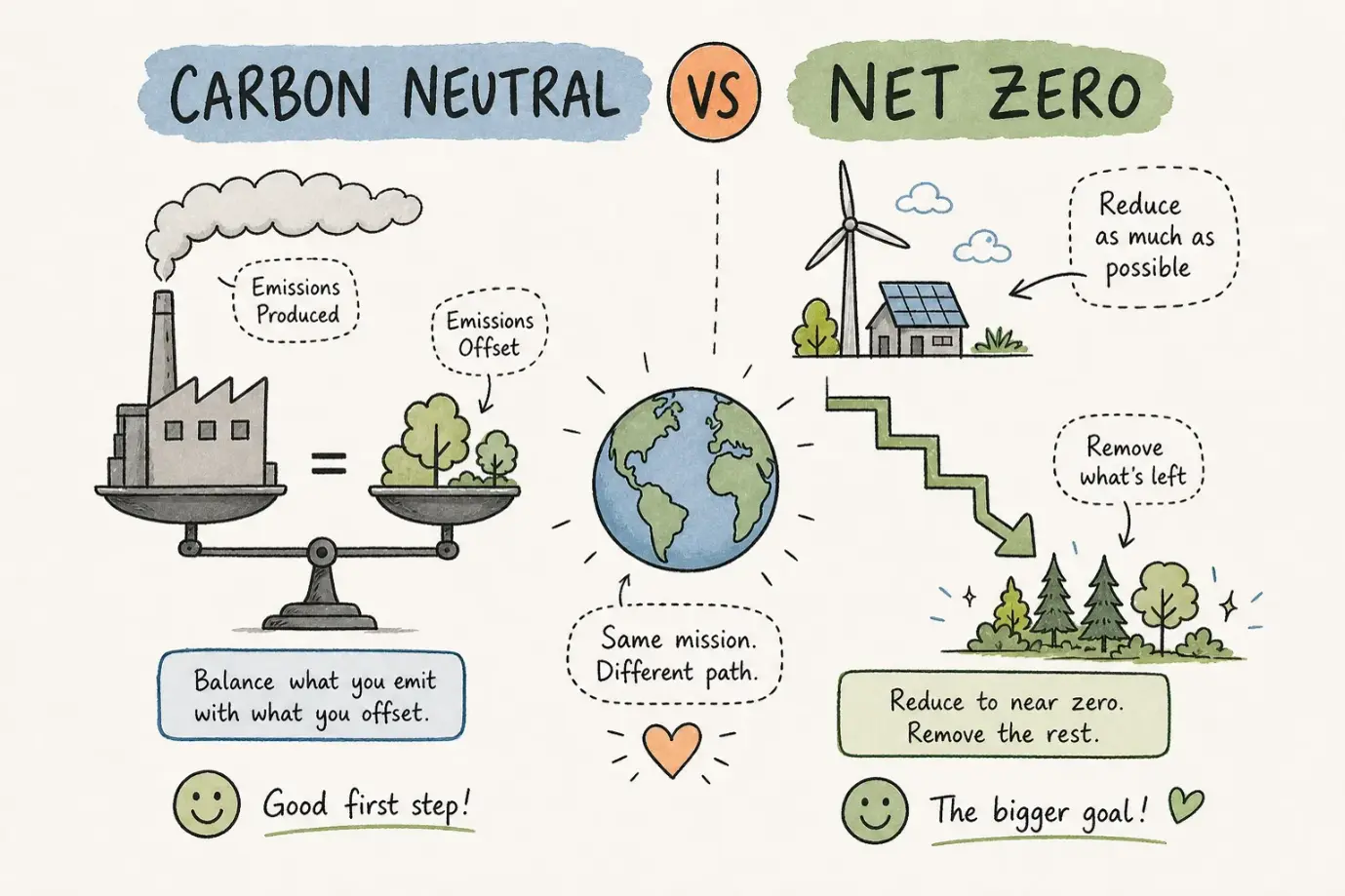
Carbon neutral vs net zero: two terms, both sound green, both are...
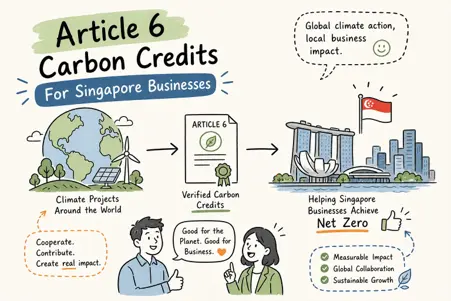
For Singapore businesses, Article 6 carbon credits explained properly can mean the...
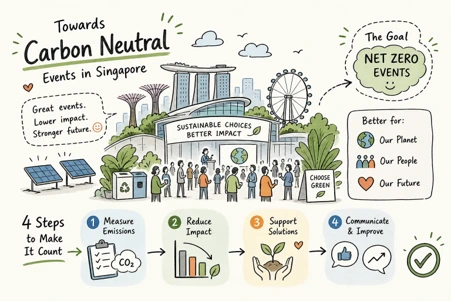
Carbon neutrality claims are increasingly visible in Singapore's events industry. Conference programmes...

Green Passport Carbon
Quick Links
More Information
 Optimized by Seraphinite Accelerator