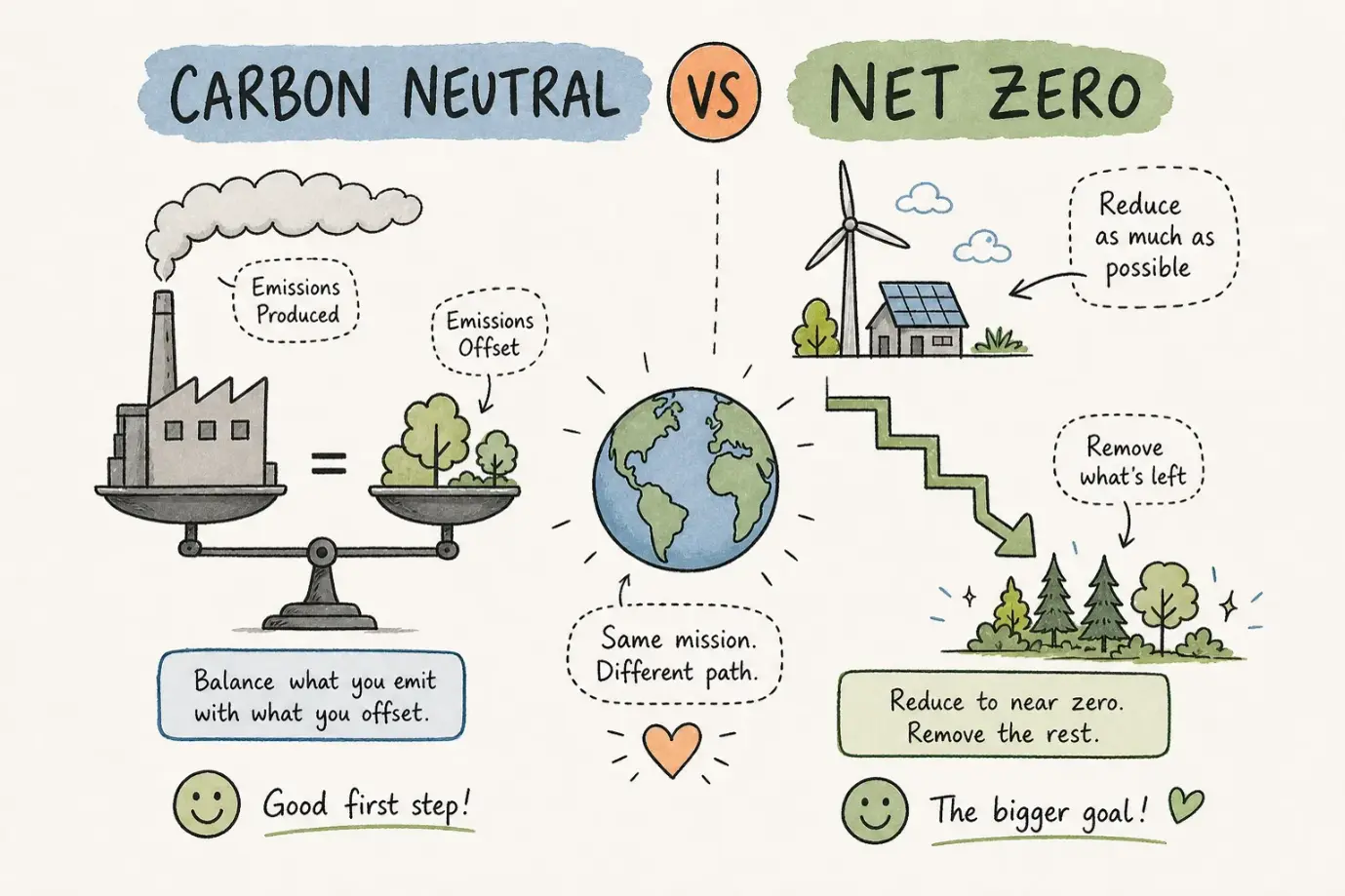
Carbon neutral vs net zero: what’s...
Carbon neutral vs net zero: two terms, both sound green, both are...

Green Passport Carbon , Singapore


Singapore’s major convention centres now offer some version of a green event package, and on the surface, this looks like progress. Reusable cups, filtered water stations, sustainably sourced menus, and multi-stream recycling bins are genuine improvements over how events were run a decade ago. The problem is that a sizeable gap exists between a venue’s operational sustainability measures and what an event organiser actually needs to report credibly on carbon in an ESG disclosure. Based on practitioner experience, most planners discover this gap after they have already signed the contract.
This article breaks down what genuinely credible green event packages for convention centres in Singapore include, what the certifications on venue brochures actually guarantee, and where the carbon measurement and certification layer fits in. It covers what you can realistically expect to pay at Singapore’s major venues and lays out a five-step process to book and deliver a convention that holds up to scrutiny. Increasingly, organisers are layering an end-to-end carbon certification model onto their venue’s sustainability offering specifically to close the gap that venue packages consistently leave open.
Marina Bay Sands has the most publicly documented green meeting programme among Singapore convention centres. Under its Sands ECO360 framework, which the venue publishes in detail, it provides a Harvest Menu for sustainable catering, reusable glassware and cups, water stations in place of bottled water, and recycled paper materials for flip charts and meeting documentation. These are well-structured inclusions, and they set a useful baseline for what a reputable convention centre should be delivering as standard rather than as a premium add-on.
Waste management goes further at leading venues. Multi-stream recycling, food-waste segregation, and composting programmes are increasingly standard. Singapore EXPO operates a food digester on-site. A concrete benchmark worth referencing: Singapore Green Building Week 2016, held at Sands Expo Convention Centre, achieved a 78% waste recycling rate driven by post-event waste segregation arranged directly by the venue. Between 2011 and 2014, the introduction of water stations at the same venue eliminated over 1.28 million plastic water bottles.
Post-event impact reporting is the other marker of a genuinely strong package. Marina Bay Sands explicitly includes an Event Impact Statement covering energy consumption, water use, waste recycling rate, and carbon footprint, as documented in its ECO360 programme materials. This kind of structured reporting gives an organiser something concrete to work with. The consistent gap, however, is this: most green event packages at Singapore convention centres do not include a structured carbon footprint calculation covering delegate travel and accommodation, documented credit retirement, or a transferable carbon neutrality certificate the organiser can actually use externally.
ISO 20121 certifies an event management system, not a carbon claim. It confirms that a venue has governance, supply chain oversight, planning processes, and continual improvement mechanisms for sustainable event management in place. It does not certify the carbon impact of a specific event, and it does not produce a carbon neutrality certificate for the client. It is a meaningful credential for operational sustainability, but it is not what you need if your ESG report requires a verified carbon claim.
BCA Green Mark rates the building’s environmental performance: energy efficiency, water management, indoor environment quality, and similar factors. It says something useful about the facility as a physical asset. It says nothing about whether the event running inside that building has been carbon-measured or delivered as carbon-neutral. Presenting a venue’s BCA Green Mark as evidence of event-level sustainability is one of the most common sources of confusion in Singapore MICE procurement.
The Singapore MICE Sustainability Certification (MSC) is the most MICE-specific credential in the market, and it is GSTC-recognised. It covers venue and event operator sustainability practices across carbon, waste, energy, water, procurement, and social responsibility. To attain certification, venues and organisers must demonstrate compliance with at least 80% of applicable clauses and pass an audit. A number of Singapore venues hold MSC certification, including Singapore EXPO at the highest Platinum tier, which sets a credible operational benchmark; check each venue’s current tier before citing it. Like ISO 20121 and BCA Green Mark, however, it does not produce a per-event carbon certificate for the organiser’s ESG report.
Venues invest heavily in building certifications and operational sustainability, and that investment is real. The reason carbon measurement and offsetting are usually absent from green event packages for convention centres in Singapore is structural: calculating a specific event’s Scope 3 emissions, covering delegate travel, accommodation, catering, and the venue energy attributable to that event, then retiring matched carbon credits with full documentation, requires a separate specialised process. Most venues do not build this capability in-house, and most green packages do not include it as standard.
Green Passport Carbon’s Calculate-Retire-Certify model is designed to close precisely this gap. The process works in three stages: the event’s carbon footprint is calculated across travel, venue energy, accommodation, and catering; eligible carbon credits are retired with documented retirement records; and a branded Green Passport Carbon certificate, with a unique ID and verification link, is issued to the organiser. The certificate documents the carbon action taken; it is not an ISO certification or an independent third-party verification. Convention centres can integrate this as a named add-on to their existing green package without building internal capability or sourcing a separate consultant and credit registry independently. The process sits cleanly alongside the venue’s own sustainability inclusions. The calculator itself is free and gives a Free Event Carbon Estimate; the Full Event Carbon Assessment, carbon-credit retirement and the Green Passport Carbon Event Certificate are provided as part of Green Passport Carbon’s quote-based service.
The output is not a marketing badge. A well-documented, standards-aligned carbon claim can support Scope 3 reporting and be communicated credibly to stakeholders across the event ecosystem, including sponsors and regulators. For Singapore-based organisations navigating SGX and ACRA climate reporting requirements and Singapore Green Plan 2030 expectations, the distinction between operational sustainability and documented carbon neutrality is increasingly relevant.
The clearest published pricing data comes from a handful of venues; the rates below were published at the time of writing and should be checked with each venue. Marina Bay Sands publishes a green meeting package from SGD 119++ per person, with an all-inclusive package from SGD 308++ per person in its detailed brochure materials. Sofitel Singapore Sentosa publishes SGD 125 per person for a half-day green meeting and SGD 150 per person for a full day, both before the 10% service charge and prevailing GST. Suntec Singapore publishes all-inclusive meeting packages from SGD 78.88++ per guest for an introductory full-day rate and SGD 128.88++ per guest at the standard rate.
Singapore EXPO and several other major venues do not publish sustainability-specific package pricing publicly. Quotes are available on request, and given the scale of these facilities, rates are typically negotiated based on event size, duration, and required inclusions. Where pricing is publicly available, per-delegate rates for green event packages at Singapore convention centres currently sit in the SGD 78 to SGD 150 range for day-meeting formats, depending on the venue and inclusions selected.
Carbon certification sits on top of the venue package as a separate line item. The cost depends on event size, emissions profile, and the credit type used. For smaller and mid-sized events, this component is often modest relative to the total venue package cost, though organisers should request indicative figures early. Presenting it as a named component in the event budget, rather than absorbing it into a contingency line, makes it easier to justify to internal stakeholders and easier to communicate to sponsors and attendees.
Five questions separate genuinely credible packages from surface-level claims. Does the venue issue a post-event impact report with actual energy, water, and waste figures? Which specific certifications apply to the event itself, not just the building? Does the package include carbon measurement and credit retirement, or only operational sustainability measures? Can the venue provide a transferable carbon neutrality certificate for the organiser’s ESG report? What local sustainable suppliers are specified for catering and materials?
Several red flags are worth noting before you sign. Vague language such as “eco-friendly” with no certification reference is the most common signal that a package is more marketing than substance. An absence of post-event reporting is another indicator. Carbon offset claims without documented credit retirement carry greenwashing risk, a concern reflected in growing guidance from sustainability bodies and ESG auditors as scrutiny in Singapore intensifies. The most persistent pattern is certifications that apply to the building being presented as event-level sustainability guarantees. The five questions above are the fastest way to test whether a venue’s green credentials are genuinely event-applicable.
Step 1: Shortlist venues using the five questions as your primary filter, not certification logos. A venue with three logos on its brochure and no post-event reporting mechanism is a weaker choice than a venue with fewer credentials and a documented impact statement process.
Step 2: Request a written sustainability brief from the venue. This should detail every green inclusion, specify which certifications apply to events rather than just the building, and confirm the exact format of the post-event impact report. Get this in writing before you commit to a contract.
Step 3: Confirm carbon measurement and certification as a named component of the event scope. If the venue does not offer this within its package, engage a specialist carbon certification provider to calculate, retire, and certify the event’s footprint alongside the venue’s own sustainability inclusions. This step is what turns an operationally sustainable convention into one with a documented carbon-neutrality claim; add independent verification if the claim needs third-party assurance.
Step 4: Confirm sustainable local suppliers for catering, materials, and waste management early in the planning cycle. In our experience coordinating Singapore events, eco-catering suppliers typically require earlier engagement than standard providers, and lead times for large-scale events can catch planners off guard.
Step 5: Use the post-event impact report and carbon neutrality certificate as structured content for sponsor communications, attendee reporting, and the company’s annual ESG disclosure. Treat the certificate as a deliverable with the same weight as the event programme or post-event survey. This is the step most organisers skip, and it is the one that makes the sustainability investment legible to the people who approved it.
A green event package at a Singapore convention centre is a genuinely strong foundation. The best venues have invested in operational sustainability, third-party certifications, and post-event reporting that covers waste, energy, and water. That investment is substantial. The gap between operational sustainability and a documented carbon neutrality claim, however, is where most green event packages for convention centres in Singapore stop, and where the accountability layer that ESG reviewers actually scrutinise begins.
Convention centres can close this gap without building internal capability by integrating an end-to-end carbon certification solution alongside their existing package. For event planners, the practical move is to ask the five questions before signing, confirm the carbon component in writing, and treat the post-event certificate as part of the event deliverable from day one rather than an afterthought at wrap-up.
If you are planning a convention in Singapore and want to understand what carbon certification would add to your existing green event package, the Green Passport Carbon team can walk you through the Calculate-Retire-Certify process and provide a clear picture of what it costs and what it delivers for your ESG report.
Carbon neutral vs net zero: two terms, both sound green, both are...
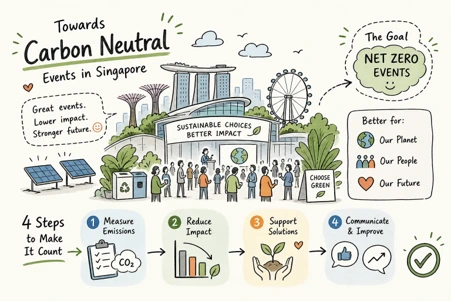
Carbon neutrality claims are increasingly visible in Singapore's events industry. Conference programmes...

Carbon offset solutions for hotel ballrooms and event spaces in Singapore are...
Find quick answers about the Event Carbon Calculator, your emissions estimate, and what happens next.
There is no official threshold. The most cited reference is approximately 14.13 kg CO2 per attendee for venue-related emissions, with energy the dominant contributor. Note this excludes attendee travel, so a full-scope per-attendee figure will typically be higher. Treat it as a comparative benchmark for the venue category rather than a pass mark for the whole event.
Yes. SACEOS has published WA 4: Sustainable MICE — Guidelines for Carbon Emissions Management, a Singapore Standards workspace agreement covering measurement, reduction, calculation, verification and offset. Separately, the Singapore MICE Sustainability Certification (MSC) provides GSTC-Recognised organisational certification, and STB and SACEOS will develop a MICE Decarbonisation Framework by 2028.
Air-conditioning, lighting and audiovisual systems run continuously through operating hours regardless of attendee behaviour, making venue energy a structural and relatively predictable load. In Singapore’s climate, cooling demand is both unavoidable and substantial. This is why the MICE Venue Sustainability Playbook points to emissions per square foot of venue area as a comparable metric.
Yes — and then raised them. By 2025 the original roadmap targets were exceeded, with all purpose-built MICE venues and over 80% of SACEOS member companies certified. Roadmap 2.0, unveiled in July 2026, commits to a MICE Decarbonisation Framework by 2028 and net zero by 2050.
No. MSC certifies the organisation across domains including carbon, waste, energy, water, social responsibility, HR competency and procurement, valid for two years. It does not produce a per-event footprint figure or evidence that a specific event’s emissions were addressed. Those are separate exercises.
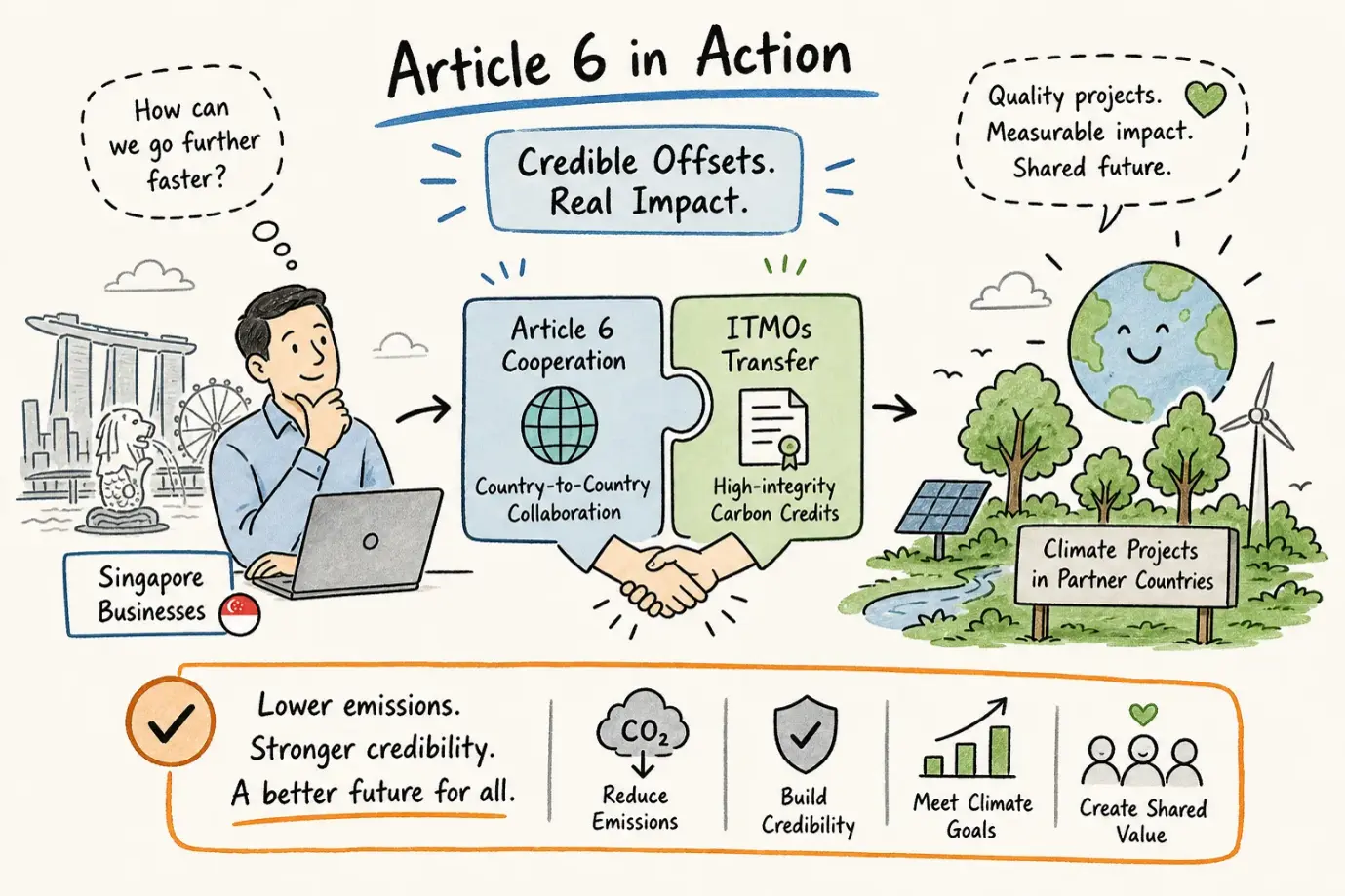
Article 6-aligned offsets are no longer just a conference talking point; they...
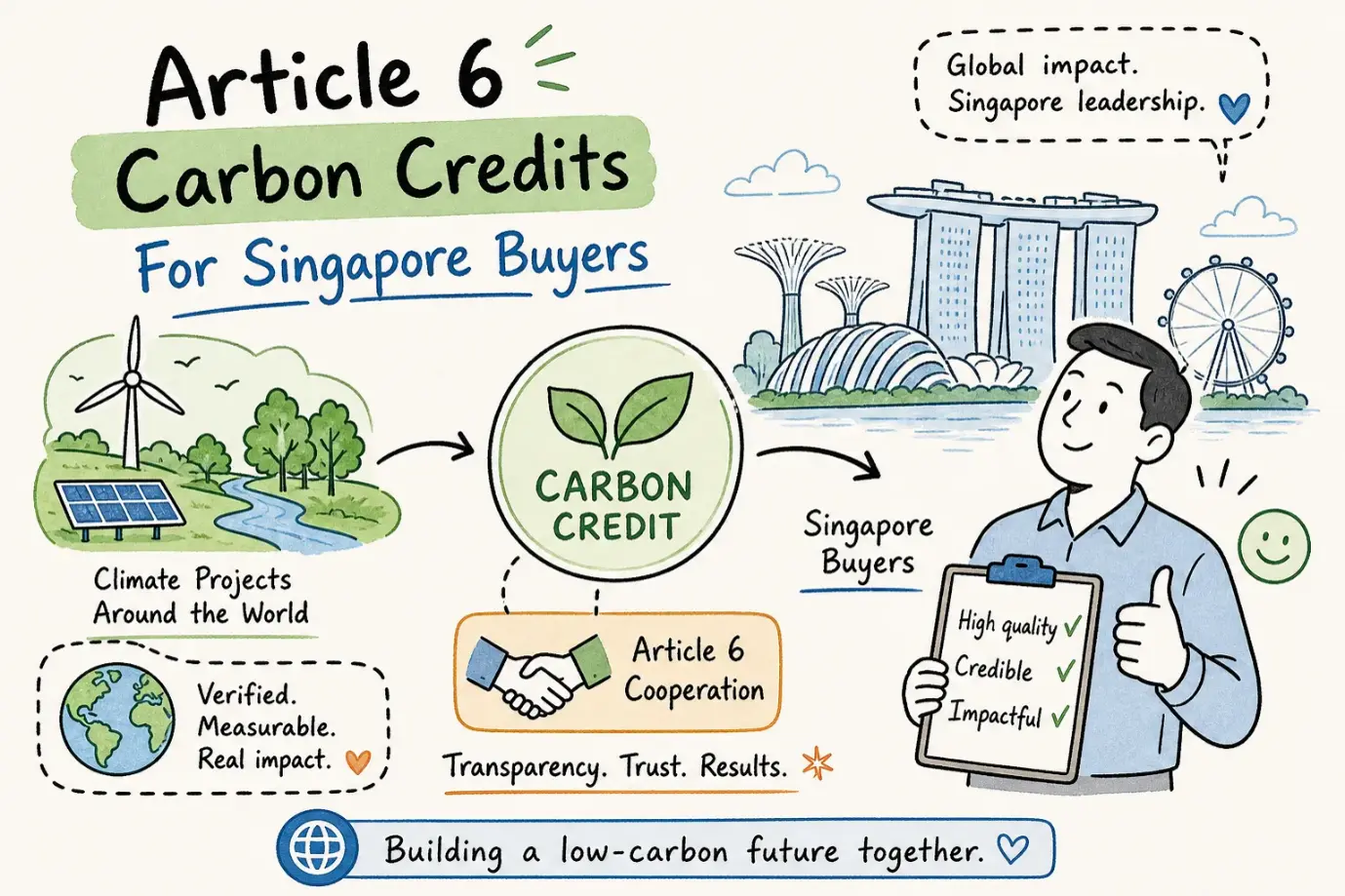
Article 6 carbon credits are fundamentally different from standard voluntary offsets, and...
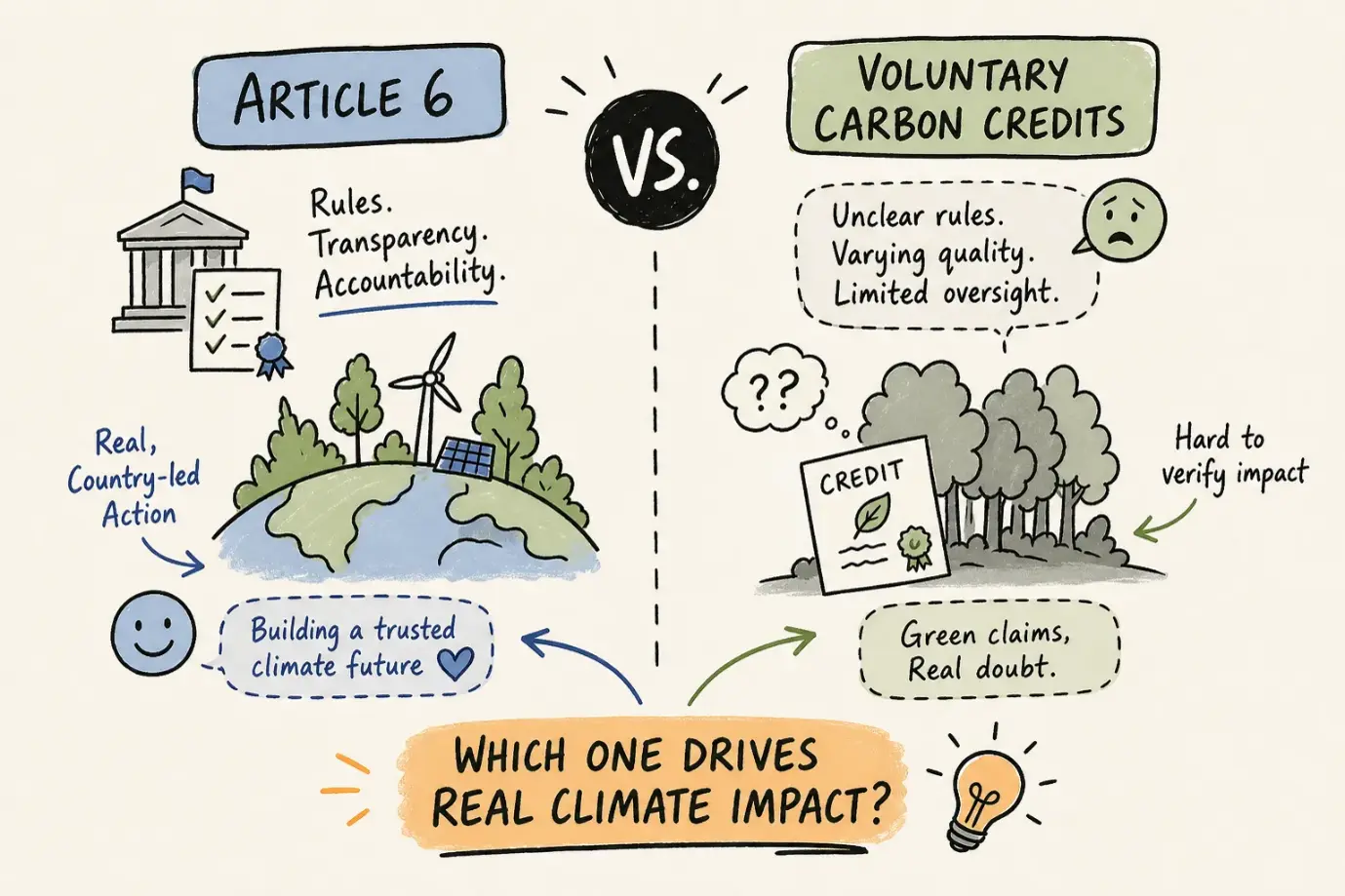
Understanding the difference between Article 6 and voluntary carbon market credits is...
Carbon neutral vs net zero: two terms, both sound green, both are...
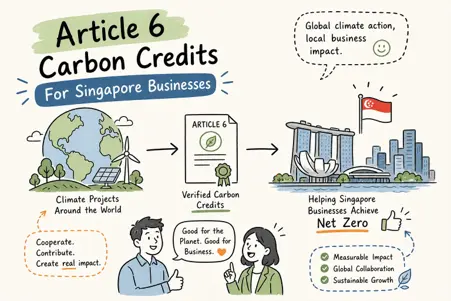
For Singapore businesses, Article 6 carbon credits explained properly can mean the...
Carbon neutrality claims are increasingly visible in Singapore's events industry. Conference programmes...

Green Passport Carbon
Quick Links
More Information
 Optimized by Seraphinite Accelerator