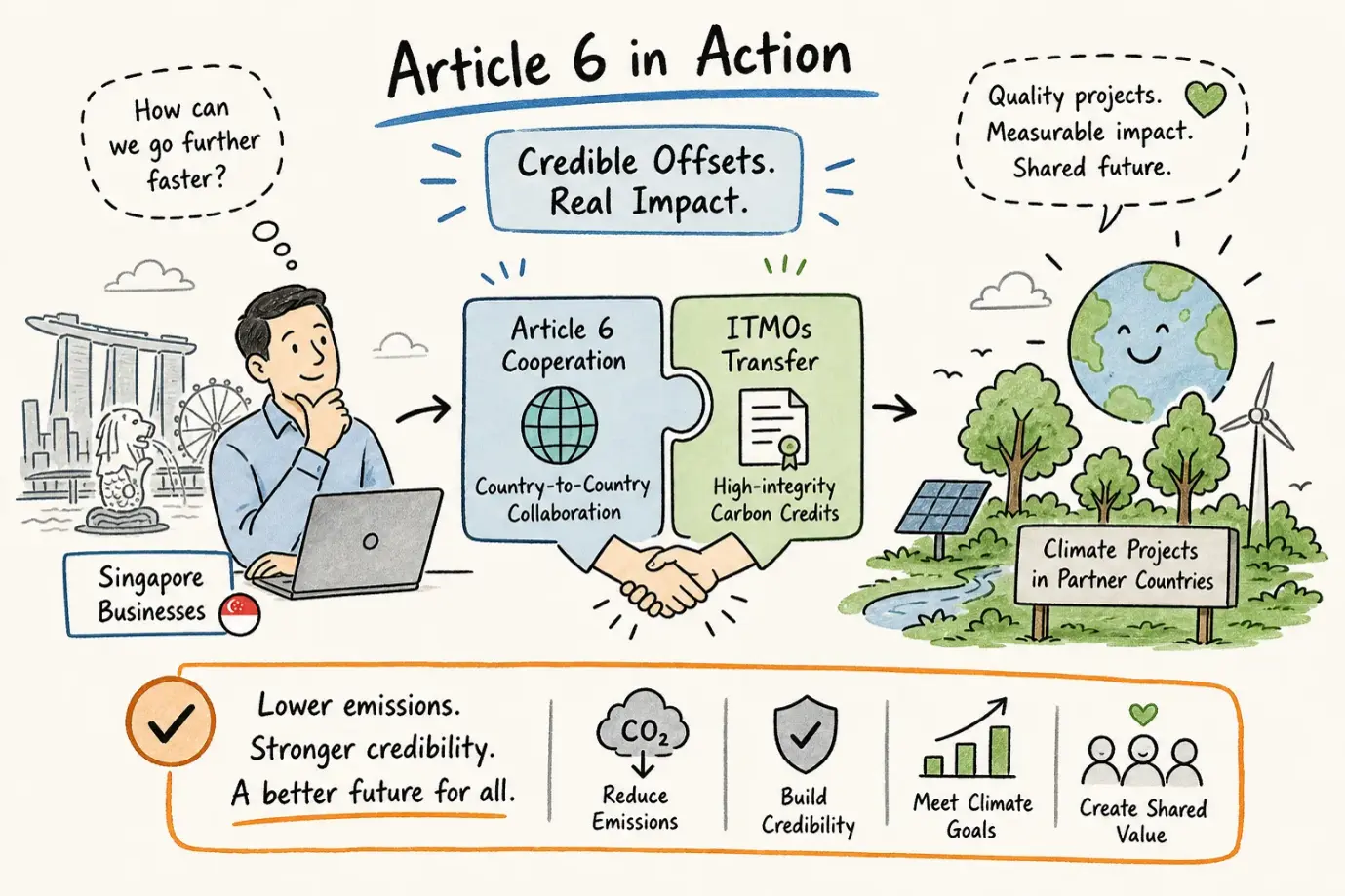
Article 6-aligned offsets explained for Singapore...
Article 6-aligned offsets are no longer just a conference talking point; they...

Green Passport Carbon , Singapore

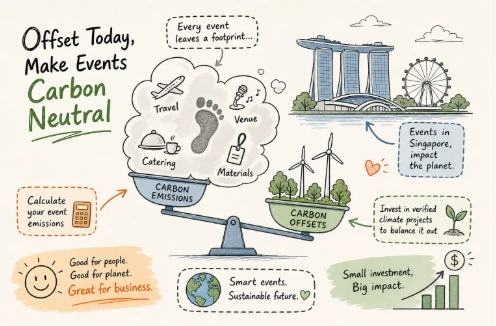
Every event planner who has looked into sustainability action eventually lands on the same question: how much does it cost to carbon offset a corporate event in Singapore, and what is that number actually based on? The honest answer is that it depends on three things: how many tonnes of CO2e your event produces, what you pay per tonne for credible offsets, and what additional fees stack on top of the credit price itself. Get those three numbers right and you have a working budget. Get them wrong and you either overspend on credits you did not need or, worse, sign off on cheap offsets that create a greenwashing liability instead of a credible sustainability claim.
This article gives you indicative SGD planning figures, not vague ranges with a disclaimer buried at the bottom. By the time you reach the conclusion, you will know roughly what a Singapore corporate event of your size should cost to offset, which credit quality standard to apply, and why some providers bundle the entire process into one fee that is often simpler and cheaper than coordinating it yourself.
The total offset bill is simply tonnes multiplied by price per tonne. Both variables move depending on choices the organiser has already made or is yet to make. Understanding what drives each one is the starting point for any realistic budget.
Headcount is the most reliable early proxy for emission volume because it scales travel, catering, and energy use together. A 30-person internal workshop and a 300-person industry conference are not in the same conversation on cost. Before you can price an offset, you need to know roughly how many people are attending and where they are coming from.
Travel is the single largest emission source for most corporate events, often accounting for 60 to 80% of the total footprint, and in the illustrative example used in this article, travel contributes 10 to 15 tCO2e of an approximately 18 tCO2e total for a 100-delegate conference. International delegates flying long-haul from Europe or North America produce dramatically more emissions per person than regional attendees from Southeast Asia, and far more than locals commuting within Singapore. A conference with 30% international attendance can produce double the emissions of an otherwise identical event with a fully local guest list; with a heavily international mix, the footprint can approach triple that of the same locally attended event. This one variable can reshape your entire budget.
Energy-intensive venues and meat-heavy catering menus add measurable tonnes, even if they are smaller contributors than travel. A large ballroom in a non-green-certified hotel draws more power per hour than a purpose-built convention space with energy management systems. Catering typically adds 1 to 3 tCO2e for a standard 100-delegate event, which translates to a modest but real line item in your offset budget. Hybrid or virtual-first formats reduce the travel component sharply and can halve the overall footprint.
This is the number you multiply by the credit price. Rather than leave you with vague estimates, here is a practical reference point based on Singapore event benchmarks.
An illustrative central estimate for a one-day corporate conference in Singapore with 100 delegates is approximately 18 tCO2e, consistent with a 15 to 25 tCO2e planning range. Venue energy and on-site operations contribute about 1.4 tCO2e, based on Singapore’s STB MICE venue benchmark of 14.13 kgCO2 per attendee, which covers venue-related emissions across six purpose-built venues. Travel from a mixed local and regional delegate group typically accounts for 10 to 15 tCO2e, making it the dominant category by a wide margin.
Catering adds another 1 to 3 tCO2e depending on menu composition, and printed materials and collateral usually fall below 1 tCO2e unless you are shipping heavy freight or producing large volumes of branded giveaways. A predominantly local attendee list pushes the total toward the lower end, around 10 to 15 tCO2e. Flip that to a heavily international mix and you can push past 25 tCO2e for the same event format. Travel origin is the single most important assumption you make when estimating your footprint.
For practical planning, think in three brackets. A small 30-person internal workshop with mostly local attendees typically produces 3 to 6 tCO2e. A standard 100-delegate corporate conference with a regional attendance mix sits in the 15 to 25 tCO2e range. A large 500-delegate MICE event with significant international attendance can exceed 100 tCO2e, depending heavily on the ratio of long-haul travellers. Identify which bracket you are in before you look at credit prices; the cost difference between the smallest and largest bracket is substantial.
Here are the numbers directly.
There is no single published market price for Singapore-eligible international carbon credits, and the Government reported in November 2025 that no credits had yet been purchased under the International Carbon Credit framework. For planning, this article uses an indicative range of roughly S$25 to S$55 per tCO2e. Singapore’s own procurement of high-quality nature-based credits for 2026 to 2030 was valued at about S$76 million for 2.175 million tonnes, or approximately S$35 per credit, which provides a useful real-world benchmark. Price varies by project type, registry, and whether credits are Article 6-aligned with corresponding adjustments or are standard voluntary carbon market (VCM) offsets. Article 6-aligned credits, which Singapore actively promotes through its international cooperation agreements, may sit toward the higher end of that range.
Not all carbon credits are priced equally, and the price difference reflects a genuine quality difference. Crediting programmes such as Verra, Gold Standard, ACR, ART and the Global Carbon Council appear on Singapore’s host-country Eligibility Lists for specific methodologies, and several have been approved by the ICVCM at programme level. That does not mean every credit they issue is eligible in Singapore or carries the ICVCM’s Core Carbon Principles label, so check each credit individually. Credits from less transparent sources may carry a lower price per tCO2e, but they also carry greenwashing risk that Singapore NEA and international ESG frameworks specifically caution against. For any claim made with reference to ISO 14068-1, credit quality is non-negotiable. A cheaper credit that cannot be independently verified to internationally recognised integrity standards is not a saving; it is a liability that can surface in an ESG audit or sustainability disclosure review.
The credit price is only part of the bill. Most offset guides stop at the per-tonne figure. Here is what they leave out.
When buying offsets through a broker, marketplace, or third-party platform, expect additional fees on top of the per-tonne price. These commonly include broker commissions, retirement fees charged when credits are formally cancelled on the ledger, and platform administration charges for processing and documentation. Retirement fees themselves are modest, registry charges per credit are typically small, though exact rates should be confirmed against each registry’s current fee schedule. The bigger variable is the broker or platform margin, which is often not disclosed upfront in a quoted credit price. Always ask whether a quote is all-in or itemised before you commit.
If you are pursuing a carbon neutrality certificate, verification and documentation add another cost layer. In some cases, these costs are bundled into a service provider’s fee; in others, they are billed separately. On GST, the position in Singapore since 23 November 2022 is that the issuance, transfer or sale of carbon credits is not treated as a supply for GST purposes. However, related service fees, including brokerage charges and platform fees from a GST-registered local provider, may carry GST at the standard rate. Confirm whether any quoted price includes or excludes GST before signing off; the difference on a S$1,000 invoice is S$90.
The DIY route involves sourcing credits from a registry, engaging a separate consultant to calculate emissions, finding a verifier for documentation, and managing retirement records independently. Each step seems manageable in isolation. Together, they produce multiple vendors, different invoices, and no single point of accountability for the methodology. By the time a certificate is issued, the coordination overhead often makes the total spend comparable to, or higher than, a structured all-in service.
Here is the calculation method, with a worked example you can apply to your own event before making a single phone call.
Estimate your total tCO2e using the reference figures above, then multiply by a realistic credit price. For a 100-delegate, one-day conference at roughly 18 tCO2e and S$35 per tCO2e, the credit cost alone is approximately S$630. Brokerage and administration fees, which, as an illustrative assumption, commonly run 10 to 20% of the credit cost in a DIY procurement, would add roughly S$63 to S$126, putting the all-in spend on credits and fees in the range of S$693 to S$756 before any certification documentation costs. That is a planning number, not a quote, but it gives you a defensible starting point for a budget conversation.
A small 30-person workshop with mostly local attendees is looking at roughly S$150 to S$250 all-in for a credible offset. A standard 100-delegate corporate conference falls in the S$600 to S$1,000 range. A 300-delegate event with a mixed domestic and international attendance profile typically falls between S$2,000 and S$4,500, with heavily international events exceeding that. These are planning anchors derived from the per-attendee footprint assumptions and credit price range discussed above, not guarantees. The single variable that moves the number most is the proportion of long-haul international delegates, so nail that assumption before you set a budget line.
The DIY approach and a structured end-to-end service are not equivalent options. They differ in cost predictability, compliance risk, and time investment.
Some Singapore providers structure their service as a single quoted fee covering emission calculation, the retirement of eligible carbon credits, documentation prepared with reference to ISO 14068-1, and a branded certificate. Singapore-based Green Passport Carbon follows a similar Calculate, Retire, Certify model, quoted per event, which means an event organiser deals with one process and one certificate instead of several separate invoices and the coordination burden that comes with them. For most event teams who are not full-time sustainability professionals, this can be lower-risk, provided the provider is transparent about its methodology, the credits retired and what its certificate covers. The Green Passport Carbon certificate documents the carbon action taken; it is not an ISO certification or an independent third-party verification. The calculator itself is free and gives a Free Event Carbon Estimate; the Full Event Carbon Assessment, carbon-credit retirement and the Green Passport Carbon Event Certificate are provided as part of Green Passport Carbon’s quote-based service.
The DIY approach offers maximum flexibility and potentially lower raw credit costs if you have the time and expertise to source high-quality, registry-verified, Article 6-aligned credits independently. Most event teams do not. A bundled approach from a provider such as Green Passport Carbon delivers a predictable cost, a documented certificate that supports ESG reporting, and removes the coordination overhead entirely. For organisations that need to include event emissions in annual sustainability disclosures, clear documentation from a single accountable provider often justifies any difference in price.
The numbers are clear enough to act on. This article uses an indicative planning range of S$25 to S$55 per tCO2e for high-quality credits, with Singapore’s own 2025 procurement implying roughly S$35 per tonne. A typical 100-delegate Singapore conference produces 15 to 25 tCO2e, meaning the credit cost alone sits in the S$375 to S$1,375 band before fees. Budget an additional 10 to 20% for brokerage and applicable GST if sourcing through a broker or platform. Viewed against a typical event’s catering spend, the offset cost is often a single line item rather than a significant budget pressure.
The decision is not whether to offset. The decision is whether to build the process yourself or use a provider that brings calculation, credit retirement and documentation together in one package. Either way, the first step is knowing your footprint. Once you have that number, the rest of the budget becomes predictable, and you have a credible answer ready for clients, sponsors, or ESG auditors who want to know what your event’s carbon action actually means. If you want to understand how much it would cost to carbon offset your specific corporate event in Singapore, that calculation starts with a straightforward emissions estimat
Article 6-aligned offsets are no longer just a conference talking point; they...
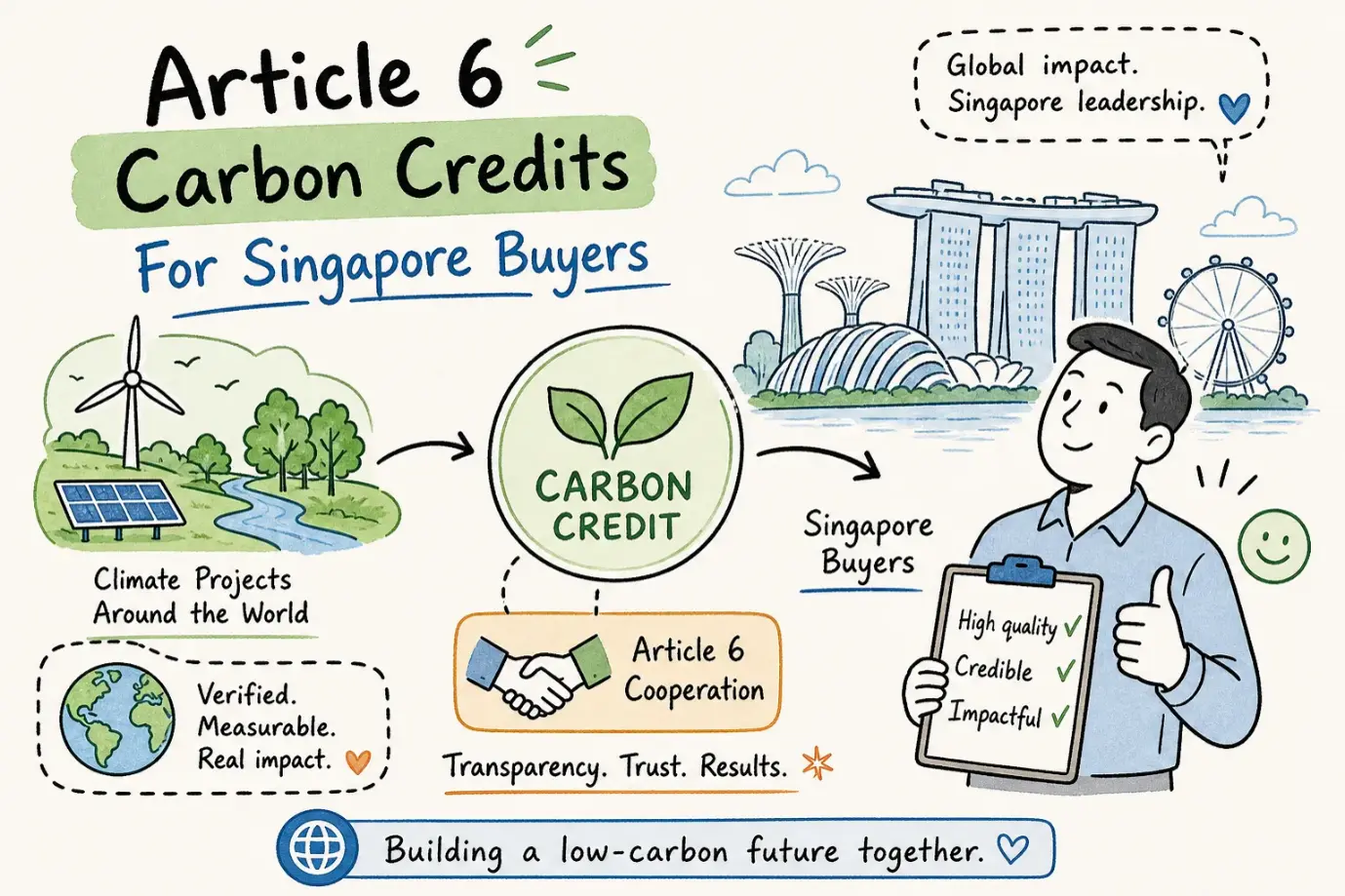
Article 6 carbon credits are fundamentally different from standard voluntary offsets, and...
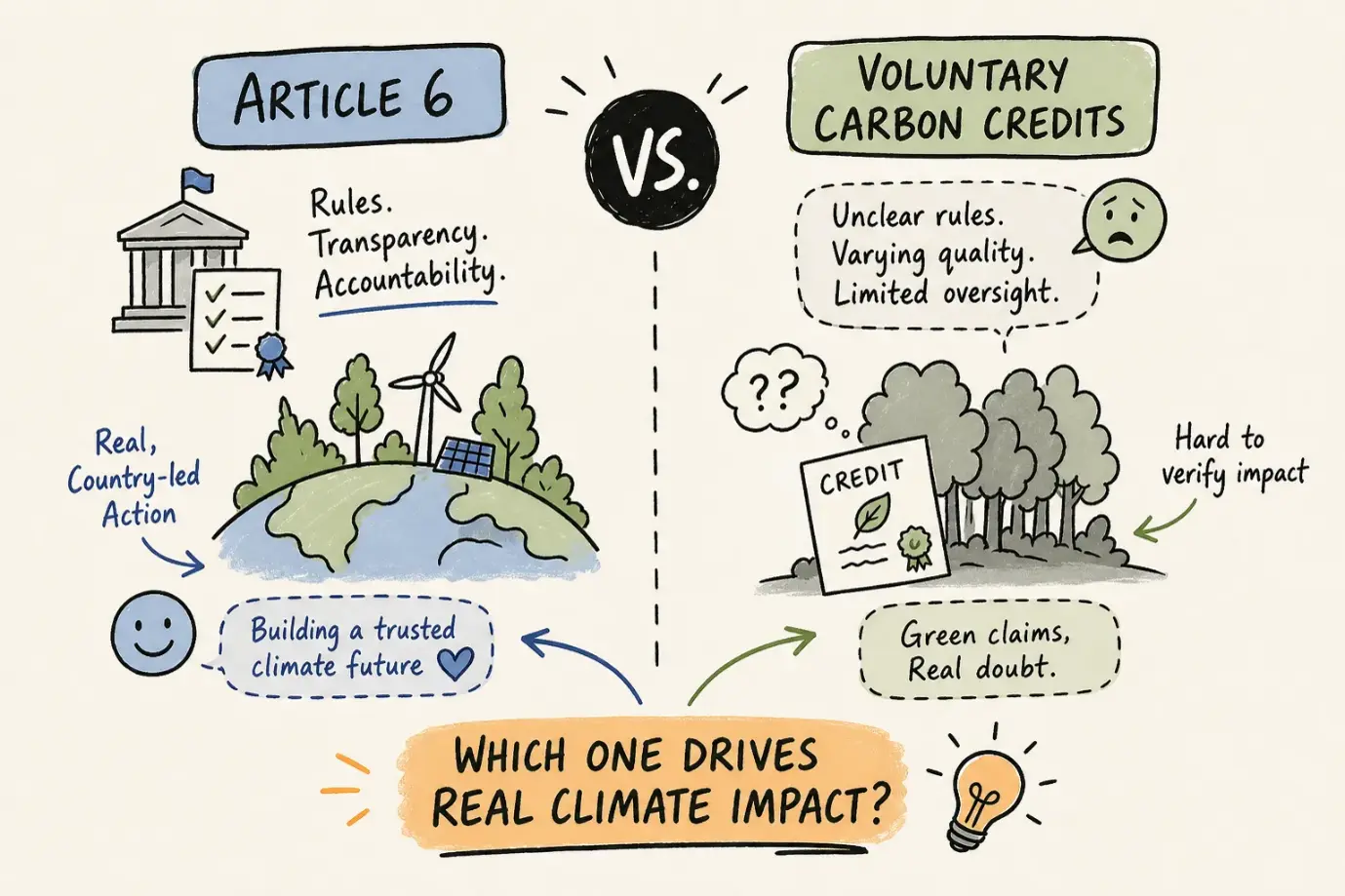
Understanding the difference between Article 6 and voluntary carbon market credits is...
Article 6-aligned offsets are no longer just a conference talking point; they...
Article 6 carbon credits are fundamentally different from standard voluntary offsets, and...
Understanding the difference between Article 6 and voluntary carbon market credits is...
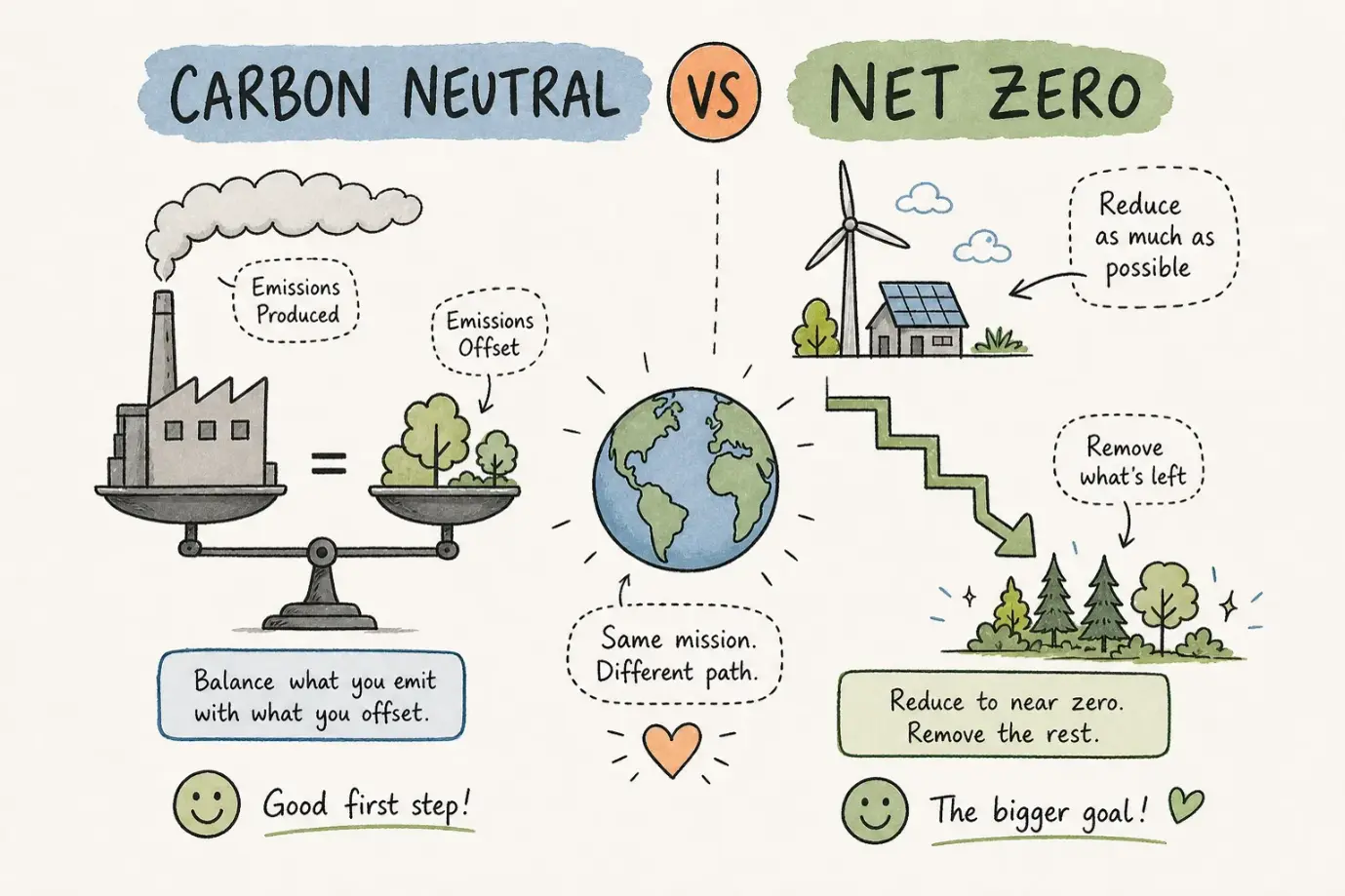
Carbon neutral vs net zero: two terms, both sound green, both are...
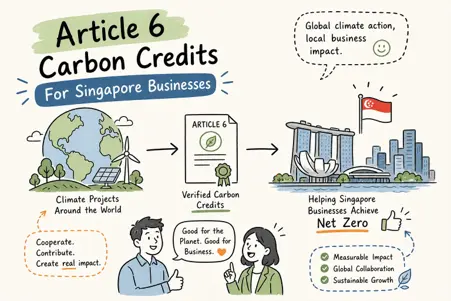
For Singapore businesses, Article 6 carbon credits explained properly can mean the...
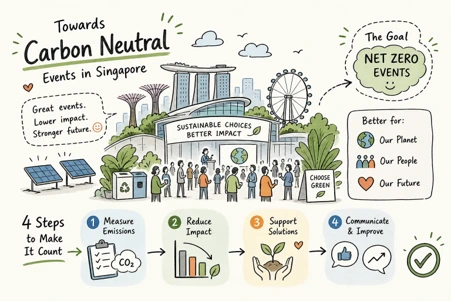
Carbon neutrality claims are increasingly visible in Singapore's events industry. Conference programmes...

Green Passport Carbon
Quick Links
More Information
 Optimized by Seraphinite Accelerator