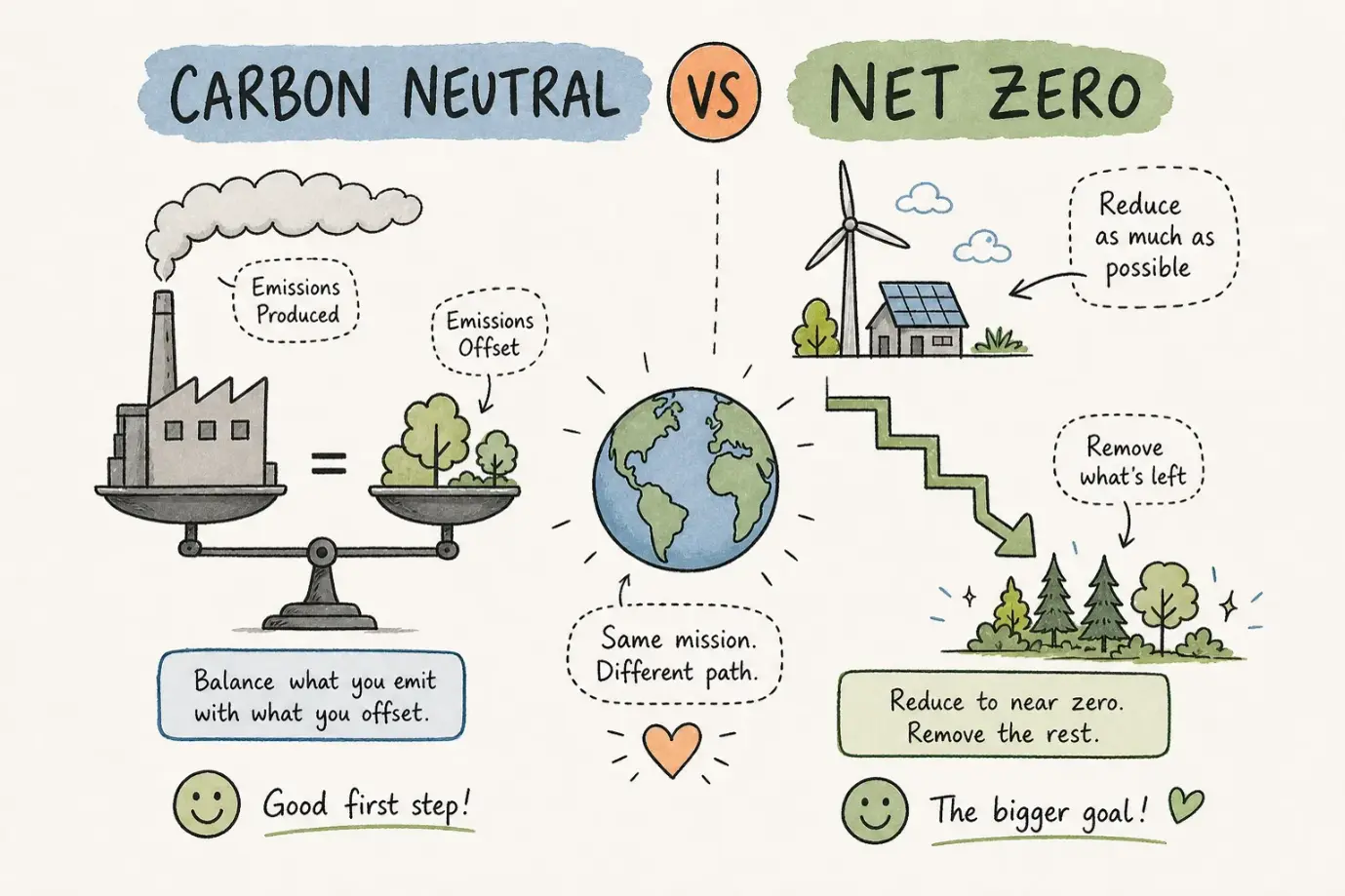
Carbon neutral vs net zero: what’s...
Carbon neutral vs net zero: two terms, both sound green, both are...

Green Passport Carbon , Singapore


Many venues now advertise a green event package Singapore corporate clients can reference in their RFPs, but what is actually inside those packages varies enormously. Singapore’s hotel ballrooms and convention centres have been adding “green” labels to their meeting packages for years. One venue calls its offering green because it switched to glass water bottles. Another holds ISO 20121 certification, operates under a SACEOS MICE Sustainability Certification, and works with specialist carbon providers to issue a documented carbon neutrality certificate after the event closes. For a corporate event manager ticking boxes on a standard checklist, the difference might not be immediately obvious. For an ESG reporting team trying to document Scope 3 emissions for an annual sustainability report, it is the difference between a package they can actually use and one they cannot.
As providers like Green Passport Carbon have formalised event carbon measurement, credit retirement and certificates for Singapore events, the bar for what counts as a credible green package has shifted. Procurement teams are increasingly pushing past aspirational language to ask for documentable action, a trend visible in the specific sustainability evidence now requested at RFP stage and in the public sector’s green procurement push under GreenGov.SG. This article breaks down what genuine green event packages in Singapore include right now, how the market is priced, and what questions you should be asking before you book or build one.
Clients in Singapore’s MICE market have become familiar with a core set of sustainability credentials, and they are increasingly using these to filter venues at the RFP stage. BCA Green Mark certification is a building-level baseline; it tells you the physical structure was designed sustainably, but it says nothing about how the events inside it are run. ISO 20121 is the standard that actually covers event sustainability management systems, addressing the full event lifecycle including waste, energy, water, procurement, and supply-chain impacts. SACEOS MICE Sustainability Certification is the locally administered standard, and it carries particular weight with government-linked corporations and trade associations that face regulatory pressure under Singapore’s Green Plan 2030. GSTC certification and EarthCheck status signal that a venue’s claims have been independently benchmarked against international tourism and hospitality sustainability norms.
Understanding which certification covers what is important, because the credentials are not interchangeable. A venue can hold BCA Green Mark Platinum without any meaningful event-level sustainability programme. When evaluating an eco-friendly event package in Singapore, the credentials that matter most are the ones tied to event operations, not just the building envelope.
Corporate clients with ESG reporting obligations have a more specific requirement than clients who simply want reusable cups and plant-based menus. They need a number: a carbon footprint figure for the event, a clear and transparent methodology behind that figure, and ideally a certificate they can attach to their sustainability report. Most standard green packages in Singapore do not deliver this. They offer good operational practices, and some deliver genuine impact, but they stop short of producing the documentation that an ESG-reporting team can actually file.
The most clearly priced green meeting packages in Singapore cluster between S$119++ and S$150++ per person. Sofitel Singapore Sentosa’s Green Meeting Package sits at S$125++ per person for a half-day and S$150++ per person for a full day, covering standard AV, sustainable catering, complimentary Wi-Fi, and island admission for delegates. Marina Bay Sands’ Easy Meeting Green starts from S$119++ per person under its Sands ECO360 programme, backed by some of the most credible venue-level certifications in the market: BCA Green Mark Platinum, LEED Platinum, ISO 20121, EIC Sustainable Event Standards Platinum, and EarthCheck benchmarking.
Other properties take different approaches. PARKROYAL COLLECTION Pickering offers a farm-to-table working lunch and eco-friendly refreshments as part of its green package positioning. Shangri-La Rasa Sentosa leans into daylight rooms to reduce energy consumption and replaces flipcharts with whiteboards to cut paper waste. Sheraton Towers uses glass water containers, recycled paper, and locally sourced menus as the foundations of its sustainable meetings offer.
The sustainability actions that have the most measurable impact tend to be the ones venues can put a number against. Pan Pacific Singapore’s switch to biodegradable drinking cartons eliminates over 1,600 plastic bottles daily in its event spaces. Marina Bay Sands donates unserved food to Food Bank and processes food waste through a biodigester. Sands Expo’s on-site hydroponics system produces around 2 kg of leafy greens monthly as part of a 10 kg per month growing programme. These are specific, auditable commitments. Contrast them with “recycled paper notepads” or “eco-friendly refreshments”, which appear in many packages but cannot be measured or reported.
If the venue can give you a number, it is a real commitment. If they can only give you a label, push harder for specifics, because a label alone will not survive ESG procurement scrutiny.
Carbon offsetting with verified, internationally aligned credits is still the inclusion that most buyers assume is present but is rarely included in practice. Marina Bay Sands includes renewable energy certificates covering meeting-venue gas and electricity emissions, and a small number of hotels offer verified credits as an add-on. But the majority of green packages in Singapore either skip carbon offsetting entirely or reference it without a credible methodology behind it. This is the gap that matters most to clients with formal carbon reporting requirements.
Renewable energy certificates and carbon offsets are often conflated in marketing materials, but they are not the same thing, and the distinction matters when a client needs to file documentation. A green package that includes a documented carbon footprint calculation and the retirement of high-quality carbon credits delivers something that none of the operational sustainability actions alone can: a figure a client can report. Standard voluntary carbon credits vary significantly in quality and credibility. Article 6-aligned credits are issued under the framework of the Paris Agreement, subject to international oversight, and carry corresponding adjustments that prevent double-counting between countries. Singapore’s October 2025 guidance on carbon credits states that corresponding adjustment requirements do not apply to corporate buyers meeting voluntary climate commitments, and that a corresponding adjustment does not by itself indicate the quality of a credit, which must be assessed separately. Buyers should still disclose whether their credits include one. Under Singapore’s Green Plan 2030 and evolving corporate disclosure expectations, the methodology behind the credit matters as much as the credit itself.
Most venues do not have the internal capability to source and retire high-quality carbon credits, calculate event-level emissions across travel, accommodation, catering, and venue energy, or document a claim in line with ISO 14068-1, the international carbon neutrality standard, revised in September 2026 as ISO 14068:2026. Building that capability in-house is a significant undertaking. The more practical route is a structured partnership with a specialist provider.
Green Passport Carbon works with venues as well as organisers and is designed to close precisely this gap. The Calculate, Retire, Certify process estimates the event carbon footprint, retires eligible carbon credits with documented retirement records, and issues a branded Green Passport Carbon certificate, with a unique ID and verification link, that a client can use in ESG reporting. The certificate documents the carbon action taken; it is not an ISO certification or an independent third-party verification. For a Singapore hotel or convention centre, embedding this into an existing green hotel meeting package does not require rebuilding the package from scratch. It adds the one element that most packages are currently missing: a documented carbon outcome that a client can report. The calculator itself is free and gives a Free Event Carbon Estimate; the Full Event Carbon Assessment, carbon-credit retirement and the Green Passport Carbon Event Certificate are provided as part of Green Passport Carbon’s quote-based service.
Half-day green meeting packages in Singapore currently sit around S$119 to S$125++ per person. Full-day packages range from S$145 to S$150++ per person, based on the most transparently priced offerings available in the market. Standard meeting package rates at comparable venues tend to be priced similarly, which reflects a broader market pattern: sustainability features are largely bundled in at parity rather than layered on as a separate premium. Hilton Singapore Orchard’s Meet with Purpose programme, for example, absorbed carbon credit costs on behalf of the client rather than itemising them as an add-on.
In the corporate segment, venues holding ISO 20121 or SACEOS certification tend to position themselves at the higher end of the market rate band, and packages that include carbon documentation carry added appeal for clients with active ESG reporting cycles. For venues looking to add carbon certification as a package feature, three pricing approaches are worth considering. A per-person add-on is the most transparent and easiest for clients to evaluate the value of. A tiered structure, such as a standard green package versus a carbon-certified green package, works well for corporate clients who need the ESG documentation and want a clear upgrade path. An opt-out model, where carbon certification is included unless the client declines, is one effective way of signalling that the venue treats carbon action as a default commitment rather than an optional extra.
Greenwashing in green event packages usually follows one pattern: claims that cannot be measured, third-party verified, or documented. “Eco-friendly catering” is a claim. “Menus sourced from certified local suppliers with a 45% lower carbon footprint compared to a standard menu, benchmarked by EarthCheck” is a verifiable fact. The difference is not just semantic; it is the difference between a claim that survives procurement scrutiny and one that does not.
Singapore’s corporate procurement teams, particularly at GLCs and MNCs with formal ESG reporting cycles, are beginning to request specific evidence at the RFP stage. Green procurement requirements in the public sector under GreenGov.SG have added to this shift. The credibility signals procurement teams use as filters include:
• ISO 14068-1 methodology alignment for any carbon claims
• Named credit registries rather than generic “carbon offsets”
• A named third-party certification scheme such as SACEOS’s MSC, EarthCheck, or EIC
• Post-event documentation in a format the client can actually file
A venue that has these credentials ready and documented does not just pass the sustainability filter; it wins the booking ahead of venues that cannot provide the same level of evidence.
For event planners evaluating a venue’s green package, five questions will tell you quickly whether the package is substantive or surface-level. Which third-party certifications does the venue hold, and do they cover event operations rather than just the building? Can the venue provide a carbon footprint figure for the event, and what methodology underpins it? What credit standard is used for any carbon offsetting, and can the venue name the registry? Is a certificate issued after the event, and in what format? Can the venue share a sample post-event sustainability report? If a venue hesitates on any of these, you have identified the gap.
For venue and hotel teams building or refreshing a green meeting package in Singapore, the same questions apply from the other side of the table. The most common shortfall right now is not in waste management or catering sourcing, those areas are reasonably well developed. It is in carbon measurement and certification: producing a documented carbon outcome that a client can attach to an ESG report. For most venues, closing this gap does not require a complete rebuild of the sustainability programme. It requires a structured partnership that provides the calculation methodology, the credit retirement process, and the certified output.
A credible green event package in Singapore in 2026 is not defined by glass water bottles and whiteboards instead of flipcharts. Those are baseline hygiene factors. The packages that win corporate bookings, and hold them through repeat business, combine strong operational sustainability practices, backed by ISO 20121 or equivalent event-level certification, with a documented carbon outcome that follows ISO 14068-1 principles. Clients with ESG reporting requirements need measurement, methodology, and documentation. Venues that can deliver all three are better placed to clear procurement filters, secure repeat bookings, and position their pricing to reflect the genuine value they provide.
The gap between a good-looking green event package and a genuinely credible one is smaller than most venues think. The operational foundations are often already in place. What is missing, in most cases, is the carbon measurement and certification layer, the step that transforms a collection of good practices into a reportable outcome. If your package currently stops short of a documented carbon result, get in touch with the Green Passport Carbon team to explore how the Calculate, Retire, Certify process can close that gap without rebuilding what you have already built.
Carbon neutral vs net zero: two terms, both sound green, both are...
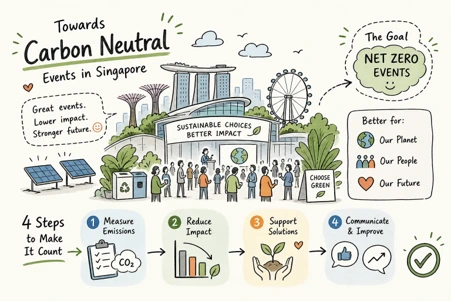
Carbon neutrality claims are increasingly visible in Singapore's events industry. Conference programmes...

Carbon offset solutions for hotel ballrooms and event spaces in Singapore are...
Find quick answers about the Event Carbon Calculator, your emissions estimate, and what happens next.
There is no official threshold. The most cited reference is approximately 14.13 kg CO2 per attendee for venue-related emissions, with energy the dominant contributor. Note this excludes attendee travel, so a full-scope per-attendee figure will typically be higher. Treat it as a comparative benchmark for the venue category rather than a pass mark for the whole event.
Yes. SACEOS has published WA 4: Sustainable MICE — Guidelines for Carbon Emissions Management, a Singapore Standards workspace agreement covering measurement, reduction, calculation, verification and offset. Separately, the Singapore MICE Sustainability Certification (MSC) provides GSTC-Recognised organisational certification, and STB and SACEOS will develop a MICE Decarbonisation Framework by 2028.
Air-conditioning, lighting and audiovisual systems run continuously through operating hours regardless of attendee behaviour, making venue energy a structural and relatively predictable load. In Singapore’s climate, cooling demand is both unavoidable and substantial. This is why the MICE Venue Sustainability Playbook points to emissions per square foot of venue area as a comparable metric.
Yes — and then raised them. By 2025 the original roadmap targets were exceeded, with all purpose-built MICE venues and over 80% of SACEOS member companies certified. Roadmap 2.0, unveiled in July 2026, commits to a MICE Decarbonisation Framework by 2028 and net zero by 2050.
No. MSC certifies the organisation across domains including carbon, waste, energy, water, social responsibility, HR competency and procurement, valid for two years. It does not produce a per-event footprint figure or evidence that a specific event’s emissions were addressed. Those are separate exercises.
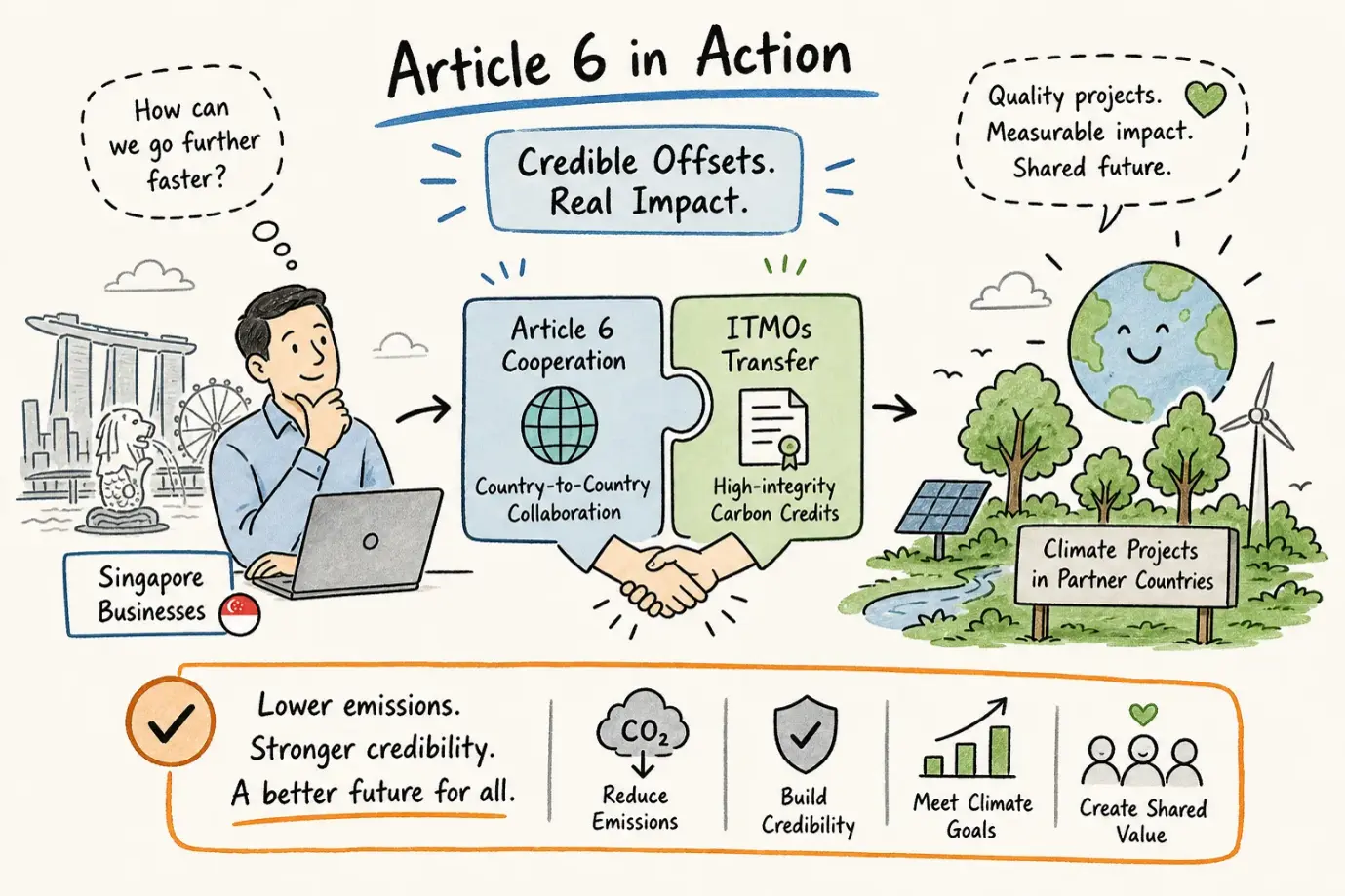
Article 6-aligned offsets are no longer just a conference talking point; they...
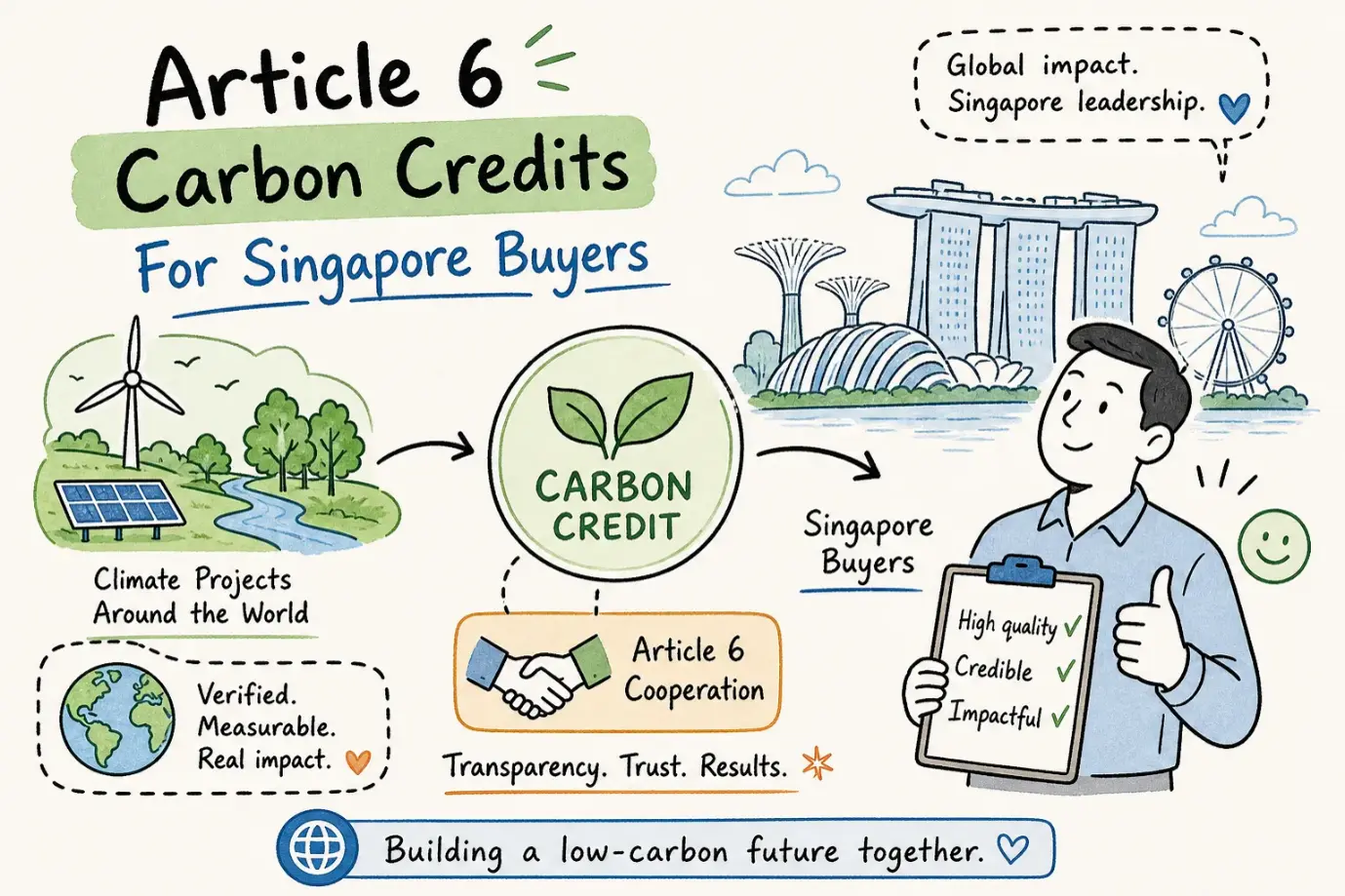
Article 6 carbon credits are fundamentally different from standard voluntary offsets, and...
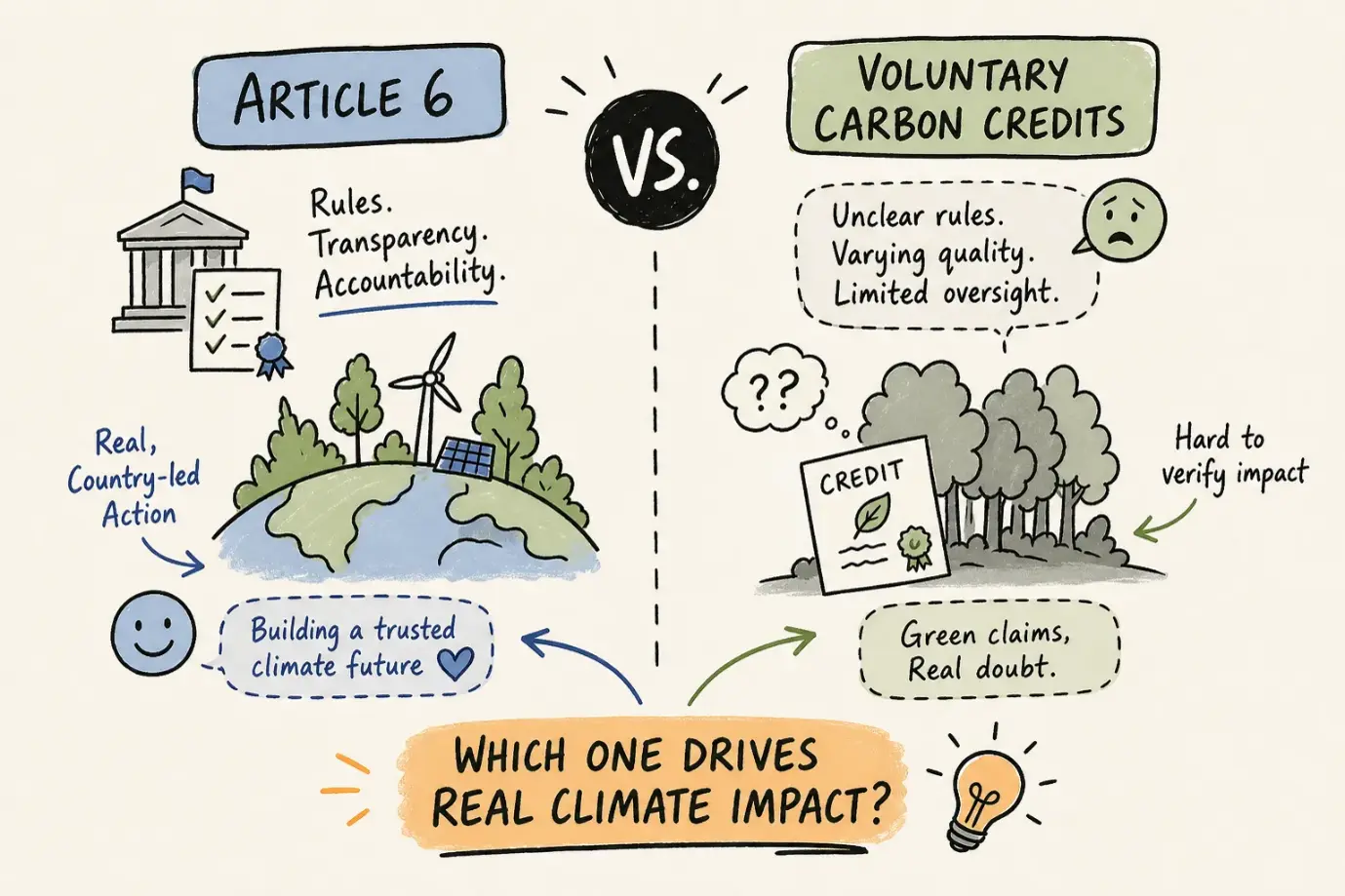
Understanding the difference between Article 6 and voluntary carbon market credits is...
Carbon neutral vs net zero: two terms, both sound green, both are...
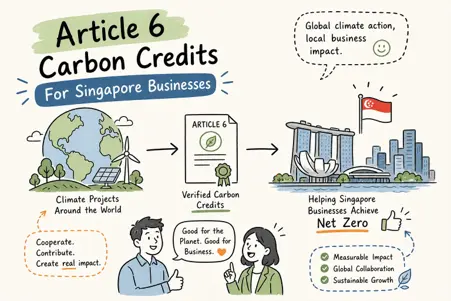
For Singapore businesses, Article 6 carbon credits explained properly can mean the...
Carbon neutrality claims are increasingly visible in Singapore's events industry. Conference programmes...

Green Passport Carbon
Quick Links
More Information
 Optimized by Seraphinite Accelerator