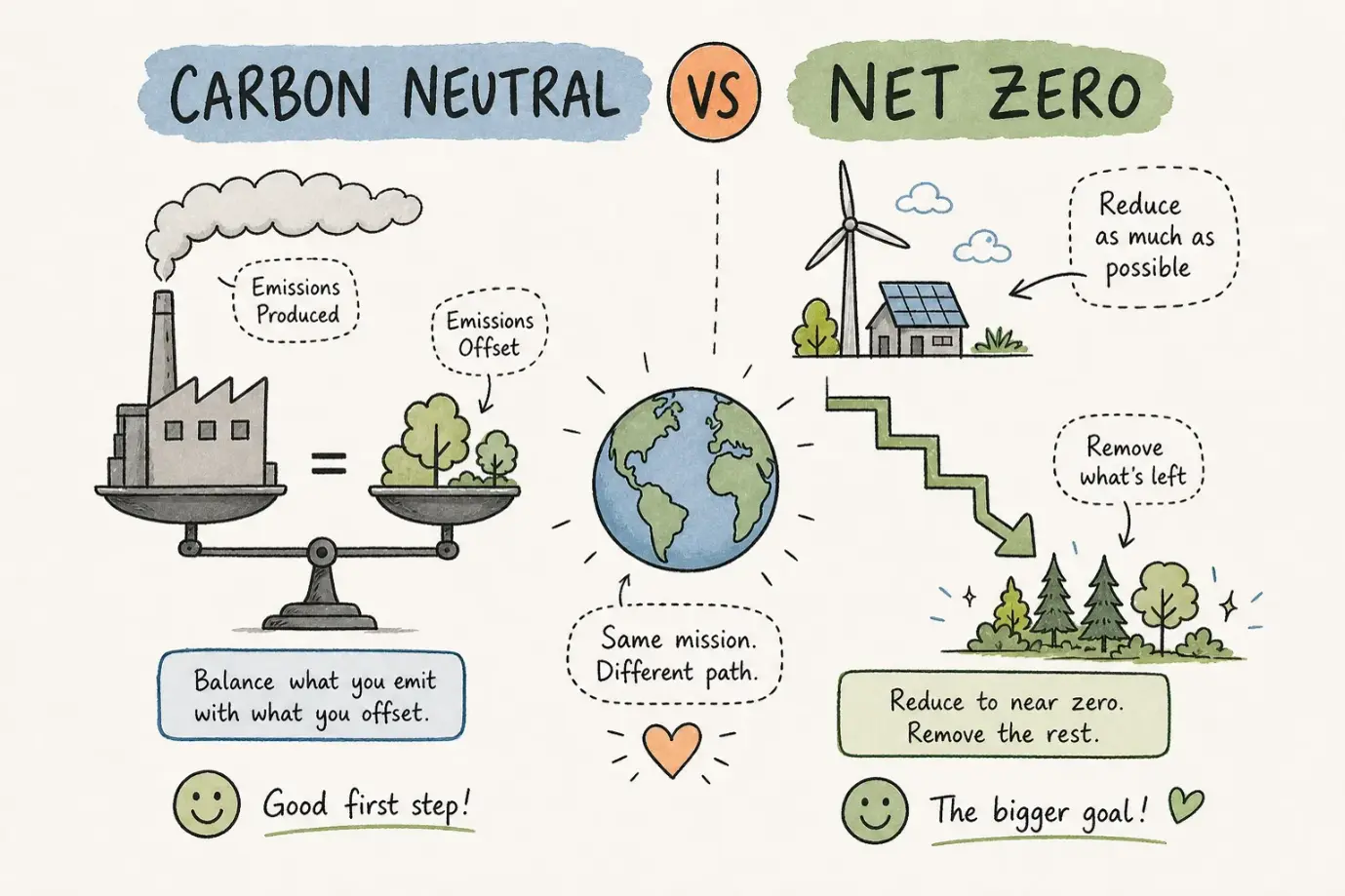
Carbon neutral vs net zero: what’s...
Carbon neutral vs net zero: two terms, both sound green, both are...

Green Passport Carbon , Singapore

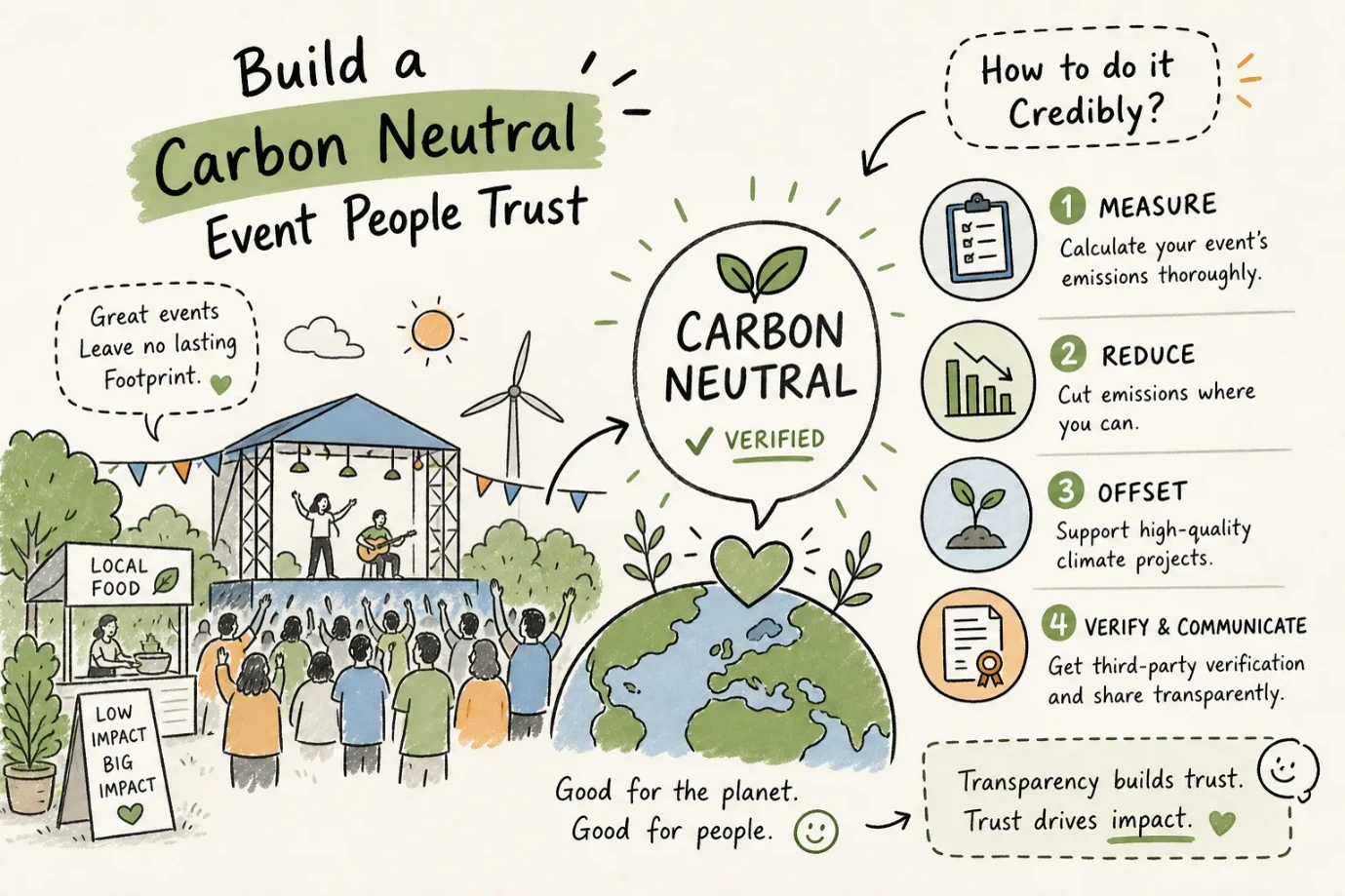
Carbon neutral event claims are increasingly common in Singapore’s MICE sector, yet the evidence to back them up rarely follows. Regulators, sponsors, and ESG teams are asking harder questions, and the gap between making a claim and being able to defend it is precisely where reputational and legal risk lives. Under Singapore’s Consumer Protection (Fair Trading) Act and the Singapore Code of Advertising Practice, unsubstantiated environmental claims can amount to unfair or misleading practices, even when the organiser had entirely good intentions.
So how do you claim carbon neutrality for your event without greenwashing? The answer is not to stop making carbon neutrality claims. It is to build them on five solid elements: accurate measurement, a recognised methodology, credible carbon credits, third-party verification, and honest communication. Every element must be in place. Miss one, and the entire claim becomes vulnerable. This article walks through each element with enough specificity to produce a defensible position, not just a badge you stick on event collateral and hope nobody examines too closely.
The problem is rarely bad faith. A credible claim requires documented evidence at every step, not a certificate purchased at the end as a shortcut to sustainability credentials. When the evidence is not there, the consequences range from sponsor backlash and attendee scepticism to regulatory scrutiny that can undermine a corporate client’s entire ESG report.
Singapore’s sustainability disclosure landscape is tightening rapidly. SGX and ACRA climate reporting requirements, the Singapore Tourism Board’s push for credible green event credentials, and Green Plan 2030 targets have placed the MICE sector under a level of scrutiny it has not faced before. Corporate event buyers are including carbon substantiation requirements in procurement briefs. An unsubstantiated carbon neutrality claim damages not only the organiser’s reputation but also creates serious reporting and ESG exposure for every corporate client who included that event in their Scope 3 emissions inventory.
The five elements that separate a defensible claim from a risky one are measurement, methodology, credit quality, verification, and communication. Think of them as interlocking dependencies: if any single one is weak or missing, the claim is exposed. The sections below address each one in turn, so that by the end, you have a clear framework for how to claim carbon neutrality for your event without greenwashing.
Before you count a single kilogram of CO2, you need a clearly defined event boundary. ISO 14068-1 requires this as a prerequisite to quantification: the claim must specify exactly which emission sources are in scope and which are not. For events, this typically means deciding upfront whether attendee travel, hotel accommodation, venue energy, catering, materials, and waste are all included. A vague or inconsistently defined boundary is the single most common reason an event carbon claim falls apart under review, because a verifier will immediately ask what is in and what is out.
The emission sources that organisers most often undercount are also the ones that matter most. Research into international conferences shows that air travel can account for 80 to 96 percent of total conference emissions, with accommodation contributing around 4 to 10 percent, and venue energy and catering making up the remainder. In-person international conferences can generate 1 to 2 tonnes of CO2e per attendee, compared to roughly 10 kilograms CO2e for virtual participation. Long-haul international travel, multi-night hotel stays, and catered food and beverage are the categories that inflate the footprint most significantly, and are most frequently excluded from weak calculations.
A robust measurement approach requires standardised emission factors, source-by-source documentation, and a clear audit trail for each data input. This is not something a generic spreadsheet handles reliably. Green Passport Carbon‘s event carbon footprint calculator is informed by recognised carbon-accounting principles and covers flights, accommodation, electricity, food and beverages, and materials, reducing the burden on organisers who would otherwise need to source their own emission factors. It produces an indicative, categorised estimate that can be reviewed and refined with actual event data; it is not by itself a final verified footprint, and any tool you use should be evaluated against your verifier’s requirements before you begin.
Carbon credits are not interchangeable, and this is where many neutrality claims quietly collapse. Four criteria define whether a credit is credible enough to support a legitimate carbon neutrality claim. Additionality means the emission reduction would not have happened without carbon credit revenue, projects with easy “would-have-happened-anyway” baselines fail here immediately. Permanence means the carbon stays out of the atmosphere over the long term, with mechanisms to handle reversals if they occur. Together, these two criteria already disqualify a significant proportion of credits available on the open market.
The remaining two criteria are equally non-negotiable. Credits must carry no double counting, meaning they are retired to a recognised registry, such as Verra or Gold Standard, and claimed by one party only. And they must cause no significant harm, meaning the project does not produce social or environmental damage as a side effect of generating credits. Any credible credit used to support a neutrality claim must satisfy all four criteria without exception.
Project type matters significantly. Avoided deforestation and forest conservation projects carry the highest greenwashing risk because stored carbon can be released through wildfire, disease, or land-use change, a risk that ICVCM guidance addresses through its permanence and reversal-risk requirements. Nature-based projects generally carry more uncertainty than engineered removals. Buying credits from a forest project with weak baselines or a reversal-prone registry can invalidate an entire neutrality claim, not merely weaken it.
For Singapore event organisers, Article 6-authorised credits offer stronger accounting properties where a buyer wants to rule out double claiming between countries. Unlike standard voluntary carbon market credits, Article 6-aligned credits involve host-country authorisation under the Paris Agreement framework and require corresponding adjustments to prevent the same reduction from being counted twice at a sovereign level. This distinction can matter in ESG reporting because it affects how you describe the credit’s climate claim. However, Singapore’s October 2025 guidance on carbon credits states that corresponding adjustment requirements do not apply to corporate buyers meeting voluntary climate commitments, and that a corresponding adjustment does not by itself indicate the quality of a credit, which must be assessed separately. Buyers should still disclose whether their credits include one. Green Passport Carbon retires eligible carbon credits with documented retirement records. Where a client specifically needs Article 6-authorised credits with a corresponding adjustment, that status should be confirmed and documented for the specific credits before retirement.
Internal calculations and self-issued certificates carry limited weight with sponsors, procurement teams, or ESG auditors. ISO 14068-1 allows a carbon neutrality claim to be self-declared, but independent third-party verification provides the strongest assurance, and many sponsors and ESG auditors expect it. That verification process involves reviewing emission source data, confirming methodology compliance, checking the evidence for any reduction actions taken, and confirming that carbon credits have been genuinely retired to a recognised registry. It is not a rubber stamp, it is the step that turns a set of internal numbers into an independently verified claim.
A legitimate, third-party-issued certificate documents that the event boundary was defined, emissions were measured using a recognised methodology, reductions were prioritised, and residual emissions were compensated with retired credits. This is the document that a corporate client or event sponsor will request when they include your event in their own annual sustainability disclosure. Green Passport Carbon issues a branded certificate with a unique certificate ID and verification link, giving Singapore event organisers a documented record of the carbon action taken for sustainability communications. It is not an ISO certification or an independent third-party verification, so where a client needs third-party assurance, an independent verifier should be engaged.
When evaluating any certification scheme, ask three questions: Is the methodology aligned with ISO 14068-1 (revised in September 2026 as ISO 14068:2026), or, for legacy claims, PAS 2060, which BSI withdrew at the end of 2025? Is credit retirement documented and traceable to a recognised registry? Is the verifier independent of the credit provider? These questions apply regardless of which provider you use. Any scheme that cannot answer all three clearly should not be issuing carbon neutrality certificates.
The wording of the claim itself is where many organisers create unnecessary legal and reputational exposure. “This event is carbon neutral” with no boundary, no methodology reference, and no basis stated nearby fails the substantiation test under Singapore’s advertising standards. “Zero-emission event” is factually wrong, because carbon neutral claims address residual emissions after reductions, not the absence of emissions. “Climate-friendly event” is unsubstantiable. “Net zero event” is misleading when the claim is based on offsets rather than deep reductions within the event boundary.
Compliant wording is specific and qualified. A defensible headline claim looks like this: “Carbon neutral for [Event Name], [date], for emissions within the stated event boundary, measured, reduced where possible, and residual emissions compensated with retired carbon credits.” The qualifier must sit directly beside the claim, not buried in a footnote. The further the qualifier is from the claim, the more misleading the claim becomes under both ISO guidance and Singapore’s advertising standards.
The tiered disclosure approach is the most legally defensible structure available. Tier one is a short headline claim near the event name or logo. Tier two is a brief qualifier directly beside it, explaining what the claim covers. Tier three is a full disclosure page or QR-linked document containing the footprint calculation, reduction actions, credit retirement evidence with registry identification, and boundary assumptions. For Singapore corporate event managers, this documentation also needs to serve as the ESG data trail: emission inventory with source data, methodology reference, reduction actions taken, credit retirement confirmation, and verification statement. A certificate alone is not sufficient for an annual sustainability report.
The five elements are not independent tasks you can complete in any order. A poorly measured boundary undermines credit quality calculations. Unverified claims make compliant wording moot. Vague communication undermines even a well-constructed certificate. A credible carbon neutral event claim is one integrated process where each step feeds the next, and the output of each becomes an input for what follows.
Green Passport Carbon’s three-step framework is built around this interdependency. The Calculate step covers an indicative emissions estimate across key event sources, which is then reviewed in a Full Event Carbon Assessment. Retire covers the retirement of eligible carbon credits with documented retirement records for every tonne compensated. Certify covers a branded Green Passport Carbon certificate, with a unique certificate ID and verification link, that gives Singapore MICE event organisers a documented record for sustainability communications and corporate reporting. The certificate documents the carbon action taken; it is not an ISO certification or an independent third-party verification, which can be added where a claim requires it. The process is delivered end-to-end, which means organisers do not need to source separate tools, consultants, and credit registries and then hope the outputs are compatible. The calculator itself is free and gives a Free Event Carbon Estimate; the Full Event Carbon Assessment, carbon-credit retirement and the Green Passport Carbon Event Certificate are provided as part of Green Passport Carbon’s quote-based service.
Claiming carbon neutrality for your event without greenwashing is entirely achievable. The methodology exists, the credit quality standards are clear, from ISO 14068-1, now ISO 14068:2026, to the Verra and Gold Standard registries, the verification process is established, and the claim language guidance is specific. What makes the difference is whether all five elements are in place before the claim appears in event marketing materials, press releases, or sponsor decks.
The risk of getting it wrong is real. Reputationally, an unsupported claim can unravel quickly under sponsor scrutiny. Legally, Singapore’s Consumer Protection (Fair Trading) Act and the Singapore Code of Advertising Practice set a clear substantiation bar. And in terms of ESG credibility, an inadequately documented claim can create reporting and reputational exposure for every corporate client who relied on your event data. The reward for getting it right is a verifiable claim that stands up in front of sponsors, clients, regulators, and attendees, and becomes a genuine asset in sustainability communications rather than a liability waiting to be challenged.
Before making any carbon neutral claim for your next event, run through the five-element checklist. If you cannot document each one, the claim is not ready. If you want a structured process that is built to satisfy each criterion, get in touch with the team at Green Passport Carbon to see how the Calculate, Retire, and Certify framework works for your specific event.
Carbon neutral vs net zero: two terms, both sound green, both are...
Carbon neutrality claims are increasingly visible in Singapore's events industry. Conference programmes...

Carbon offset solutions for hotel ballrooms and event spaces in Singapore are...
Find quick answers about the Event Carbon Calculator, your emissions estimate, and what happens next.
There is no official threshold. The most cited reference is approximately 14.13 kg CO2 per attendee for venue-related emissions, with energy the dominant contributor. Note this excludes attendee travel, so a full-scope per-attendee figure will typically be higher. Treat it as a comparative benchmark for the venue category rather than a pass mark for the whole event.
Yes. SACEOS has published WA 4: Sustainable MICE — Guidelines for Carbon Emissions Management, a Singapore Standards workspace agreement covering measurement, reduction, calculation, verification and offset. Separately, the Singapore MICE Sustainability Certification (MSC) provides GSTC-Recognised organisational certification, and STB and SACEOS will develop a MICE Decarbonisation Framework by 2028.
Air-conditioning, lighting and audiovisual systems run continuously through operating hours regardless of attendee behaviour, making venue energy a structural and relatively predictable load. In Singapore’s climate, cooling demand is both unavoidable and substantial. This is why the MICE Venue Sustainability Playbook points to emissions per square foot of venue area as a comparable metric.
Yes — and then raised them. By 2025 the original roadmap targets were exceeded, with all purpose-built MICE venues and over 80% of SACEOS member companies certified. Roadmap 2.0, unveiled in July 2026, commits to a MICE Decarbonisation Framework by 2028 and net zero by 2050.
No. MSC certifies the organisation across domains including carbon, waste, energy, water, social responsibility, HR competency and procurement, valid for two years. It does not produce a per-event footprint figure or evidence that a specific event’s emissions were addressed. Those are separate exercises.
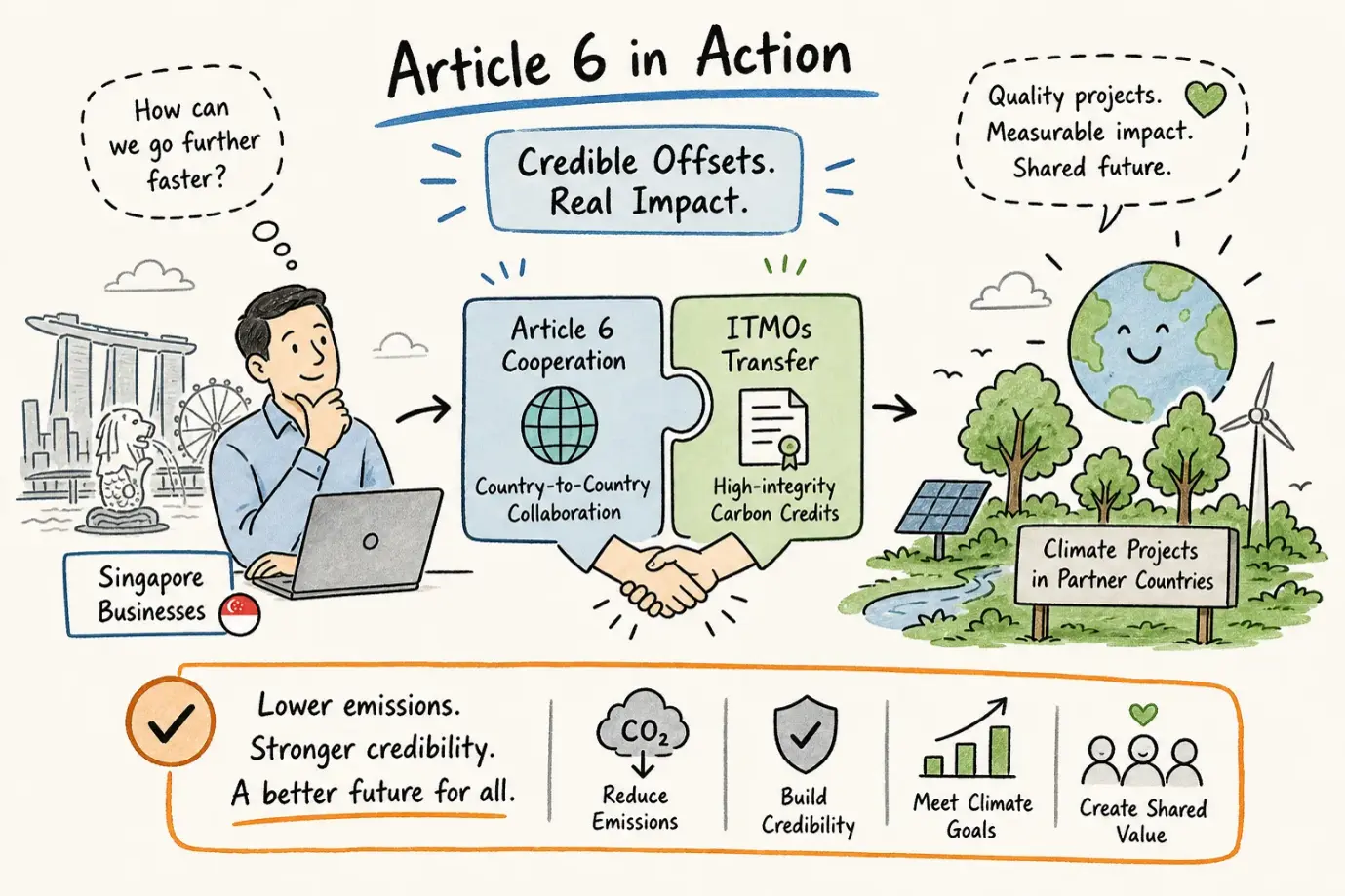
Article 6-aligned offsets are no longer just a conference talking point; they...
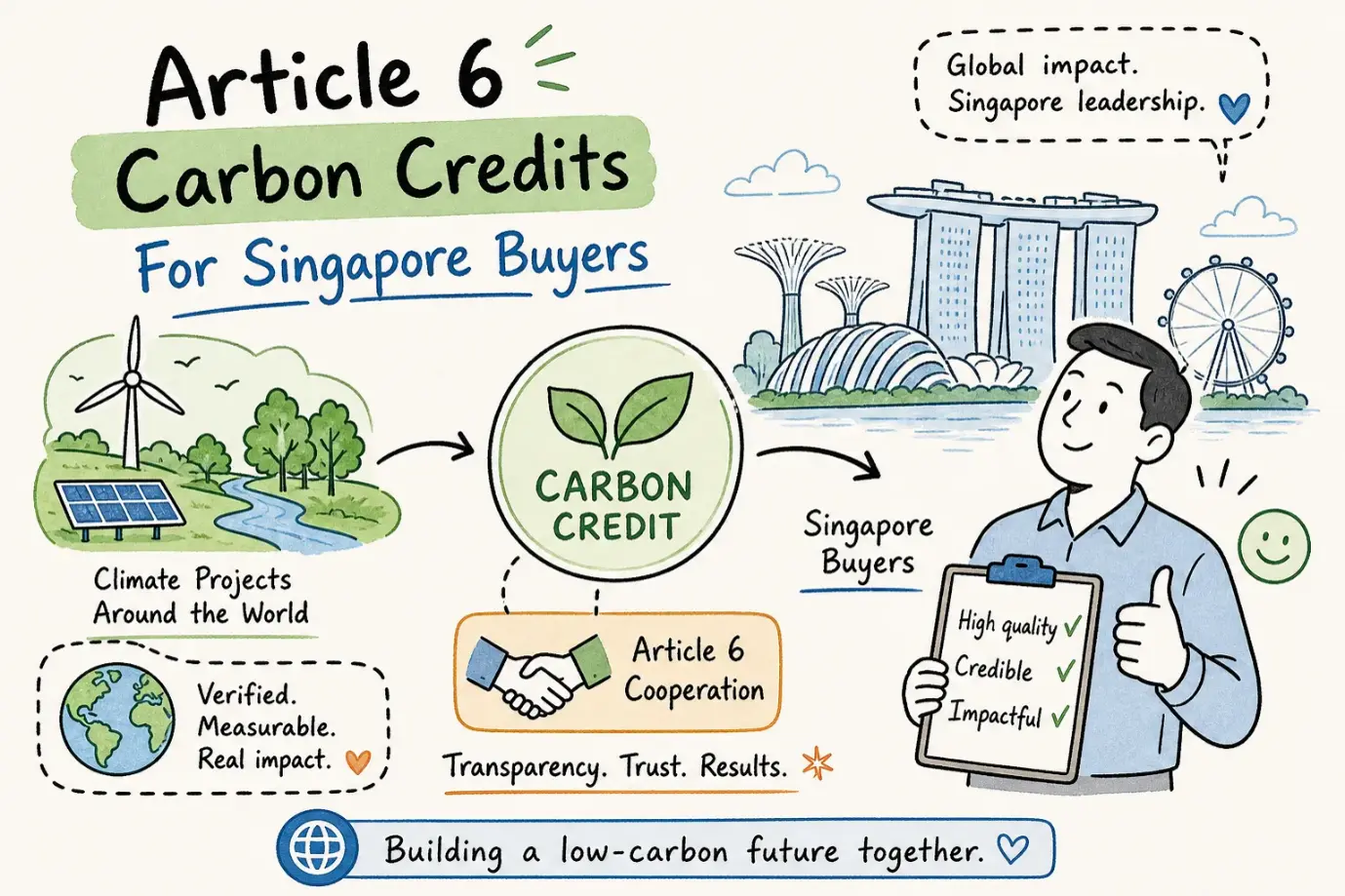
Article 6 carbon credits are fundamentally different from standard voluntary offsets, and...
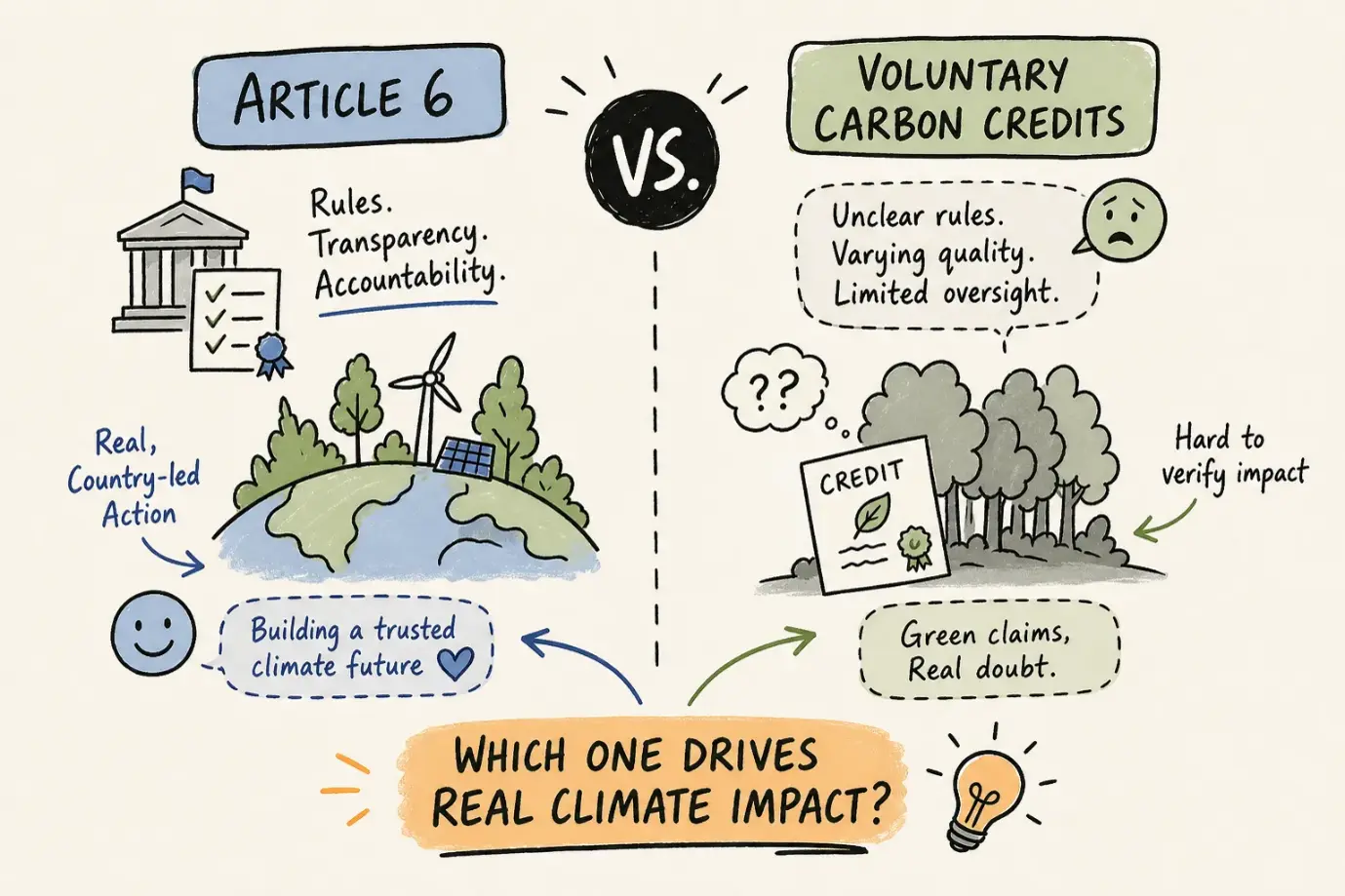
Understanding the difference between Article 6 and voluntary carbon market credits is...
Carbon neutral vs net zero: two terms, both sound green, both are...
For Singapore businesses, Article 6 carbon credits explained properly can mean the...
Carbon neutrality claims are increasingly visible in Singapore's events industry. Conference programmes...

Green Passport Carbon
Quick Links
More Information
 Optimized by Seraphinite Accelerator