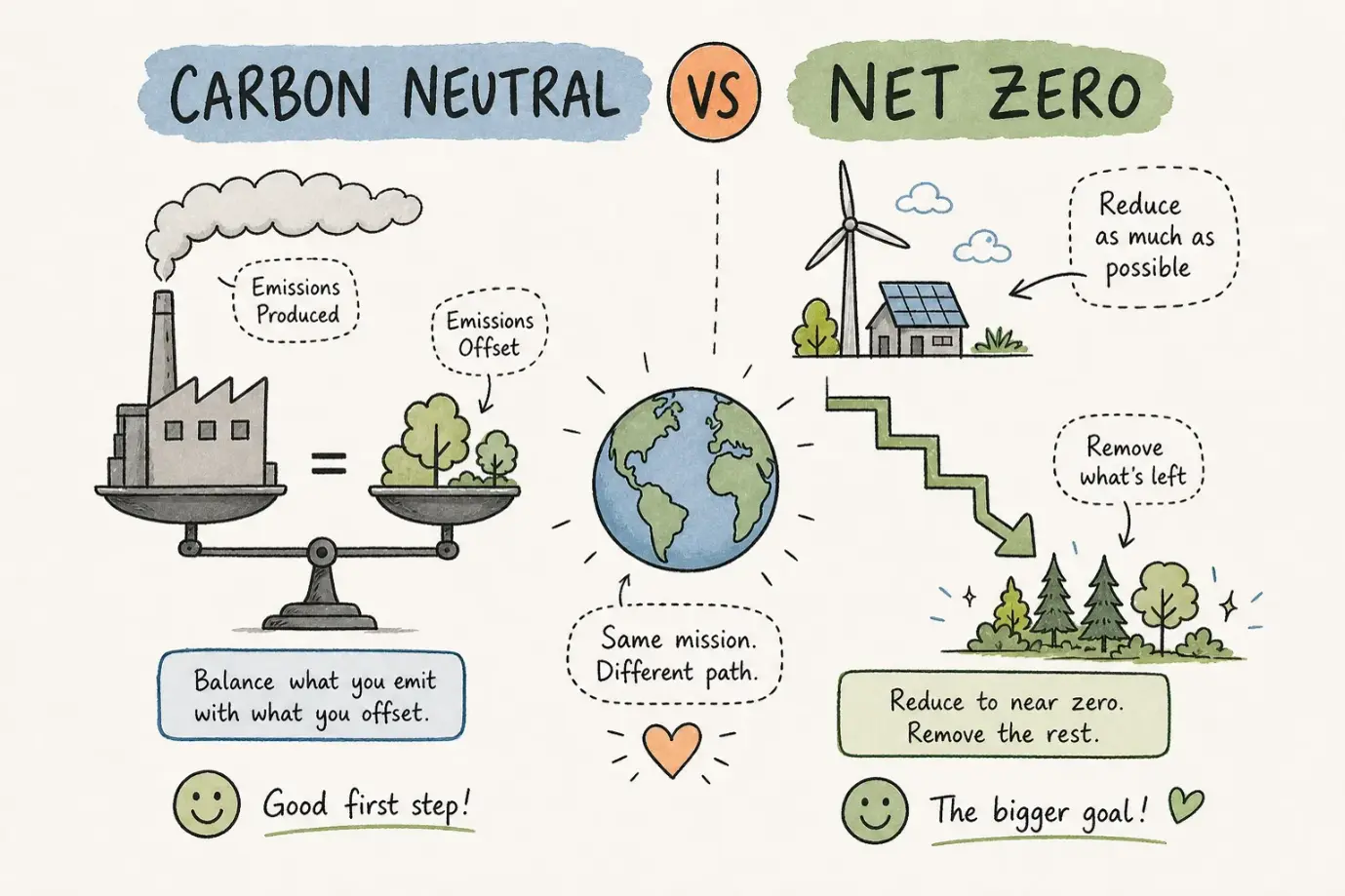
Carbon neutral vs net zero: what’s...
Carbon neutral vs net zero: two terms, both sound green, both are...

Green Passport Carbon , Singapore

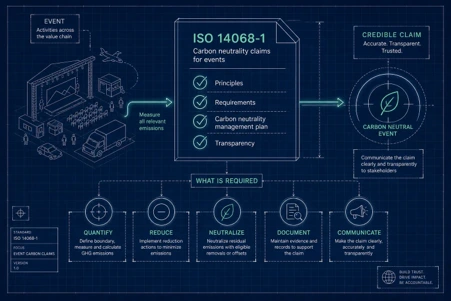
Event carbon claims have become commonplace across the industry. Carbon neutral conference. Sustainable summit. Net zero exhibition. Most of them will not survive serious scrutiny, and the problem is rarely dishonesty. It is that organisations make claims without understanding what a credible one actually requires. ISO 14068-1 is the international standard that sets out what is needed to make a defensible carbon-neutrality claim, and it draws a clear line between a substantiated assertion and a marketing phrase.
This guide explains how to align your event carbon claims with ISO 14068-1: what to define, what to measure, what to reduce, how to offset the residual, and how to document and communicate it all. At Green Passport Carbon, we work with Singapore event organisers to build their carbon claims on the principles of this standard from the moment they start calculating emissions, not scrambled together before the certificate gets printed. If your event is making a carbon-neutrality claim, or planning to, this is where to start.
ISO 14068-1 is the international standard for carbon neutrality. It provides a structured set of requirements covering GHG accounting, reductions, neutralisation, reporting, and verification, and is widely used in place of earlier frameworks such as PAS 2060, which BSI withdrew at the end of 2025. ISO revised the standard in September 2026 as ISO 14068:2026, a minor revision that mainly changes the title and removes the part number. Claims not aligned with ISO 14068-1 are less likely to meet widely recognised requirements for transparency and verification.
The standard’s foundational logic is a hierarchy, not a shortcut. Carbon neutrality is not achieved by purchasing offsets to cancel out emissions. It requires a clearly defined subject to have a quantified carbon footprint, a record of genuine reductions implemented, and then neutralisation of only the residual emissions that could not be cut further. That sequence is deliberate. Skipping straight to offsets is not compliant with the standard, and anyone who reviews your claim closely will notice.
ISO 14068-1 also governs how you communicate the claim externally. Vague statements such as “our event is green” or “we are committed to sustainability” carry no weight under the standard. The claim must be specific, documented, verifiable, and tied to a defined subject and reporting period. This matters for ESG reporting, client requirements, and any audit that follows.
Before any carbon accounting begins, ISO 14068-1 requires you to define what you are actually claiming is carbon neutral. For an event, this means naming the exact event, not a category of events, specifying the dates it covers, and identifying precisely which activities fall within scope. The standard is explicit: the subject must be identifiable. A vague or shifting definition invalidates the claim before you have entered a single data point.
The emissions boundary determines which sources are included in your carbon footprint calculation, and it must be defined in advance. For event-type subjects, this typically follows ISO 14064-1 principles. The boundary must reflect activities within the event’s control or responsibility, and material emission sources cannot be excluded simply because they make the footprint look larger. Selectively shrinking the boundary to produce a more flattering number is one of the fastest ways to end up with an indefensible claim.
The most common mistake at this stage is underreporting Scope 3 emissions, particularly attendee travel and accommodation. These categories are frequently the largest contributors to an event’s carbon footprint, and leaving them out does not just weaken the claim, it makes it incorrect. The boundary definition step needs to happen before data collection begins, not after the numbers come in and someone decides what to include.
Once the subject and boundary are defined, the inventory captures every material emission source within that boundary. Scope 1 covers direct emissions from event-controlled sources: on-site generators, company vehicles, any directly controlled combustion. Scope 2 covers purchased energy, primarily electricity. Scope 3 is where most event footprints actually live.
For events, the material Scope 3 categories typically include the following:
• Attendee and speaker travel, usually the single largest source
• Hotel accommodation for attendees, speakers, and staff
• Venue energy use and outsourced venue services
• Catering, including upstream supply-chain impacts where data are available
• Freight and logistics for equipment, stands, and materials
• Event materials: signage, print, giveaways, staging
• Waste and water treatment
• Digital delivery for hybrid or virtual formats
ISO 14068-1 requires a complete inventory. Omitting material sources is not a boundary decision, it is a gap in compliance. Every source must be quantified as activity data multiplied by an appropriate emission factor, and the global warming potential basis used to convert gases to CO₂e must be stated and applied consistently throughout. The methodology, data sources, and assumptions must all be documented so the inventory can be audited by someone who was not in the room when the calculations were made.
The calculation sequence the standard expects runs in a specific order: define the subject and boundary, build the Scope 1, 2, and 3 source list, apply activity data and emission factors, convert to CO₂e, sum to a gross footprint, then move to reduction planning. That sequencing is not optional. It reflects the standard’s own internal logic.
ISO 14068-1 is unambiguous on this point: reductions must come before offsets. The standard requires that an event organiser demonstrate they have prioritised reducing GHG emissions before relying on carbon credits to close the gap. For events, this means evidencing decisions such as choosing a lower-carbon venue, reducing freight, sourcing renewable energy, and cutting single-use materials. Offsets cannot substitute for reduction actions; they can only address what genuinely remains after those actions have been taken.
The carbon credits used to neutralise residual emissions must meet specific criteria under Clause 11 of the standard. They must be real, additional, permanent, independently verified, certified, non-double-counted, and retired through a recognised registry. Credits that lack independent verification or carry double-counting risks do not support a valid ISO 14068-1 claim. In Singapore’s context, Article 6-authorised credits with a corresponding adjustment are relevant given the country’s active role in international carbon credit cooperation under the Paris Agreement. However, Singapore’s October 2025 guidance on carbon credits states that corresponding adjustment requirements do not apply to corporate buyers meeting voluntary climate commitments, and that a corresponding adjustment does not by itself indicate the quality of a credit, which must be assessed separately. Buyers should still disclose whether their credits include one.
The standard does not set a percentage cap on residual emissions. It expects that all feasible reductions have been made, and that neutralisation covers only what genuinely could not be reduced, not what was inconvenient to address. The distinction matters, and it will come up if the claim is verified.
The evidence file supporting an ISO 14068-1 claim needs to contain specific records: the defined event subject and boundary; the complete GHG inventory with data sources, emission factors, and assumptions; evidence of the reduction actions implemented; details of the carbon credits used, including type, registry, and retirement documentation; and the public carbon-neutrality report with an executive summary. This is not a tick-box exercise. The file must be substantive enough to withstand independent review by someone who is actively looking for gaps.
Claim wording is governed by the standard, not by your marketing team. The claim must accurately describe what was achieved, be supported by documentation prepared in line with ISO 14068-1, specify the subject and reporting period, and explain how residual emissions were addressed. Broad statements such as “this was a carbon neutral event” without further qualification or reference to supporting documentation do not meet the standard’s communication requirements. The standard exists precisely because vague claims eroded trust, and it closes that loophole deliberately.
For a publicly communicated carbon-neutrality claim, independent third-party verification is the strongest route, although the standard also allows a self-declared claim supported by full documentation. Verification is conducted against ISO 14064-3 by an accredited body. In Singapore, verifiers operating under the Singapore Accreditation Council include organisations such as Normec Verifavia and SGS; other providers such as Bureau Veritas and TÜV SÜD also offer relevant services in the region, though you should confirm current accreditation status on the Singapore Accreditation Council register before commissioning verification. The process involves reviewing the inventory, reduction evidence, credit retirement records, and the public report. For well-prepared organisers with complete post-event data, verification can typically be completed within weeks to months, the timeline is driven almost entirely by how quickly the data trail is assembled, not by the process itself.
Green Passport Carbon structures its process around three steps: Calculate, Retire, and Certify. Each follows the logic of ISO 14068-1. The Calculate step produces an indicative estimate of the event’s emissions across key sources, which is then reviewed in a Full Event Carbon Assessment. The Retire step retires eligible carbon credits against residual emissions after reductions have been implemented, with documented retirement records. The Certify step issues a branded Green Passport Carbon certificate with a unique certificate ID and verification link that supports ESG reporting and external communications. The certificate documents the carbon action taken; it is not an ISO certification or an independent third-party verification, so organisers who need a verified ISO 14068 claim should also commission an accredited verifier. The calculator itself is free and gives a Free Event Carbon Estimate; the Full Event Carbon Assessment, carbon-credit retirement and the Green Passport Carbon Event Certificate are provided as part of Green Passport Carbon’s quote-based service.
For Singapore MICE events, aligning event carbon claims with ISO 14068-1 is increasingly a client and sponsor requirement, not a best-practice aspiration. Singapore’s Green Plan 2030 targets, SGX and ACRA climate reporting requirements, and the Singapore Tourism Board’s push for sustainable business events all create real, regulatory-adjacent pressure on organisers to raise their sustainability standards. Green Passport Carbon’s end-to-end process removes the complexity of sourcing separate tools, consultants, and credit registries, and helps organisers build a well-documented claim from the first data entry point, with less need to interpret the standard themselves.
ISO 14068-1 is not complicated once you strip it to its essentials. Define your subject precisely. Measure all material emissions honestly. Reduce what you can and neutralise the residual with qualified credits. Document everything. Communicate the claim accurately. That is the standard in plain language, and every step has a purpose.
For event organisers in Singapore, the practical question is not whether to align your event carbon claims with ISO 14068-1. It is how to do so without it consuming your entire planning cycle. Green Passport Carbon was built specifically to answer that question: a documented carbon-neutrality process informed by ISO 14068-1, without requiring your team to become carbon accounting specialists. Book a consultation to align your event carbon claims with ISO 14068-1 and start with a methodology that was designed to produce a defensible result.
Carbon neutral vs net zero: two terms, both sound green, both are...
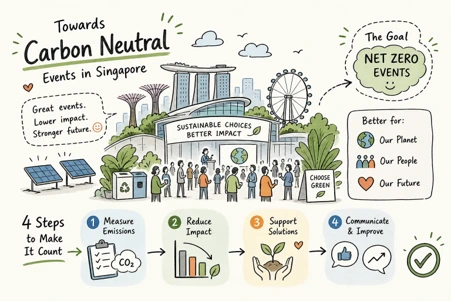
Carbon neutrality claims are increasingly visible in Singapore's events industry. Conference programmes...

Carbon offset solutions for hotel ballrooms and event spaces in Singapore are...
Find quick answers about the Event Carbon Calculator, your emissions estimate, and what happens next.
There is no official threshold. The most cited reference is approximately 14.13 kg CO2 per attendee for venue-related emissions, with energy the dominant contributor. Note this excludes attendee travel, so a full-scope per-attendee figure will typically be higher. Treat it as a comparative benchmark for the venue category rather than a pass mark for the whole event.
Yes. SACEOS has published WA 4: Sustainable MICE — Guidelines for Carbon Emissions Management, a Singapore Standards workspace agreement covering measurement, reduction, calculation, verification and offset. Separately, the Singapore MICE Sustainability Certification (MSC) provides GSTC-Recognised organisational certification, and STB and SACEOS will develop a MICE Decarbonisation Framework by 2028.
Air-conditioning, lighting and audiovisual systems run continuously through operating hours regardless of attendee behaviour, making venue energy a structural and relatively predictable load. In Singapore’s climate, cooling demand is both unavoidable and substantial. This is why the MICE Venue Sustainability Playbook points to emissions per square foot of venue area as a comparable metric.
Yes — and then raised them. By 2025 the original roadmap targets were exceeded, with all purpose-built MICE venues and over 80% of SACEOS member companies certified. Roadmap 2.0, unveiled in July 2026, commits to a MICE Decarbonisation Framework by 2028 and net zero by 2050.
No. MSC certifies the organisation across domains including carbon, waste, energy, water, social responsibility, HR competency and procurement, valid for two years. It does not produce a per-event footprint figure or evidence that a specific event’s emissions were addressed. Those are separate exercises.
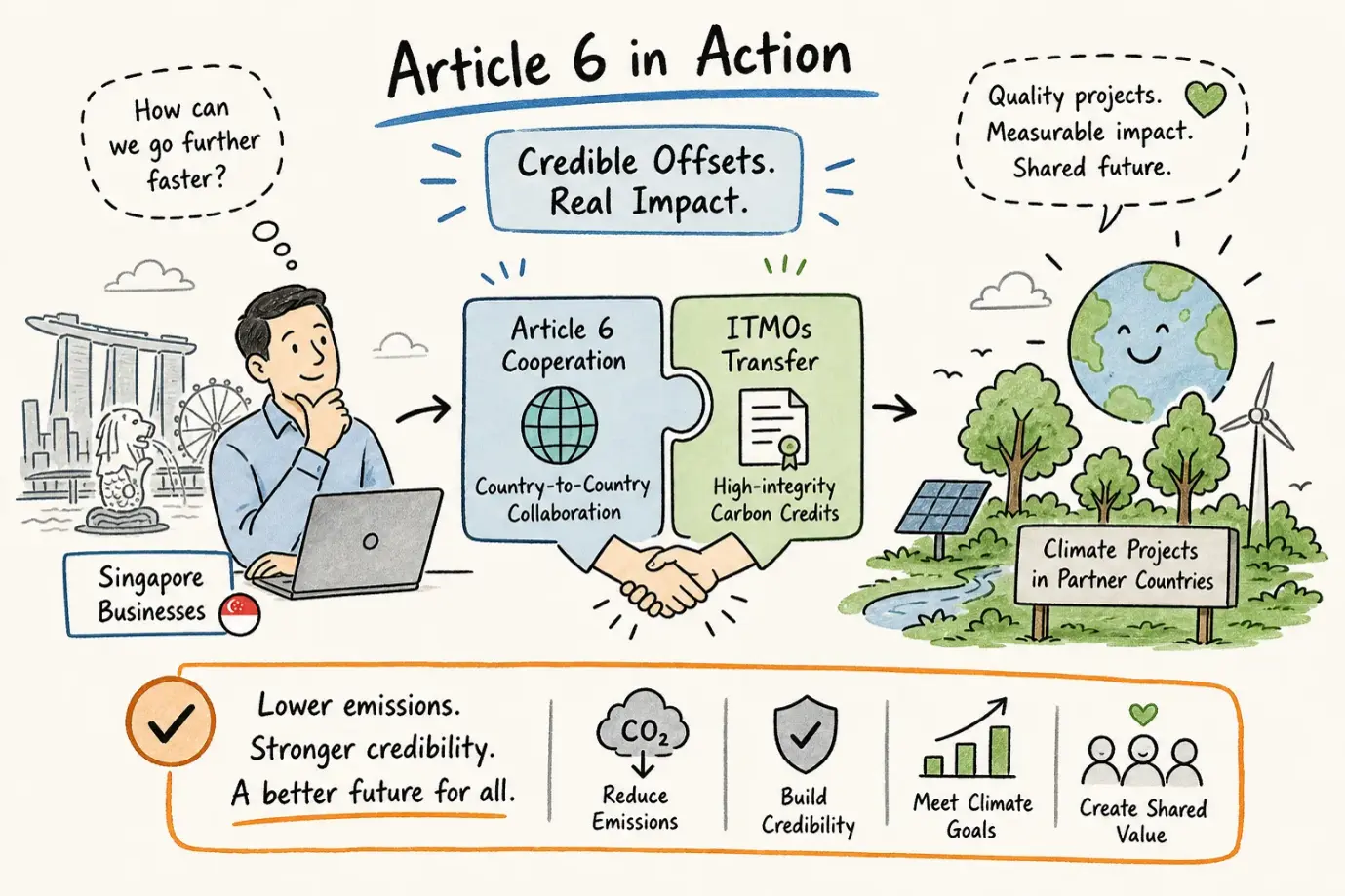
Article 6-aligned offsets are no longer just a conference talking point; they...
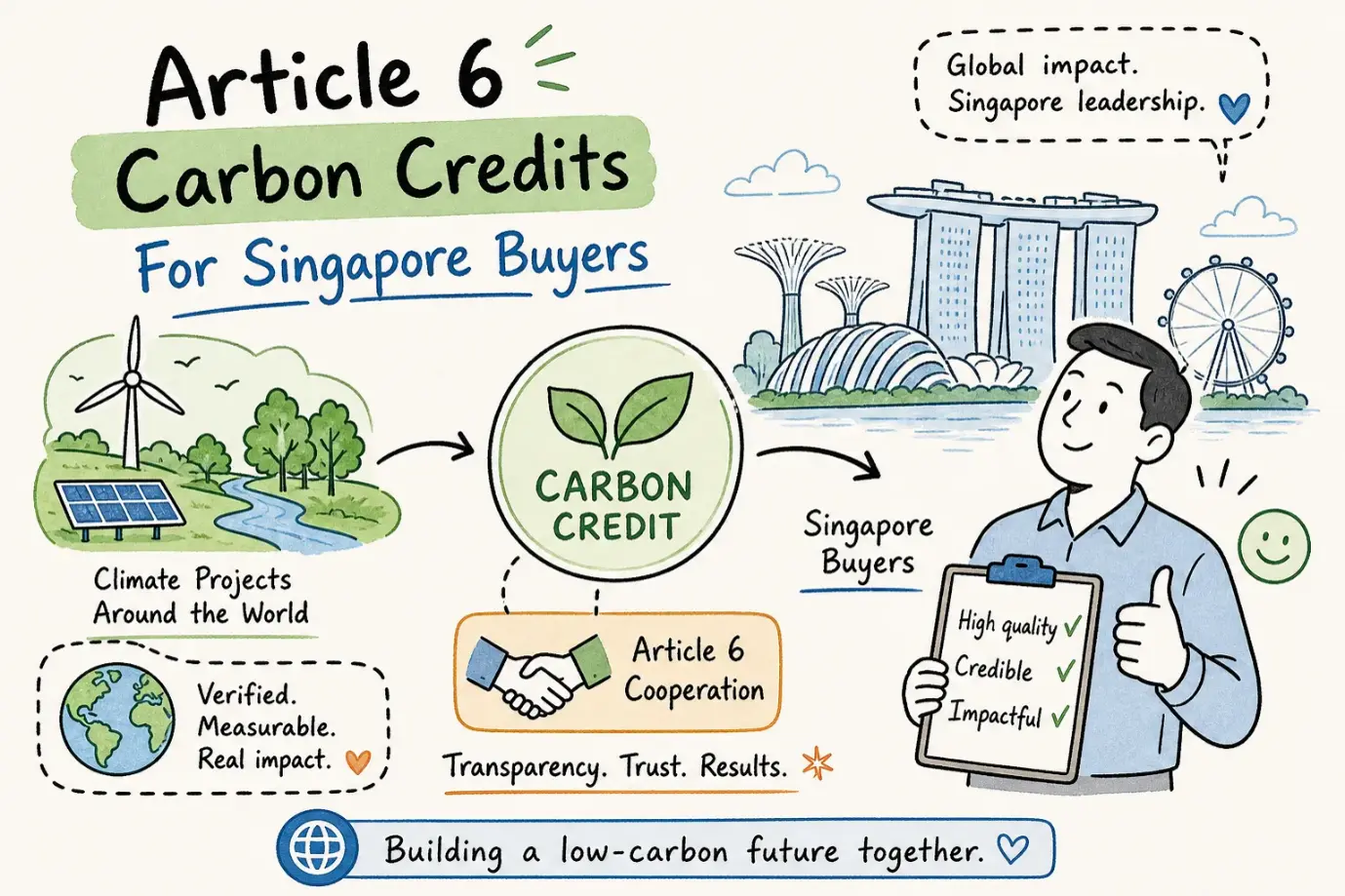
Article 6 carbon credits are fundamentally different from standard voluntary offsets, and...
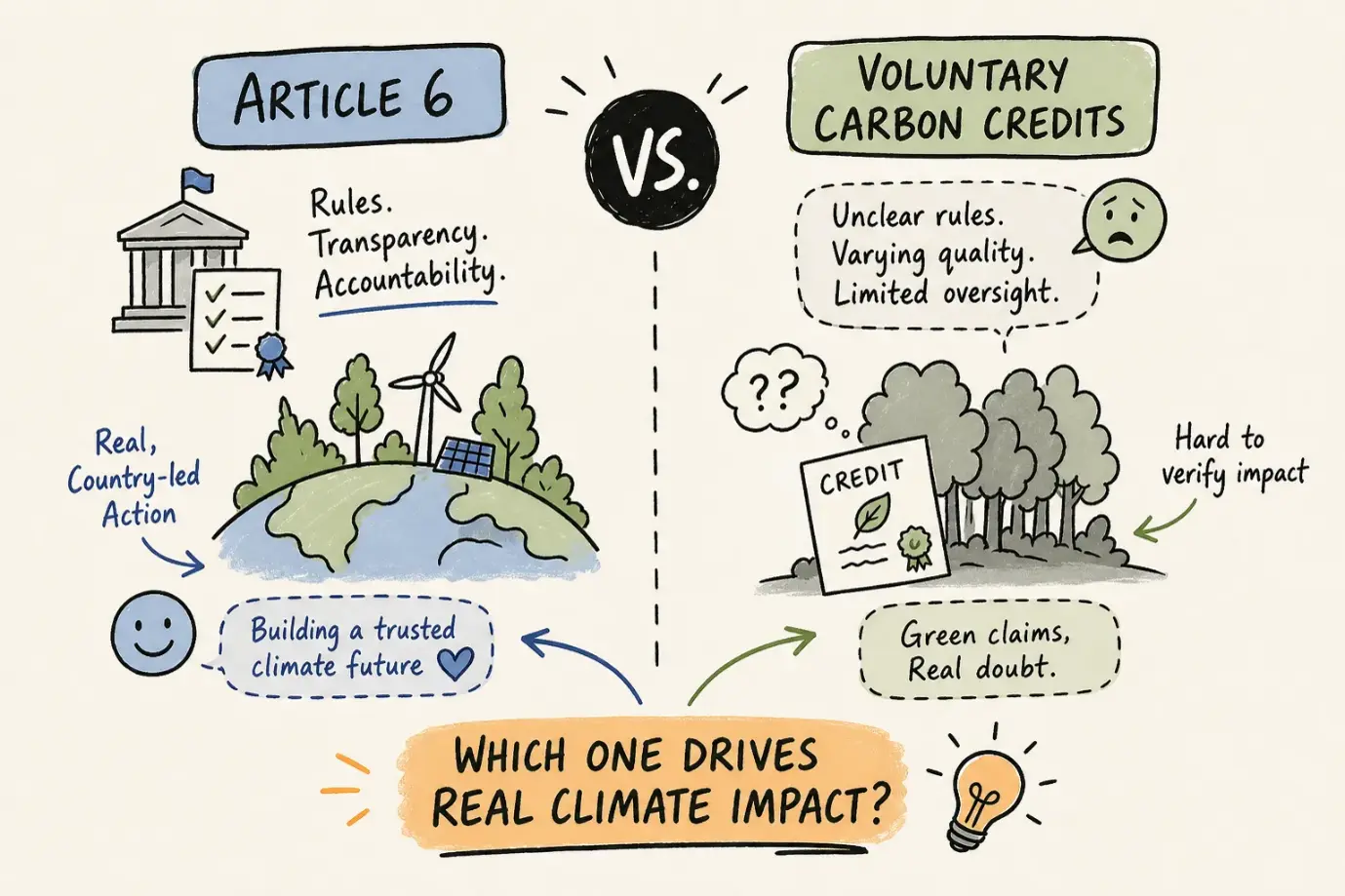
Understanding the difference between Article 6 and voluntary carbon market credits is...
Carbon neutral vs net zero: two terms, both sound green, both are...
For Singapore businesses, Article 6 carbon credits explained properly can mean the...
Carbon neutrality claims are increasingly visible in Singapore's events industry. Conference programmes...

Green Passport Carbon
Quick Links
More Information
 Optimized by Seraphinite Accelerator