
Carbon Offset Solutions for Singapore Hotel...
Carbon offset solutions for hotel ballrooms and event spaces in Singapore are...

Green Passport Carbon , Singapore

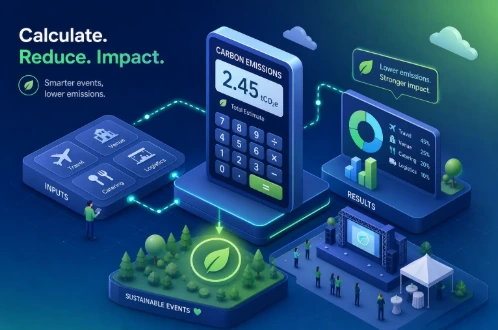
Many event planners who go looking for a carbon emission calculator find one quickly. ICAO for flights. EPA for energy. myclimate for a quick estimate. They punch in a few numbers, get a figure, and feel like they’ve done the work. The problem is that a number without the right scope isn’t a carbon footprint. It’s a guess with a decimal point.
Green Passport Carbon was built around one observation: events are not flights, not households, and not factories. They’re a layered combination of travel, energy, food, waste, and accommodation that few general-purpose calculators are purpose-built to handle. This guide explains how these tools actually work, what inputs matter most for events, where common calculators fall short, and what a purpose-built event carbon calculator does differently.
Every carbon emission calculator, whether it covers flights, electricity, or freight, works on the same basic principle. You feed it an activity: a flight route, kilowatt-hours of electricity, kilograms of food waste. It multiplies that activity by a published emission factor to produce a CO₂ or CO₂e figure. The emission factor is the critical variable. For electricity in Singapore, the Energy Market Authority (EMA) sets the official grid emission factor at 0.402 kgCO₂/kWh for 2024. Tools built for the Singapore market should apply this figure for local venue energy calculations rather than substituting a global average.
Not all emission factors are created equal, and neither are the methodologies that govern them. ICAO’s Carbon Emissions Calculator uses a globally harmonised aviation methodology covering route distance, aircraft type, load factors, and a fuel-to-CO₂ factor of 3.16 kg per kg of fuel. ISO 14083 covers transport chain emissions for passengers and freight. The GHG Protocol governs broader corporate Scope 1, 2, and 3 accounting. Each standard was built for a specific context, which matters enormously when you are trying to measure something as multi-faceted as a corporate event.
Here is where things get uncomfortable. Side-by-side comparisons published by transport emissions researchers have found that results for the same route can differ by a factor of two or more, and in some cases by four times or higher. In one published comparison for a Singapore to Paris return trip, ICAO produces roughly 1,034 kg CO₂e, myclimate comes in around 4,500 kg, and Atmosfair at approximately 6,194 kg. The differences come down to whether the tool includes cabin class weighting, radiative forcing, cargo belly allocation, and aircraft-specific fuel data. A tool that excludes non-CO₂ climate effects from aviation will produce a materially lower number than one that includes them. Neither is strictly wrong, they are just answering different questions.
For most MICE events, attendee travel accounts for the largest share of total emissions, often more than half the footprint when delegates are flying in from multiple cities or countries. A robust CO₂ footprint estimator for events needs origin and destination data, mode of transport, and cabin class at minimum. Averaging across a generic “international flight” factor understates emissions significantly for long-haul business class travel and overstates them for short regional hops.
The calculation should group attendees by origin, assign the appropriate transport mode to each group, estimate round-trip distance, and multiply by the number of travellers in that group before summing all groups into a total travel figure.
The venue’s electricity consumption, calculated using the local grid emission factor, is typically the second largest contributor. Accommodation adds Scope 3 emissions tied to hotel nights, and catering carries its own emissions profile. Beef and dairy-heavy menus carry substantially higher carbon intensity than plant-forward alternatives. One published benchmark places a meat-centric conference serving at around 4.1 kg CO₂e per serving, compared to roughly 0.90 kg CO₂e for a plant-based equivalent. Many general-purpose greenhouse gas calculators have no dedicated fields for event catering, multi-origin travel, or accommodation. They were not designed to. Event planners who try to cobble together separate tools for each category quickly discover that the inputs don’t reconcile neatly into a single total.
Waste generated on-site adds to the footprint but is often omitted from event estimates entirely. Food waste, print collateral, and single-use items each carry their own emissions profile. A GHG equivalency calculator built for industrial reporting is not going to have a field for branded lanyards disposed of after a two-day conference. These categories feel small individually but compound across large-scale events with high material usage.
The ICAO calculator is an excellent tool for what it was designed to do: estimate aviation emissions for a single passenger journey. The EPA’s tools are calibrated to U.S. emission factors and household-level energy inputs. myclimate handles personal and trip-based footprints well. None of these is a criticism, they are well-built tools that answer specific questions well. The problem arises when event planners use them as proxies for a full event footprint, which requires integrating travel from multiple origins, local energy use, food and beverage emissions, accommodation, and waste into a single coherent inventory.
Generic business carbon calculators typically capture Scope 1 and 2 emissions reasonably well. Scope 3, which includes all the attendee travel, hotel stays, and supply chain emissions tied to an event, is where they struggle. For a 300-person conference, ignoring attendee travel emissions because your calculator does not have a field for them is not a methodology choice. It is a blind spot that will show up the moment anyone scrutinises your claim.
A carbon footprint calculator that produces a number significantly lower than reality, 40% lower, for example, does not just mean you bought fewer offsets than you needed. It means your carbon neutrality claim does not hold up. In the context of ESG reporting and increasing regulatory scrutiny in Singapore, that is a reputational and compliance risk. Methodology transparency and scope completeness are not optional refinements. They are the difference between a defensible claim and one that cannot survive a question in an audit.
Green Passport Carbon built its event carbon calculator specifically to handle the multi-source complexity that generic tools cannot. The calculation covers flights, accommodation, venue electricity, food and beverages, and materials. Everything feeds into a single inventory, the total is not the sum of five disconnected spreadsheets. It is a coherent, indicative planning estimate informed by how ISO 14068-1 defines the boundary of a carbon neutral event.
Locally calibrated emission factors matter more than most planners realise. Singapore’s electricity grid has a specific carbon intensity that differs from the global averages many international GHG calculators apply by default. Using the correct local grid factor of 0.402 kgCO₂/kWh is not a minor detail. It directly affects the accuracy of what is often the venue’s largest single emission source. A calculator built for the Singapore market applies this EMA-sourced default as a matter of course, not as an afterthought.
The methodology behind the Green Passport Carbon calculator is informed by recognised carbon-accounting principles, including ISO 14068-1, the internationally recognised standard for carbon neutrality claims, which was revised in September 2026 as ISO 14068:2026. This matters because ISO 14068-1 defines how you set the boundary of your footprint, what you must include, and how offsets qualify. Starting from a calculator built around these principles gives you a sound basis for review, but calculator results are indicative and are not by themselves a final verified or certified footprint. The estimate should be reviewed and refined with actual event data before it supports a carbon neutrality claim.
Getting a total emissions figure is step one. It tells you the scale of the problem. But an emissions number on its own does not constitute a carbon neutral event, and it does not satisfy ESG reporting requirements in any meaningful way. What transforms a number into a verifiable claim is the combination of a robust methodology, qualified carbon credits retired against the total, and documented evidence that the process meets a recognised standard.
For exactly this reason, Green Passport Carbon structures its process around three connected steps, each one building on the last to produce a claim that holds up.
• Calculate: Produce a scoped, methodology-aligned footprint covering all relevant emission sources for your event, using Singapore-specific factors where applicable.
• Retire: Retire eligible carbon credits against that total, with documented retirement records. Where a client specifically needs Article 6-authorised credits with a corresponding adjustment, that status should be confirmed and documented for the specific credits before retirement.
• Certify: Receive a branded Green Passport Carbon certificate, with a unique certificate ID and verification link, that event organisers and corporates can use in sustainability communications and ESG reports. The certificate documents the carbon action taken; it is not an ISO certification or an independent third-party verification. The calculator itself is free and gives a Free Event Carbon Estimate; the Full Event Carbon Assessment, carbon-credit retirement and the Green Passport Carbon Event Certificate are provided as part of Green Passport Carbon’s quote-based service.
Each step is connected. None is optional if you want a claim that holds up under scrutiny. This is not a theoretical framework. It is a practical pathway that removes the need to source separate tools, consultants, and credit registries, and delivers a documented output that directly supports annual ESG reporting.
A carbon emission calculator is only as useful as its scope. For a one-way flight or a household energy bill, a general-purpose tool does the job well enough. For a multi-day conference with international delegates, a gala dinner, and three hotels, it leaves too much out. The inputs matter, the emission factors matter, and the methodology determines whether your final number is defensible or decorative.
Event professionals in Singapore who need a carbon footprint that stands behind an ESG report or a carbon neutrality certificate need a tool built for that purpose. Generic flight calculators, household footprint tools, and freight estimators were not built with MICE events in mind. They were built for other problems. Using them for yours produces an answer, but not necessarily the right one.
Start with the right carbon emission calculator, and the path from measurement to certification becomes straightforward. Green Passport Carbon’s event-specific calculator, informed by ISO 14068-1 principles and built for Singapore events, is built precisely for this. If your next event needs a carbon footprint that actually reflects what happened, start there.
Carbon offset solutions for hotel ballrooms and event spaces in Singapore are...
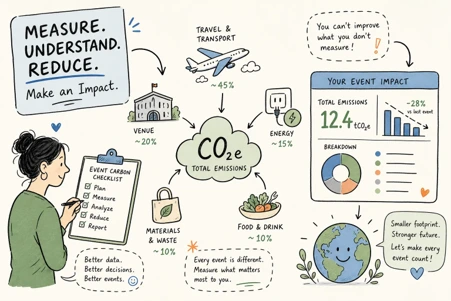
Most event organisers know they should be doing event carbon measurement. The...

Many venues now advertise a green event package Singapore corporate clients can...
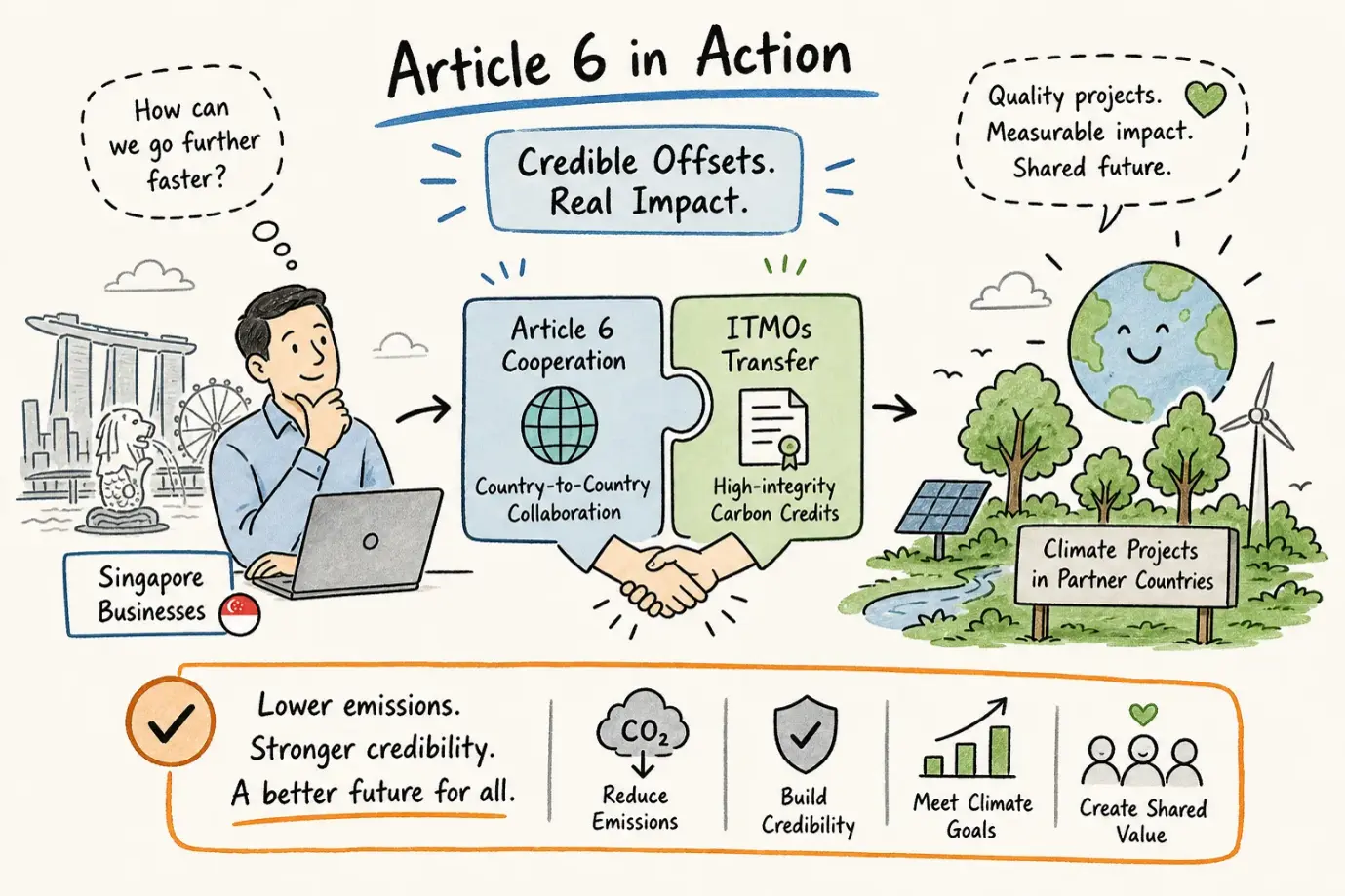
Article 6-aligned offsets are no longer just a conference talking point; they...
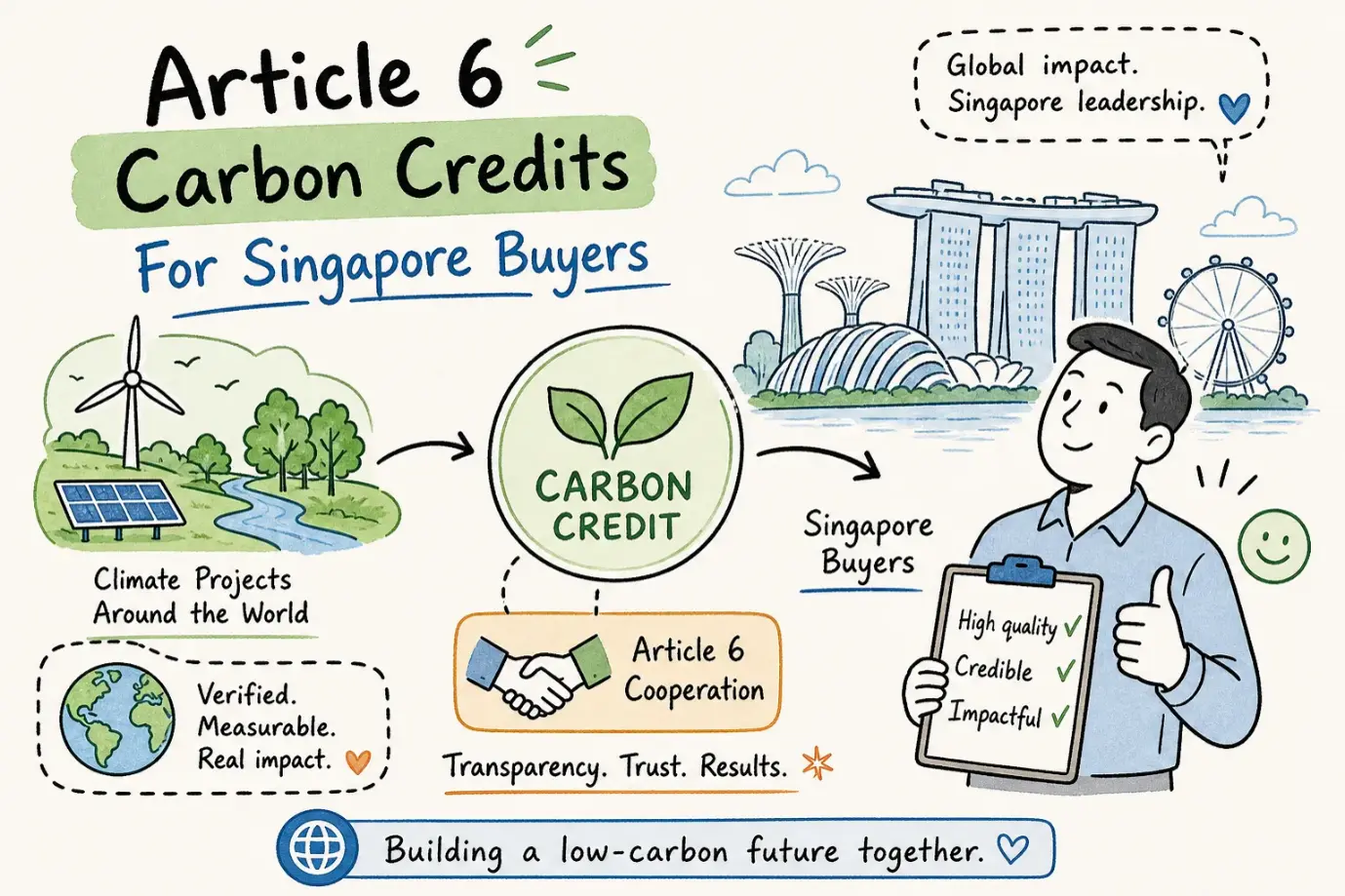
Article 6 carbon credits are fundamentally different from standard voluntary offsets, and...
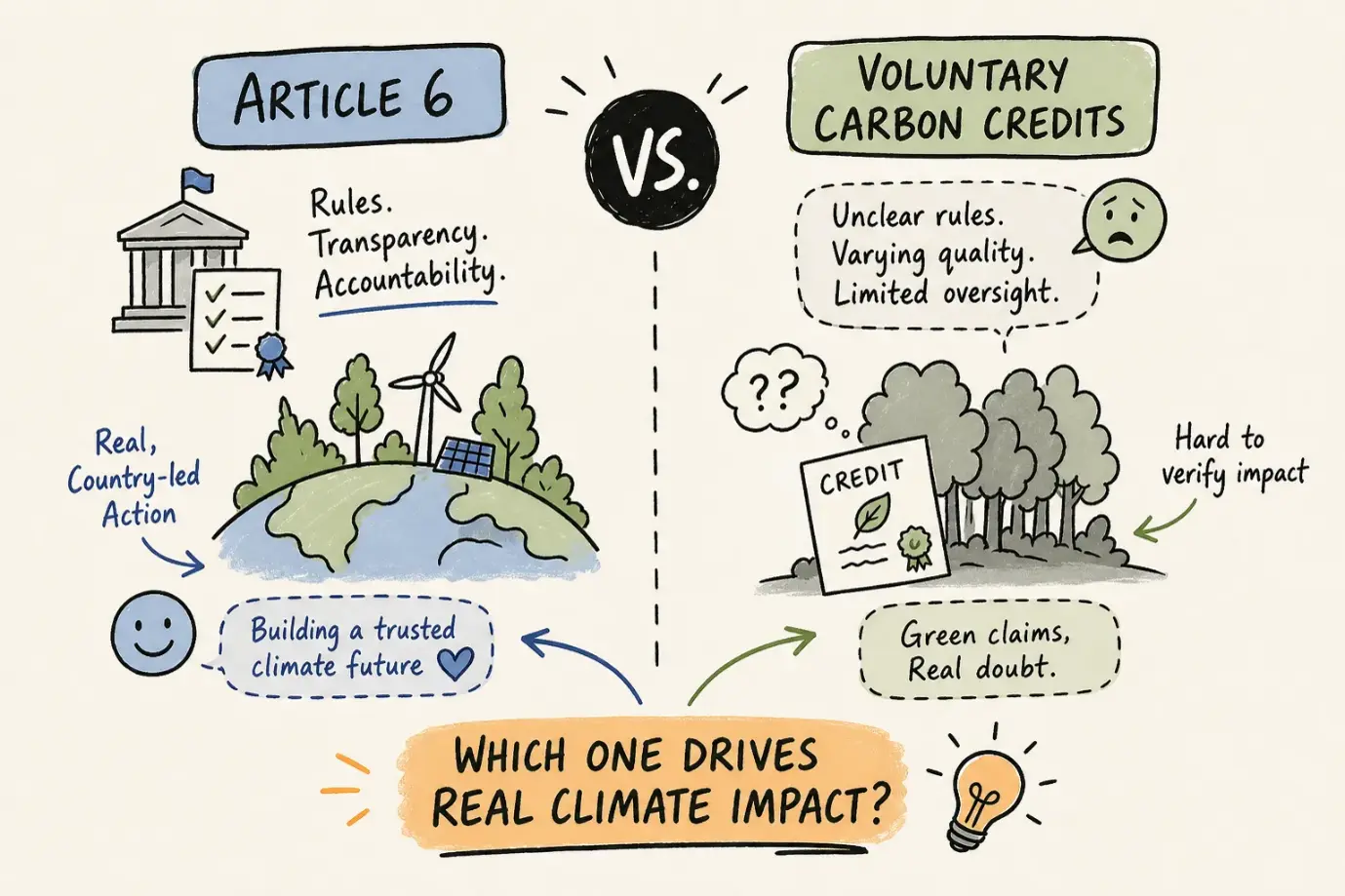
Understanding the difference between Article 6 and voluntary carbon market credits is...
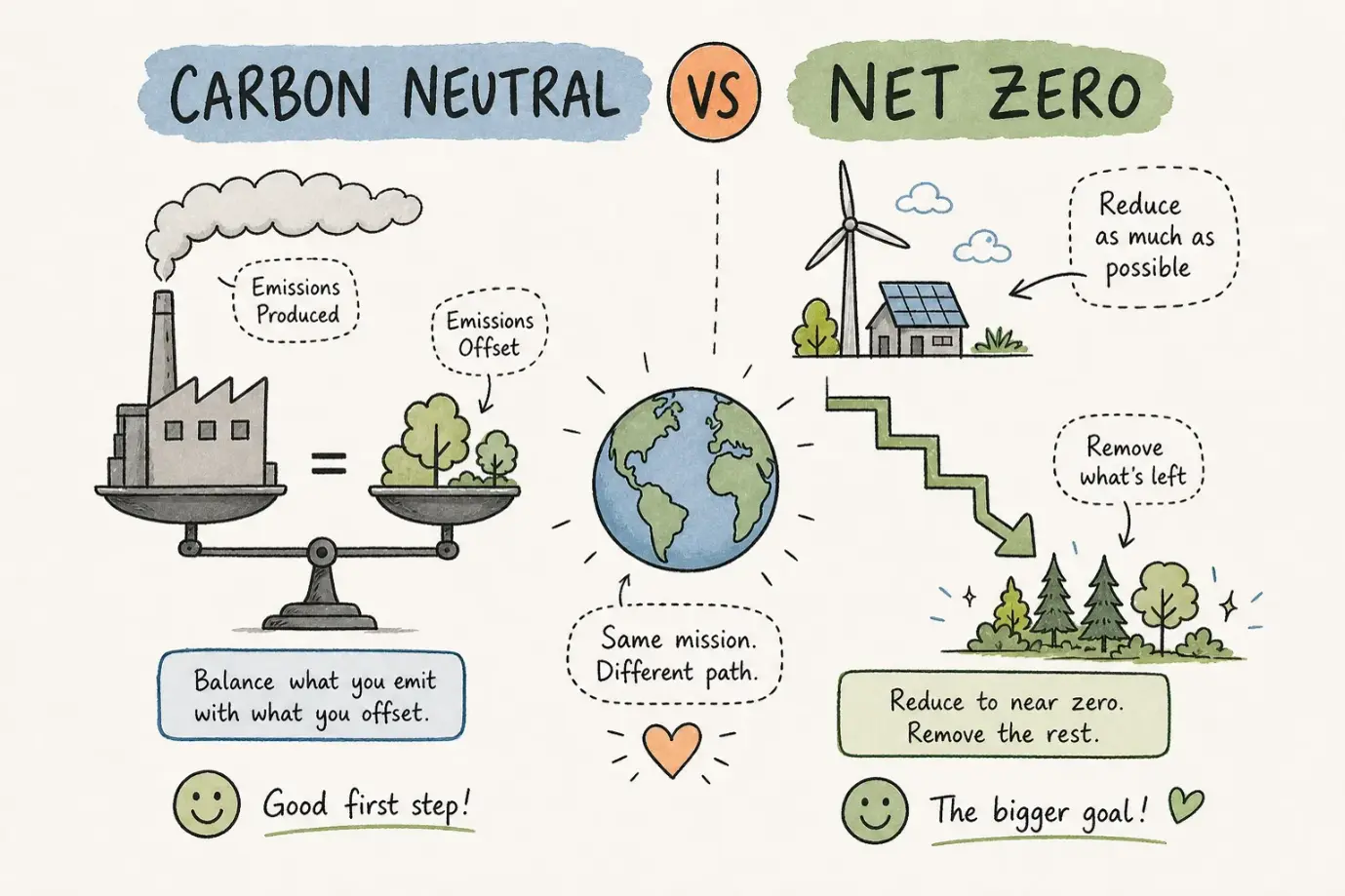
Carbon neutral vs net zero: two terms, both sound green, both are...
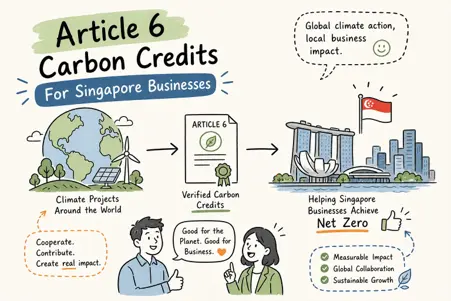
For Singapore businesses, Article 6 carbon credits explained properly can mean the...
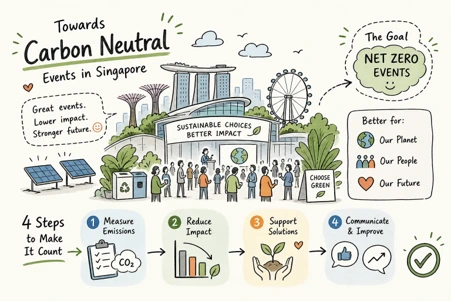
Carbon neutrality claims are increasingly visible in Singapore's events industry. Conference programmes...

Green Passport Carbon
Quick Links
More Information
 Optimized by Seraphinite Accelerator