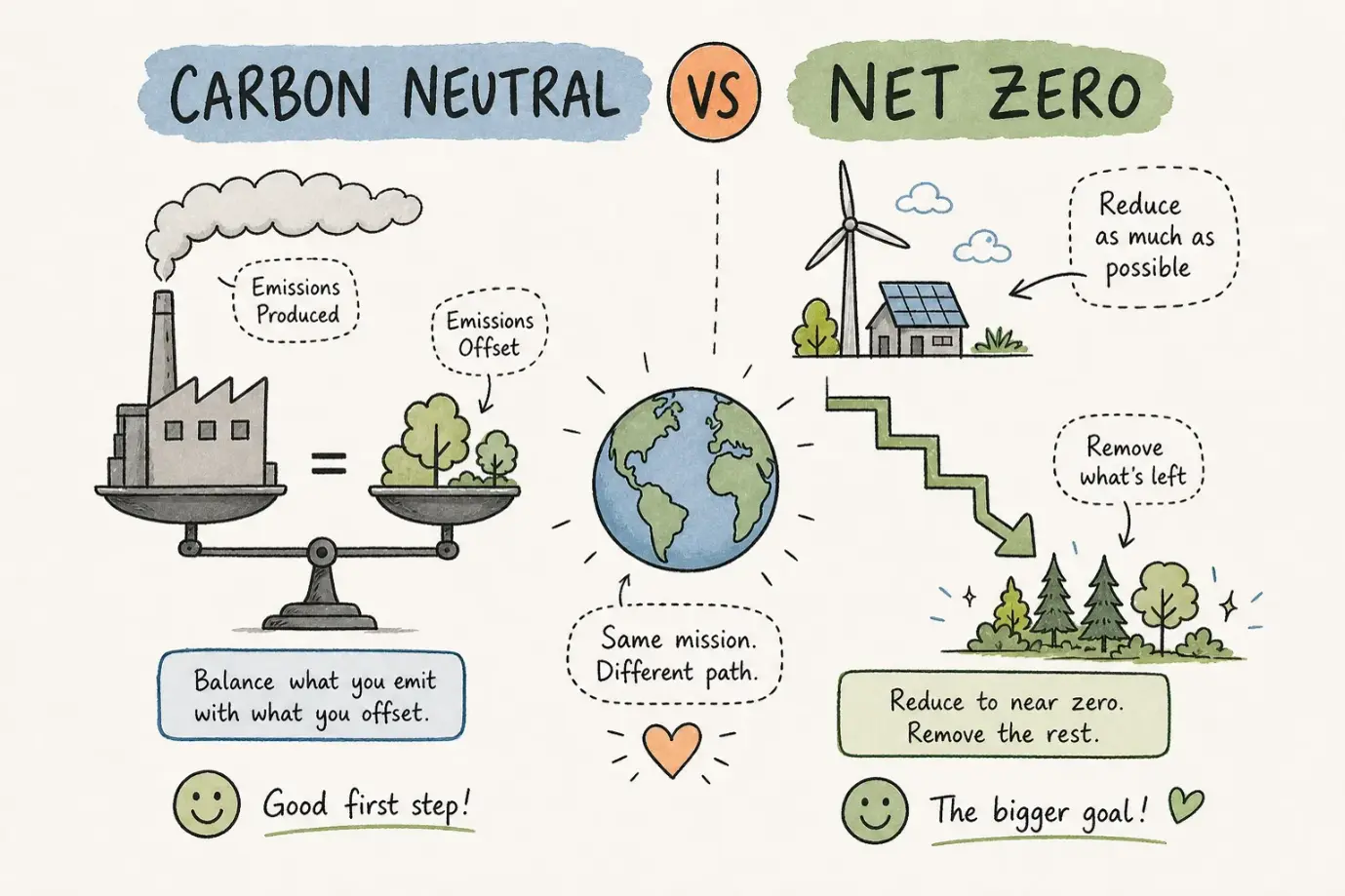
Carbon neutral vs net zero: what’s...
Carbon neutral vs net zero: two terms, both sound green, both are...

Green Passport Carbon , Singapore

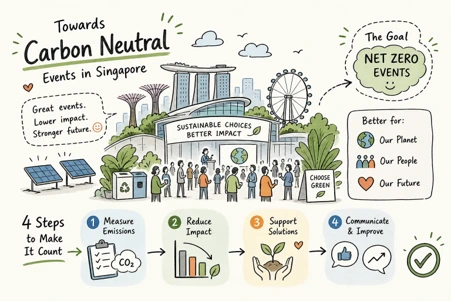
Carbon neutrality claims are increasingly visible in Singapore’s events industry. Conference programmes feature green logos, venue brochures cite “carbon offset” initiatives, and post-event reports include offset certificates. The risk, observed across the broader MICE sector, is that many such claims are backed by little more than a purchase receipt with no named standard behind them. Where a recognised carbon neutrality standard is absent, there is no structural obligation to measure comprehensively, reduce first, or use credits that meet quality criteria. That gap is where reputational and commercial risk accumulates.
A carbon neutrality standard is what separates a defensible claim from a liability waiting to surface when a sponsor’s procurement team or an ESG auditor starts asking questions. A claim made in conformity with a recognised framework such as ISO 14068-1 must meet that standard’s quantification, reduction, offsetting and disclosure requirements. Those who do not are essentially selling confidence with no structural backing. This article explains what each relevant standard requires, how they compare, and what Singapore event organisers need to do to get this right.
Buying an offset is a transaction. A carbon neutrality standard is a rulebook. The two are not interchangeable, and conflating them is the most common source of greenwashing risk in the events sector. Without a governing standard, an organiser has no obligation to measure all material emission sources, document reduction efforts, use credits that meet quality criteria, or have any of it independently verified. A certificate issued without that framework is, at best, a marketing asset, one that may not withstand review by procurers or ESG auditors who require standards-backed evidence.
Sponsors, MNC clients, and ESG auditors are increasingly asking a different set of questions. Not “do you have a certificate?” but “which standard underpins the claim, how was the boundary set, were Scope 3 emissions included, and was this independently verified?” A certificate that cannot answer those questions does not satisfy modern procurement requirements, and the Singapore market is moving in that direction.
Any recognised carbon neutrality standard must address four non-negotiables. Together, these elements reflect the core requirements codified in ISO 14068-1 and are what distinguish a credible claim from a cosmetic one:
Comprehensive quantification: all material emission sources within a defined boundary must be measured, not just the convenient ones.
A reduction hierarchy: reductions and removal enhancements must be implemented before any offsetting takes place.
Residual-only offsetting: credits are used to neutralise what genuinely cannot be reduced, not to bypass the hard work of cutting emissions.
Independent verification: the claim should be checked by a qualified independent third party before it is published. This is not mandatory under ISO 14068-1, which also permits self-declared claims, but it provides the strongest assurance.
ISO 14068-1:2023, published that year, became the international standard for achieving and demonstrating carbon neutrality. In September 2026, ISO replaced it with ISO 14068:2026, a minor revision that mainly changes the title and removes the part number. It sits within the ISO 14060 family and applies to organisations and to products, including services and events. Importantly, when the standard uses the word “carbon,” it refers to all greenhouse gases, not just CO₂. That makes it directly applicable to event organisers who need to account for attendee travel, venue energy, accommodation, catering, and supply chain emissions within a single, coherent framework, and it provides the GHG neutrality guidance needed to substantiate claims across all those sources.
The mitigation hierarchy is what makes ISO 14068-1 meaningfully stricter than older approaches. The sequence is non-negotiable: quantify the full footprint first, implement reductions and removal enhancements within the defined boundary second, and only then offset the residual emissions that remain. Offsetting alone does not satisfy the standard. Reductions must be documented, prioritised, and evidenced before any credits are retired. This is a deliberate design choice to prevent the standard from being used as a fig leaf for inaction.
ISO 14068-1 requires the inclusion of material Scope 3 emissions. For events, this means attendee travel, accommodation, and supply chain emissions are not optional additions that can be excluded with a footnote. They are mandatory inputs when they are material to the footprint. This is a significant departure from older frameworks, which gave organisations far more latitude to define narrow boundaries that excluded the largest emission sources. In a conference where the majority of the footprint derives from delegate travel, excluding Scope 3 would materially undermine the credibility of any neutrality claim.
PAS 2060 was the previous carbon neutrality specification, widely used before 2023 and withdrawn by BSI at the end of 2025. It required a carbon management plan and some form of offsetting, but gave organisations considerably more flexibility on which emissions to include and how to demonstrate neutrality. The reduction hierarchy was softer, Scope 3 inclusion was treated more permissively, and the overall framework was less demanding in its evidence requirements. ISO 14068-1 is more structured, more explicit about the reduction hierarchy, and more demanding on Scope 3 accountability. Certificates issued under PAS 2060 today reference a standard that no longer exists, which creates an obvious credibility problem when those certificates face external scrutiny.
ISO 14064 is a family of GHG accounting and verification standards. ISO 14064-1 covers organisational-level emission inventories, ISO 14064-2 covers project-level quantification, and ISO 14064-3 covers verification and validation of GHG statements. This family tells you how to measure and verify emissions accurately, but it does not define what carbon neutrality means or set out the carbon neutrality claim rules that govern how a claim must be structured and disclosed. ISO 14068-1 uses ISO 14064-1 (or ISO 14067 for products) for quantification, and ISO 14064-3 is the usual basis when a claim is independently verified. In other words, ISO 14064 is the foundation; ISO 14068-1 is the building constructed on top of it.
The practical summary is straightforward. If your certificate needs to hold up to scrutiny in 2026 and beyond, it should reference ISO 14068-1 or its 2026 revision, ISO 14068:2026. PAS 2060 is withdrawn. ISO 14064 alone is not a carbon neutrality claim standard. The current best-practice framework is ISO 14064-1 for the accounting layer combined with ISO 14068-1 for the neutrality claim. Any other combination is either outdated or incomplete, neither position is one you want to be defending to a client’s legal or ESG team.
The implementation sequence for event organisers under the carbon neutrality standard follows a clear progression. Start by defining the subject and boundary of the claim: a single event, an annual conference programme, or a venue. Then quantify the carbon footprint across Scope 1, Scope 2, and material Scope 3 emissions, covering travel, venue energy, accommodation, catering, and waste. Document a carbon neutrality management plan that sets reduction targets, assigns responsible parties, and establishes timelines. Implement reductions wherever operationally feasible before turning to offsetting. Retire eligible, verified carbon credits for the residual emissions that cannot be reduced. Finally, decide how the claim will be substantiated: the standard allows a self-declaration, but independent third-party verification, typically using ISO 14064-3, gives the strongest assurance before publishing the carbon neutrality claim. Each step builds on the last, and skipping any of them breaks the chain of credibility.
ISO 14068-1 sets clear quality criteria for the credits used to offset residual emissions. They must be real, additional, measurable, permanent, and independently verified. Credits must be retired against the specific reporting period so they cannot be double-counted or claimed by another party. The registry must maintain serial-numbered records that allow full traceability. Article 6-aligned credits can meet these criteria, but the standard does not require Article 6 authorisation, and each credit’s quality still needs to be checked. Singapore is an active participant in international carbon credit cooperation under the Paris Agreement, and Article 6 alignment is therefore a commercially relevant consideration when presenting certificates to government-linked clients or MNC procurement teams whose own ESG reporting may reference Singapore’s international climate commitments.
Singapore’s Green Plan 2030, the Singapore Tourism Board’s sustainable business events initiatives, and ACRA and SGX climate reporting requirements are all moving in the same direction. The expectation that event carbon claims are standards-backed and well evidenced is no longer confined to the sustainability community; it is entering mainstream procurement. Government-linked organisations, MNCs with their own ESG reporting obligations, and international sponsors are asking for documentation that names the standard applied, describes the boundary, confirms Scope 3 inclusion, and evidences independent verification. A generic offset certificate does not answer those questions. Documentation that names the standard referenced, the boundary, the credits retired and the verification status does.
Green Passport Carbon was developed to address the practical implementation gap that event organisers in Singapore’s MICE sector face when working towards a standards-aligned carbon neutrality claim. Its end-to-end process covers event carbon footprint calculation across travel, venue, accommodation, and catering emissions; carbon credit retirement with full documentation; and a branded Green Passport Carbon certificate with a unique ID and verification link, prepared with reference to principles aligned with ISO 14068-1. The certificate documents the carbon action taken; it is not an ISO certification or an independent third-party verification, which organisers can commission separately if their claim requires it. Having the calculation, credit retirement and documentation handled through a single provider purpose-built for events reduces the complexity of coordinating separate consultants and credit registries. For a PCO managing a client conference or a corporate team handling an annual roadshow, that simplicity is not just convenient: it is what makes implementation realistic rather than aspirational. The calculator itself is free and gives a Free Event Carbon Estimate; the Full Event Carbon Assessment, carbon-credit retirement and the Green Passport Carbon Event Certificate are provided as part of Green Passport Carbon’s quote-based service.
The key points are clear. ISO 14068-1:2023 became the internationally recognised carbon neutrality standard, and ISO replaced it in September 2026 with ISO 14068:2026, a minor revision. PAS 2060 has been withdrawn. ISO 14064 provides the accounting and verification backbone, not the neutrality claim framework itself. For Singapore event organisers, a certificate that names a recognised standard is no longer a nice-to-have when the claim needs to survive scrutiny from clients, sponsors, or ESG auditors.
The steps are defined by the standard: measure comprehensively, reduce first, offset only residual emissions with qualifying credits, substantiate the claim, ideally with independent verification, and disclose transparently. There is no shortcut that satisfies all of those requirements, providers who suggest otherwise are offering exposure rather than protection. Contact the Green Passport Carbon team to discuss what implementing the carbon neutrality standard looks like for your next event or annual programme.
Carbon neutral vs net zero: two terms, both sound green, both are...
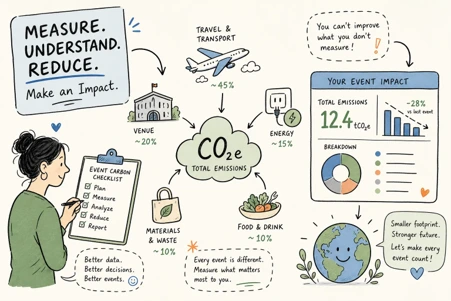
Most event organisers know they should be doing event carbon measurement. The...

Many venues now advertise a green event package Singapore corporate clients can...
Find quick answers about the Event Carbon Calculator, your emissions estimate, and what happens next.
There is no official threshold. The most cited reference is approximately 14.13 kg CO2 per attendee for venue-related emissions, with energy the dominant contributor. Note this excludes attendee travel, so a full-scope per-attendee figure will typically be higher. Treat it as a comparative benchmark for the venue category rather than a pass mark for the whole event.
Yes. SACEOS has published WA 4: Sustainable MICE — Guidelines for Carbon Emissions Management, a Singapore Standards workspace agreement covering measurement, reduction, calculation, verification and offset. Separately, the Singapore MICE Sustainability Certification (MSC) provides GSTC-Recognised organisational certification, and STB and SACEOS will develop a MICE Decarbonisation Framework by 2028.
Air-conditioning, lighting and audiovisual systems run continuously through operating hours regardless of attendee behaviour, making venue energy a structural and relatively predictable load. In Singapore’s climate, cooling demand is both unavoidable and substantial. This is why the MICE Venue Sustainability Playbook points to emissions per square foot of venue area as a comparable metric.
Yes — and then raised them. By 2025 the original roadmap targets were exceeded, with all purpose-built MICE venues and over 80% of SACEOS member companies certified. Roadmap 2.0, unveiled in July 2026, commits to a MICE Decarbonisation Framework by 2028 and net zero by 2050.
No. MSC certifies the organisation across domains including carbon, waste, energy, water, social responsibility, HR competency and procurement, valid for two years. It does not produce a per-event footprint figure or evidence that a specific event’s emissions were addressed. Those are separate exercises.
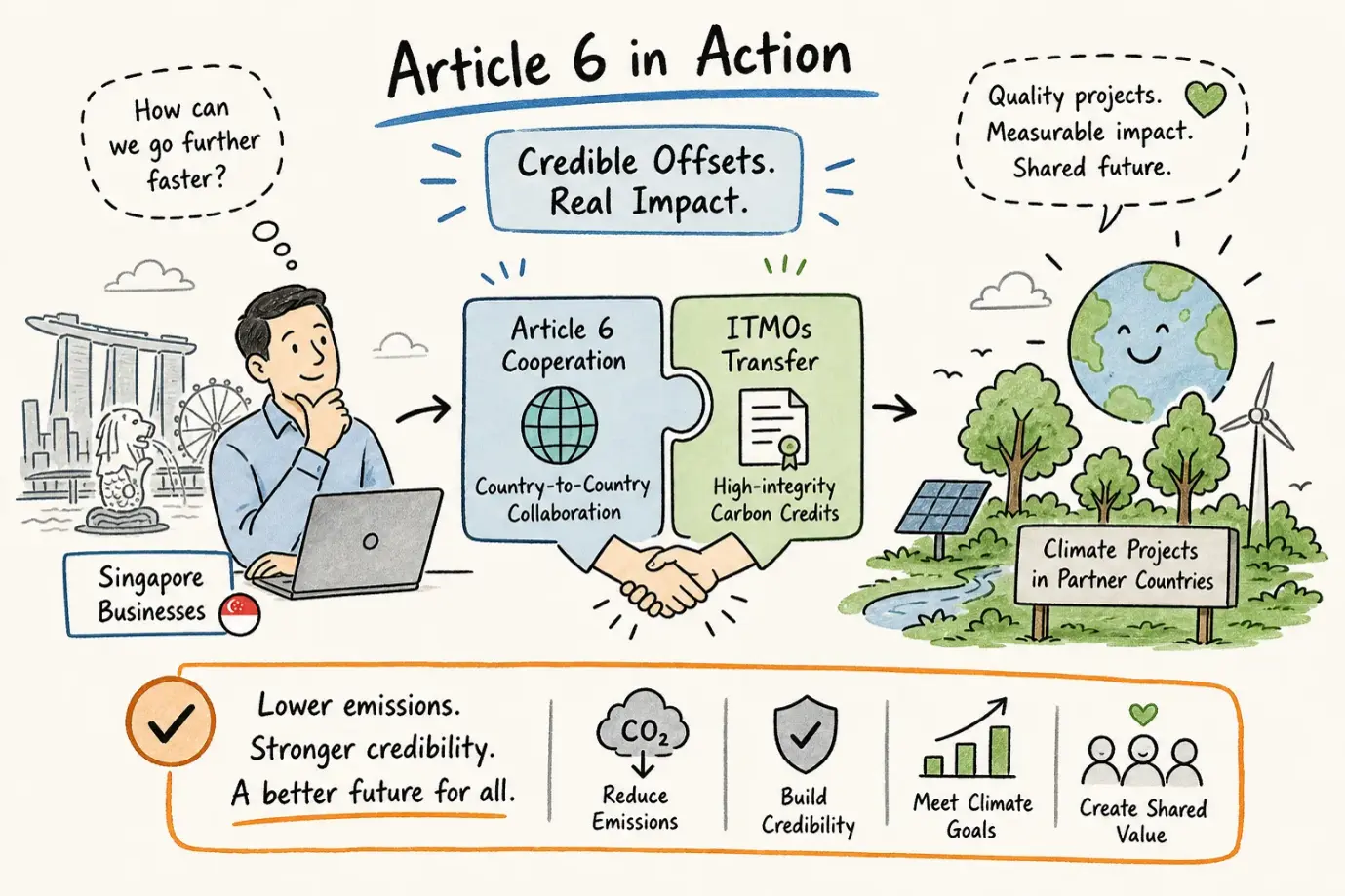
Article 6-aligned offsets are no longer just a conference talking point; they...
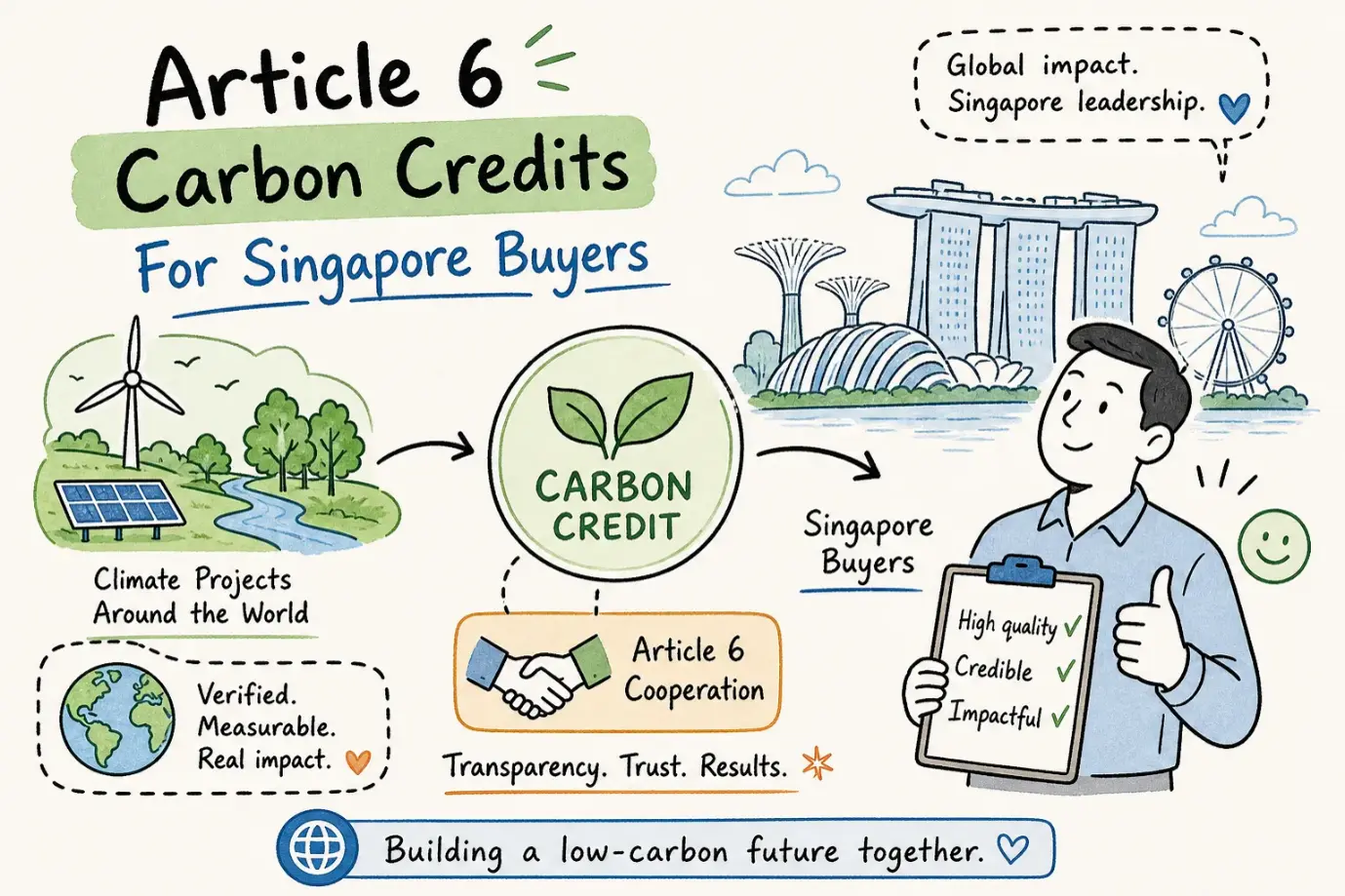
Article 6 carbon credits are fundamentally different from standard voluntary offsets, and...
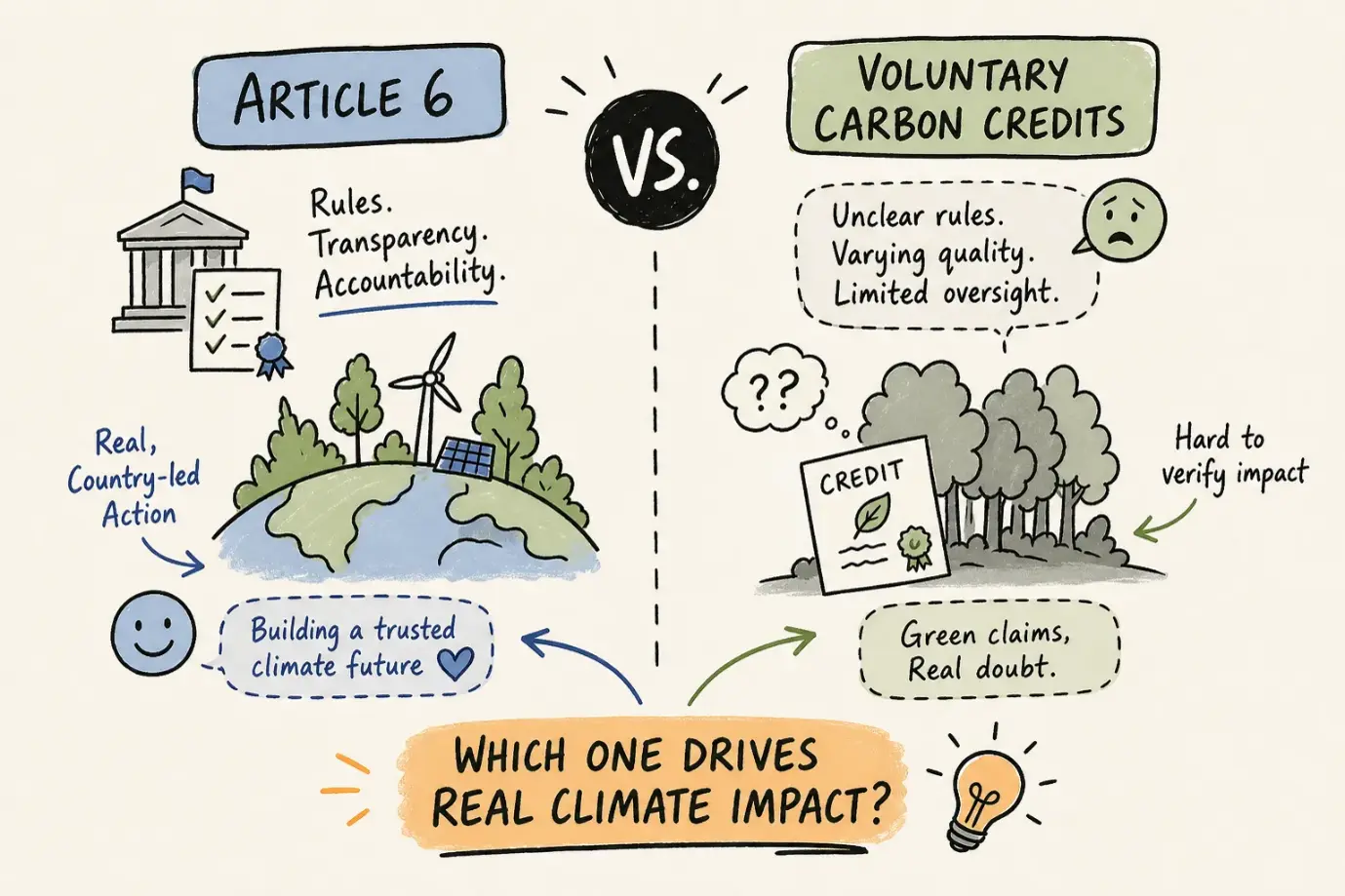
Understanding the difference between Article 6 and voluntary carbon market credits is...
Carbon neutral vs net zero: two terms, both sound green, both are...
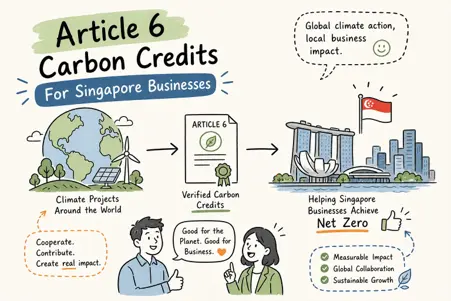
For Singapore businesses, Article 6 carbon credits explained properly can mean the...
Carbon neutrality claims are increasingly visible in Singapore's events industry. Conference programmes...

Green Passport Carbon
Quick Links
More Information
 Optimized by Seraphinite Accelerator