
Carbon Offset Solutions for Singapore Hotel...
Carbon offset solutions for hotel ballrooms and event spaces in Singapore are...

Green Passport Carbon , Singapore


Singapore is widely regarded as one of Asia’s most active hubs for conferences, exhibitions, and corporate events. Planning sustainable MICE events in Singapore has shifted from a nice-to-have into a concrete operational and reporting requirement, and this guide walks you through exactly how to meet that bar. The Singapore Tourism Board (STB) and SACEOS have a formal roadmap in place, venue certifications are tiered and auditable, and ESG reporting requirements are increasingly encouraging organisations to pull carbon accountability directly into event scopes.
The most practical approach to this shift involves two parallel layers of work. The first is operational: choosing certified venues, commissioning responsible caterers, designing for waste reduction, and running a tighter logistics operation. The second is measurable and reportable: calculating your residual carbon footprint and obtaining a documented certificate that holds up to ESG scrutiny. Specialist providers like Green Passport Carbon can significantly reduce the in-house burden of that second layer for Singapore MICE organisers, removing the need to build dedicated capability from scratch. This guide walks you through both dimensions in sequence.
The Singapore MICE Sustainability Roadmap, developed by STB and SACEOS, is not a soft industry aspiration. It sets concrete milestones that your venue and supplier partners are already being assessed against, which means your event benefits or suffers depending on the choices you make at the planning stage. Understanding the targets is the first step to using them as a procurement filter rather than treating them as regulatory background noise.
The roadmap’s near-term targets required all purpose-built MICE venues and 80% of SACEOS members to hold internationally or nationally recognised sustainability certification by 2025. Tracking of waste and carbon emissions was set as a 2023 target. These milestones are the benchmarks against which your venue partners are being assessed today. If a venue cannot produce evidence of certification, that absence tells you something specific about its sustainability posture.
Roadmap 2.0, launched by STB and SACEOS in July 2026, extends the ambition further across environmental, social and economic pillars. A MICE Decarbonisation Framework for purpose-built venues is due by 2028, and Singapore’s national net-zero target is set for 2050. For event organisers, this matters less as a distant headline and more as a practical argument for acting now. Organisations that start measuring their event emissions in 2026 will have a baseline from which to demonstrate progress. Those that wait will find themselves scrambling to establish that baseline under external pressure rather than on their own terms.
Venue selection carries more sustainability weight than any other single decision an organiser makes. The venue’s energy systems, waste infrastructure, and certifications underpin every other green practice you apply at the event. Not all “green” venue claims carry equal weight, and understanding the certification hierarchy is essential before you shortlist.
Four certifications are worth prioritising when evaluating green event management credentials. BCA Green Mark (Platinum and Super Low Energy tiers) signals the highest energy and environmental performance for the building itself. LEED Platinum is its internationally recognised equivalent. ISO 20121 is a process standard for sustainable events management, it tells you the venue manages events sustainably as a systematic practice rather than on an ad hoc basis. The SACEOS MICE Sustainability Certification rounds out the picture as the local sector-specific standard. Green Mark tells you the building performs to a measurable environmental standard; ISO 20121 tells you the operational processes are embedded. The strongest venues hold both.
Among purpose-built convention venues, Sands Expo and Convention Centre holds BCA Green Mark Platinum, LEED Platinum, and the SACEOS MICE Sustainability Certification. Singapore EXPO has achieved BCA Green Mark Platinum Super Low Energy and SACEOS MICE Sustainability Certification Platinum, the highest available tier. Resorts World Convention Centre carries BCA Green Mark Certified, EIC Sustainable Events Standards Platinum, and SACEOS MICE Sustainability Certification.
For hotel-venue combinations, Marina Bay Sands (BCA Green Mark Platinum, LEED Platinum, ISO 20121), Capella Singapore (EarthCheck Certified Gold), and Pan Pacific Orchard (Green Mark Platinum) are the strongest options with recognised credentials across both building performance and sustainable event operations.
Catering is a significant operational lever for reducing event waste, even though attendee travel, particularly air travel, which can account for more than 80% of total event emissions at events with substantial international attendance, remains the dominant emissions source. The decisions here come down to two things: who you hire and how you design the menu and service structure from the start. Getting these decisions right has a meaningful impact on your event’s waste profile and supply-chain footprint.
In Singapore’s context, “local sourcing” has a specific meaning anchored in the SFA Farm-to-Table recognition scheme, which requires a minimum of 15% locally sourced produce. Caterers with this credential include Shiok Kitchen Catering, Rasel Catering (which holds the SFA Farm-to-Table Highest Tier Award), and Orange Clove, all of which source from local farms and use biodegradable serviceware. Purple Sage prioritises local producers and processes food waste through a bio-digester rather than sending it to landfill. Plant-forward, seasonal menus reduce transport emissions, and portion control paired with proper demand forecasting cuts overproduction before it ever becomes a waste problem.
The operational measures that make the most difference are straightforward. Right-size portions based on confirmed attendance numbers rather than estimates. Set up food rescue or donation arrangements before the event, not after. Amici Catering and Shiok Kitchen both have surplus redistribution processes in place. Use compostable or reusable serveware in place of single-use plastics, and arrange for segregated waste collection at the venue so what cannot be avoided is at least recovered properly.
Operational green practices reduce emissions, but they do not tell you how much you have reduced, what your residual footprint is, or what you need to offset to make a credible carbon neutrality claim. Measurement is the step most organisers skip, and it is exactly the gap that undermines ESG credibility when reporting season arrives.
The main emission categories for a MICE event are attendee travel (typically the dominant contributor, which in published studies of events with substantial international attendance accounts for more than 84% of total emissions, with air travel alone exceeding 80%), venue energy consumption, accommodation, catering, and materials and waste. For corporate events, these emissions fall under Scope 3. Without a quantified footprint, it is generally not possible to make a credible carbon neutrality claim or include the event in an ESG report in any meaningful way, a position consistent with the requirements set out under ISO 14068-1 and SACEOS guidance.
Several platforms are in active use for MICE carbon measurement. ZEERO Events is purpose-built for the sector and integrates with Cvent via API. TRACE by isla focuses on live and hybrid events. The Green Events Tool (GET) covers carbon calculation alongside broader sustainability assessment categories including energy, water, and waste. EarthCheck EventCalculator produces a footprint report using venue energy, transport, accommodation, and waste data. Some Singapore-based providers, including Green Passport Carbon, offer a dedicated event carbon footprint calculator covering flights, accommodation, electricity, food and beverages, and materials, built specifically for the local MICE context rather than adapted from a generic corporate tool.
This is where the two layers of sustainable event management connect. Operational green practices and carbon measurement only become something reportable and communicable when they are packaged into a verifiable credential that an ESG team can file, a client can reference, and a sponsor can use in their own sustainability documentation.
A venue with a Green Mark certificate, locally sourced catering, and segregated recycling bins is genuinely better than the alternative. None of that, however, produces a document that satisfies ESG reporting requirements. Carbon measurement and certification close that gap by quantifying the residual footprint and retiring credits against it using recognised methods. Without this layer, the operational work your team has done remains real but harder to evidence, which limits its value in procurement responses, sponsor communications, and annual sustainability reports.
Green Passport Carbon offers an end-to-end certification process built specifically for Singapore’s MICE sector, reducing the need to source separate tools, consultants, and credit registries. The process runs in three steps: Calculate, using their event carbon footprint calculator for an indicative estimate across flights, accommodation, electricity, food and beverages, and materials, which is then reviewed in a Full Event Carbon Assessment; Retire, retiring eligible carbon credits with documented retirement records; and Certify, receiving a branded Green Passport Carbon certificate with a unique certificate ID and verification link. The certificate documents the carbon action taken; it is not an ISO certification or an independent third-party verification. The calculator itself is free and gives a Free Event Carbon Estimate; the Full Event Carbon Assessment, carbon-credit retirement and the Green Passport Carbon Event Certificate are provided as part of Green Passport Carbon’s quote-based service.
ISO 14068-1 is the international successor to the older PAS 2060 standard, which BSI withdrew at the end of 2025, and it was revised in September 2026 as ISO 14068:2026. It also requires a more explicit reduce-first hierarchy before offsets are applied, a meaningful distinction from earlier approaches to carbon neutrality claims. The outcome is a documented certificate that connects a well-run green event to a reportable sustainability result, informed by a recognised international standard and suitable for inclusion in ESG reporting and procurement documentation; organisers who need an independently verified ISO 14068 claim can add third-party verification.
The assumption that sustainable events are significantly more expensive is the most common reason organisations delay action. The reality is more nuanced: some measures carry genuine additional cost, most operational changes reduce spending, and the reputational and procurement benefits are increasingly quantifiable.
Carbon offsets for a 200-person conference typically run between S$500 and S$2,000, depending on the event’s carbon profile. Industry estimates suggest some organisations pay 2 to 4% more overall when prioritising sustainability goals, with sustainable-sourcing premiums reaching 5 to 10% in specific procurement categories. These are real costs worth building into the event budget from the planning stage rather than treating as unexpected line items.
Venues with integrated waste-management programmes can cut event waste costs by 20 to 30%, according to the MICE Venue Sustainability Playbook. Every 1°C increase in air-conditioning setpoint saves approximately 3% on electricity costs, and operational changes to venue temperature management are among the easiest reductions to implement. Digitalisation, reduced food waste through better demand forecasting, and local ingredient sourcing all lower costs rather than raise them. Sustainability, in practice, is a set of measures with a mixed and often positive cost profile, not a uniform premium on top of a conventional event budget.
Low-carbon events in Singapore are built in two layers. The first is operational: selecting certified venues, working with responsible caterers, designing for waste reduction, and running a tighter logistics operation from the outset. The second is measured and reportable: calculating your residual carbon footprint, retiring credits against it, and obtaining a certificate that meets ESG scrutiny. Together, these layers are what turn a well-intentioned green meeting in Singapore into a documented, communicable sustainability outcome.
Green Passport Carbon supports event organisers in Singapore with the second layer, so that the operational work done in the first layer becomes something documented and usable in ESG reporting. The structured three-step process, Calculate, Retire, Certify, is built for the local MICE context and produces a branded certificate with a verification link, informed by ISO 14068-1 principles, without requiring your team to build that capability from scratch.
The practical next step is to calculate your event’s carbon footprint before you finalise your supplier and venue selections, not after. Starting with a footprint figure gives every downstream decision, from venue shortlisting to catering briefs to offset budgeting, a clear sustainability anchor. Reach out to the Green Passport Carbon team to get that calculation started.
Carbon offset solutions for hotel ballrooms and event spaces in Singapore are...
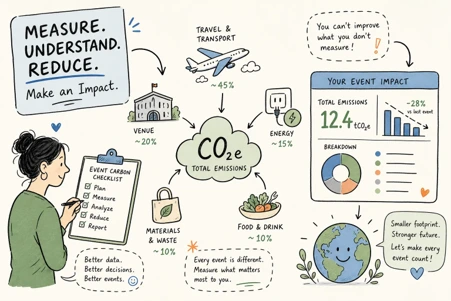
Most event organisers know they should be doing event carbon measurement. The...

Many venues now advertise a green event package Singapore corporate clients can...
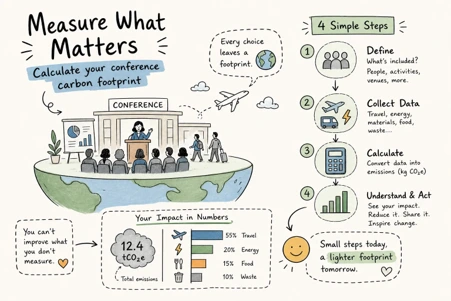
The CO2e figure for your conference has moved from a nice-to-have into...
Find quick answers about the Event Carbon Calculator, your emissions estimate, and what happens next.
There is no official threshold. The most cited reference is approximately 14.13 kg CO2 per attendee for venue-related emissions, with energy the dominant contributor. Note this excludes attendee travel, so a full-scope per-attendee figure will typically be higher. Treat it as a comparative benchmark for the venue category rather than a pass mark for the whole event.
Yes. SACEOS has published WA 4: Sustainable MICE — Guidelines for Carbon Emissions Management, a Singapore Standards workspace agreement covering measurement, reduction, calculation, verification and offset. Separately, the Singapore MICE Sustainability Certification (MSC) provides GSTC-Recognised organisational certification, and STB and SACEOS will develop a MICE Decarbonisation Framework by 2028.
Air-conditioning, lighting and audiovisual systems run continuously through operating hours regardless of attendee behaviour, making venue energy a structural and relatively predictable load. In Singapore’s climate, cooling demand is both unavoidable and substantial. This is why the MICE Venue Sustainability Playbook points to emissions per square foot of venue area as a comparable metric.
Yes — and then raised them. By 2025 the original roadmap targets were exceeded, with all purpose-built MICE venues and over 80% of SACEOS member companies certified. Roadmap 2.0, unveiled in July 2026, commits to a MICE Decarbonisation Framework by 2028 and net zero by 2050.
No. MSC certifies the organisation across domains including carbon, waste, energy, water, social responsibility, HR competency and procurement, valid for two years. It does not produce a per-event footprint figure or evidence that a specific event’s emissions were addressed. Those are separate exercises.
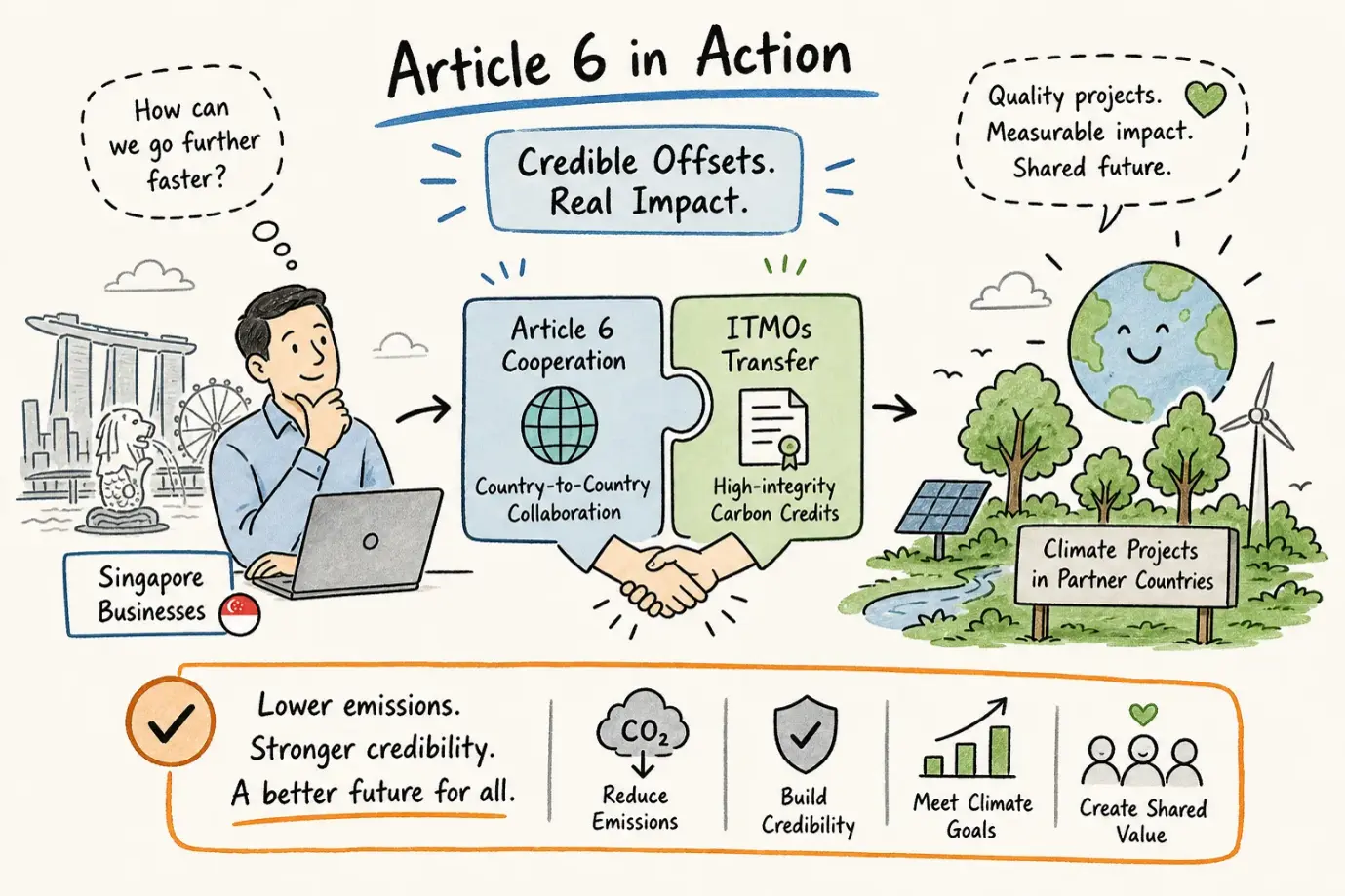
Article 6-aligned offsets are no longer just a conference talking point; they...
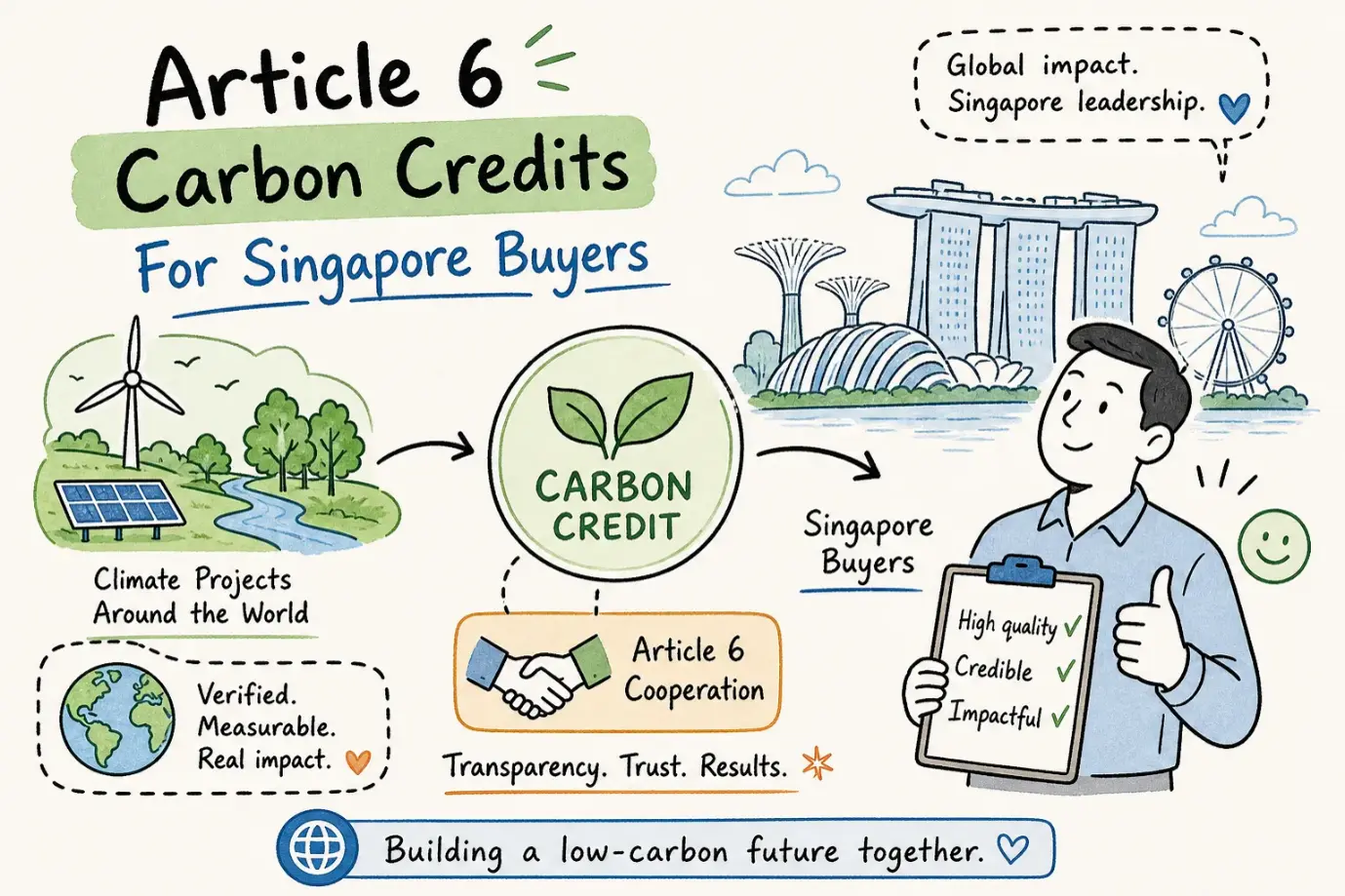
Article 6 carbon credits are fundamentally different from standard voluntary offsets, and...
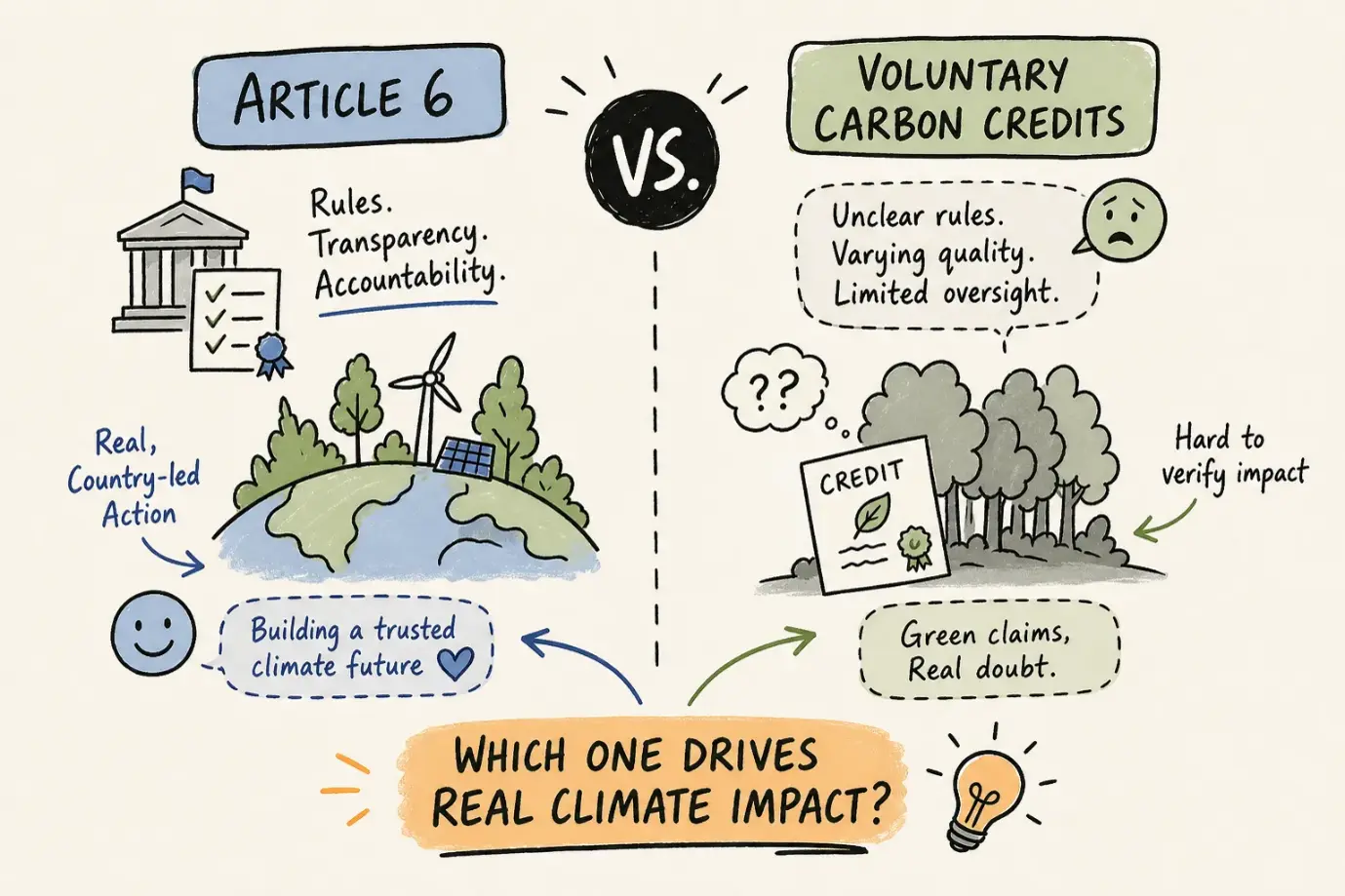
Understanding the difference between Article 6 and voluntary carbon market credits is...
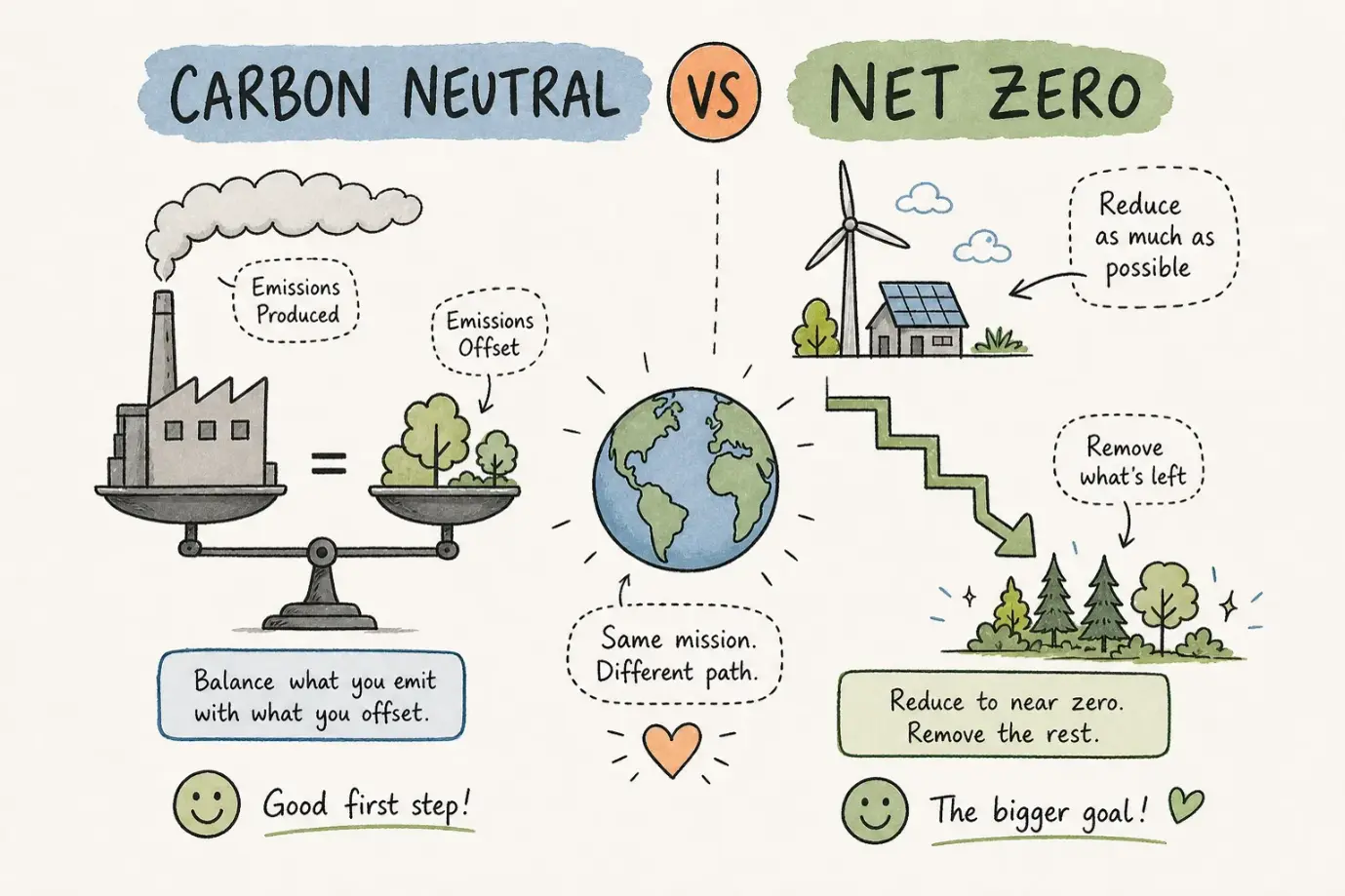
Carbon neutral vs net zero: two terms, both sound green, both are...
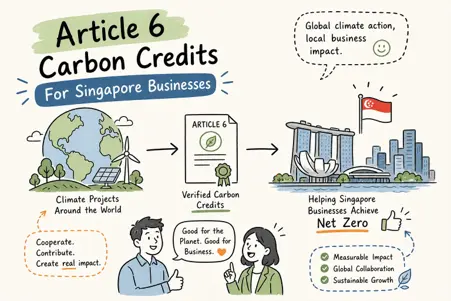
For Singapore businesses, Article 6 carbon credits explained properly can mean the...
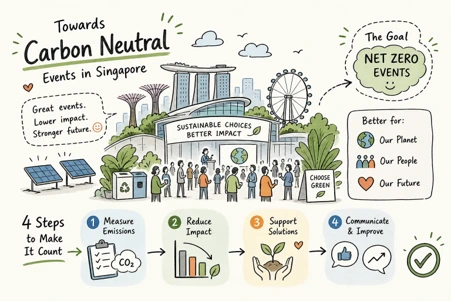
Carbon neutrality claims are increasingly visible in Singapore's events industry. Conference programmes...

Green Passport Carbon
Quick Links
More Information
 Optimized by Seraphinite Accelerator